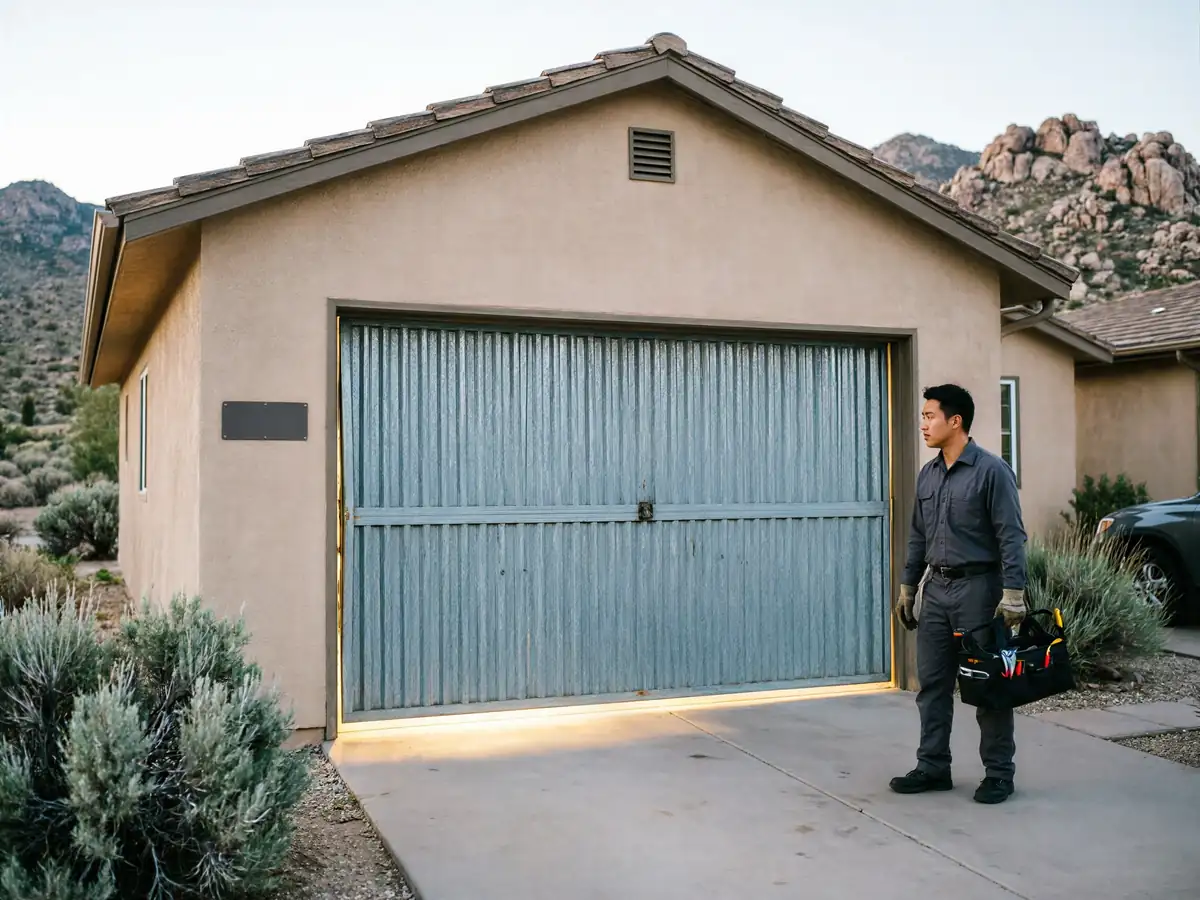
The Houses Here
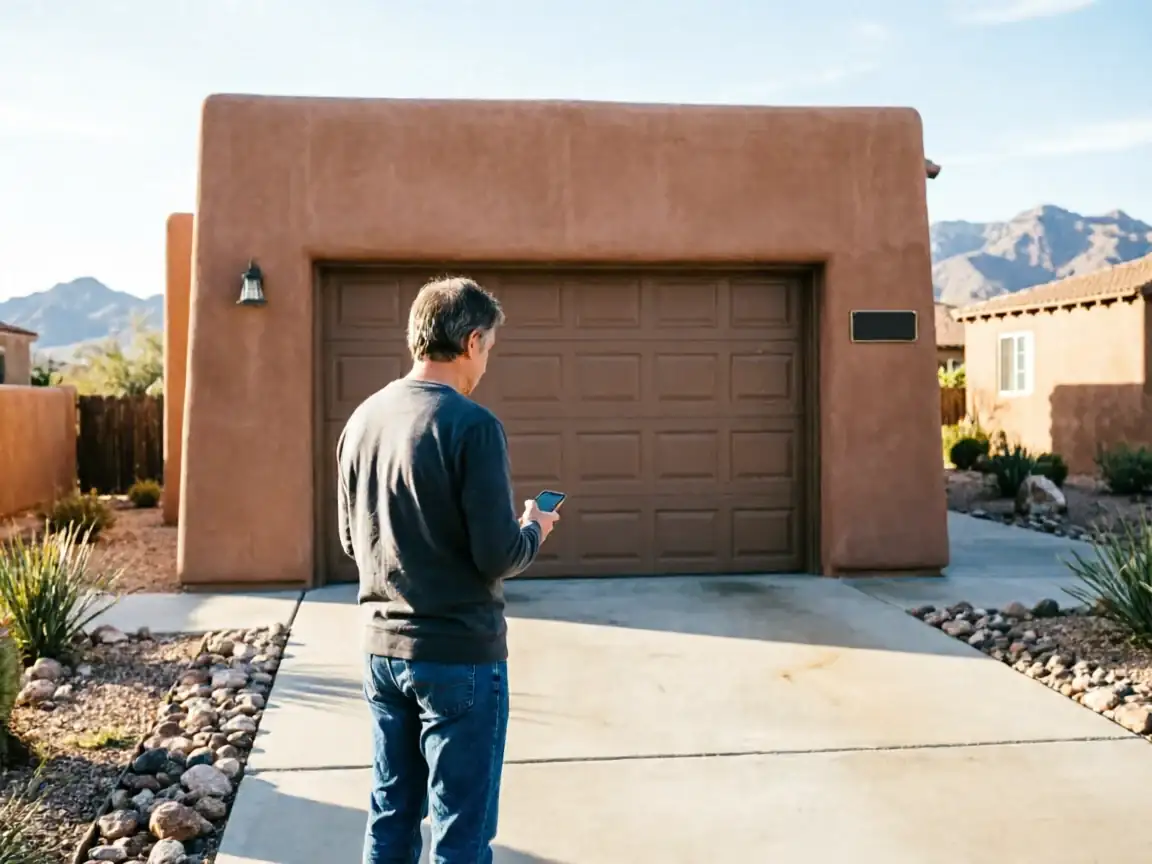
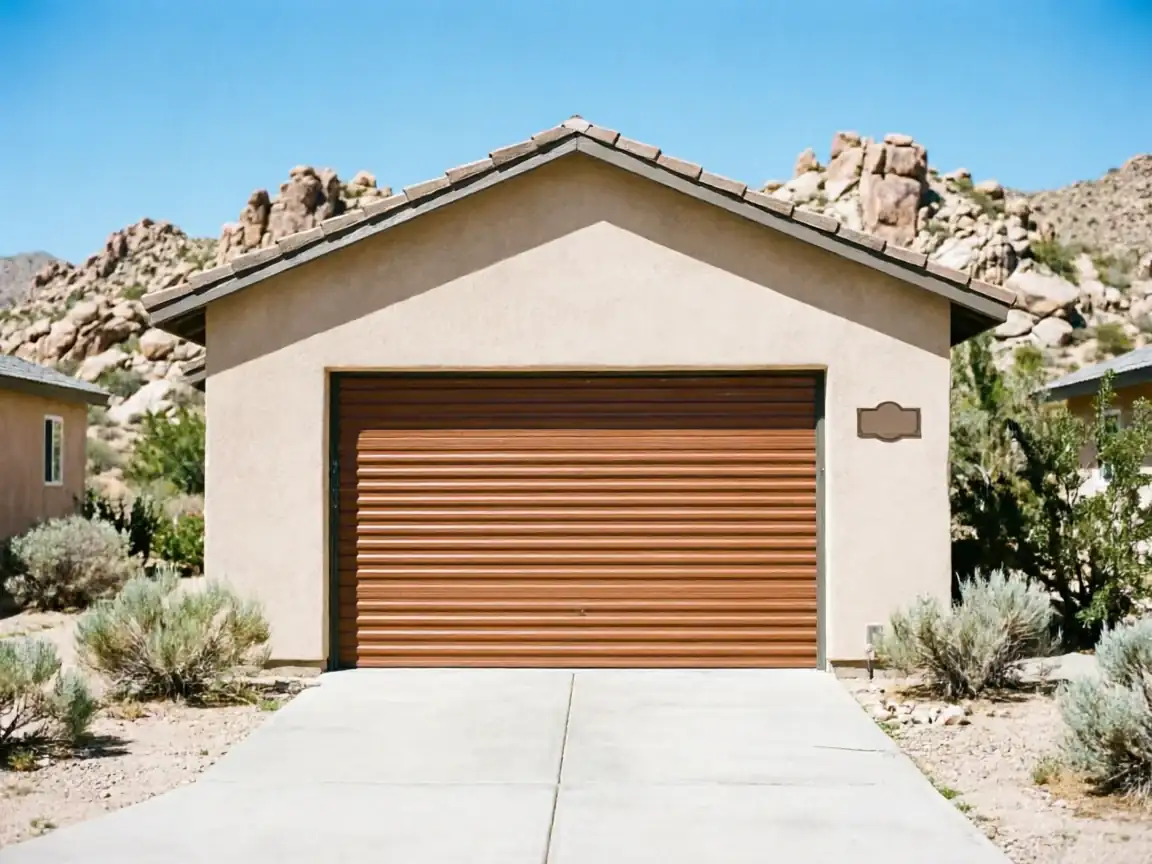
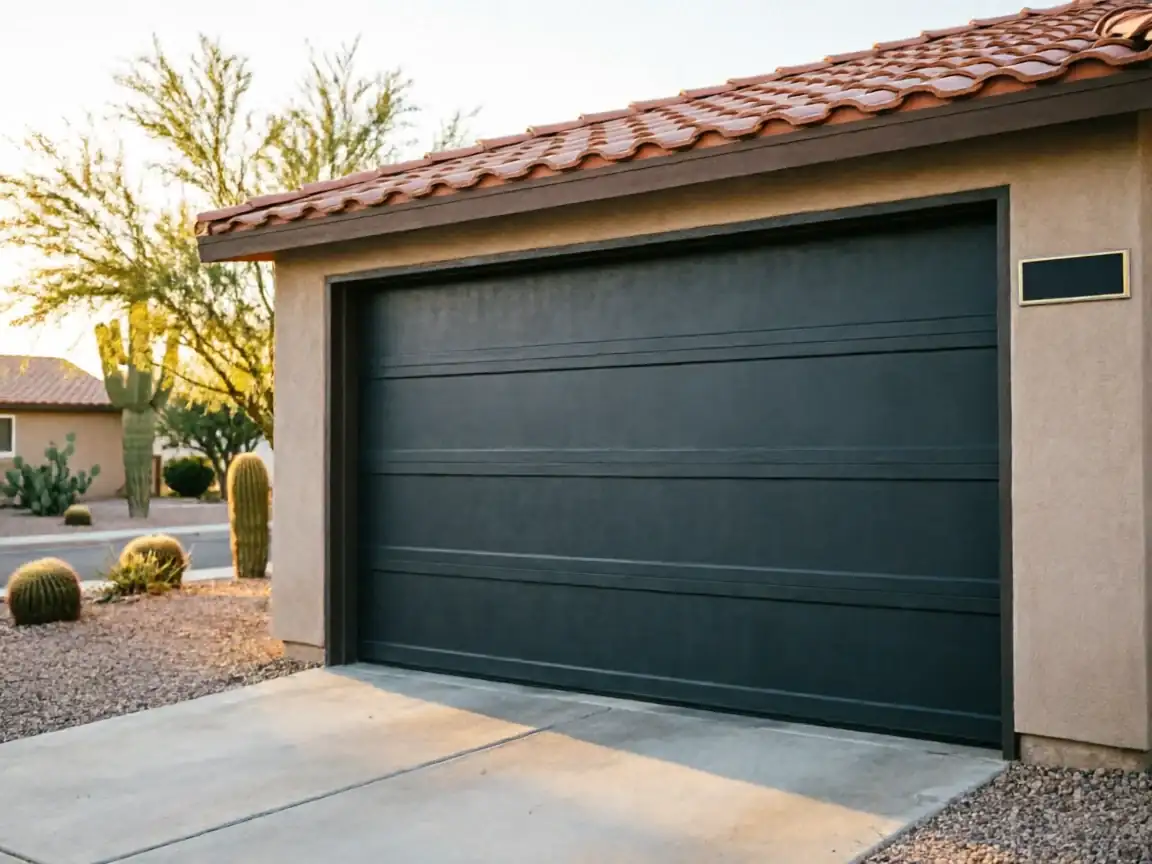
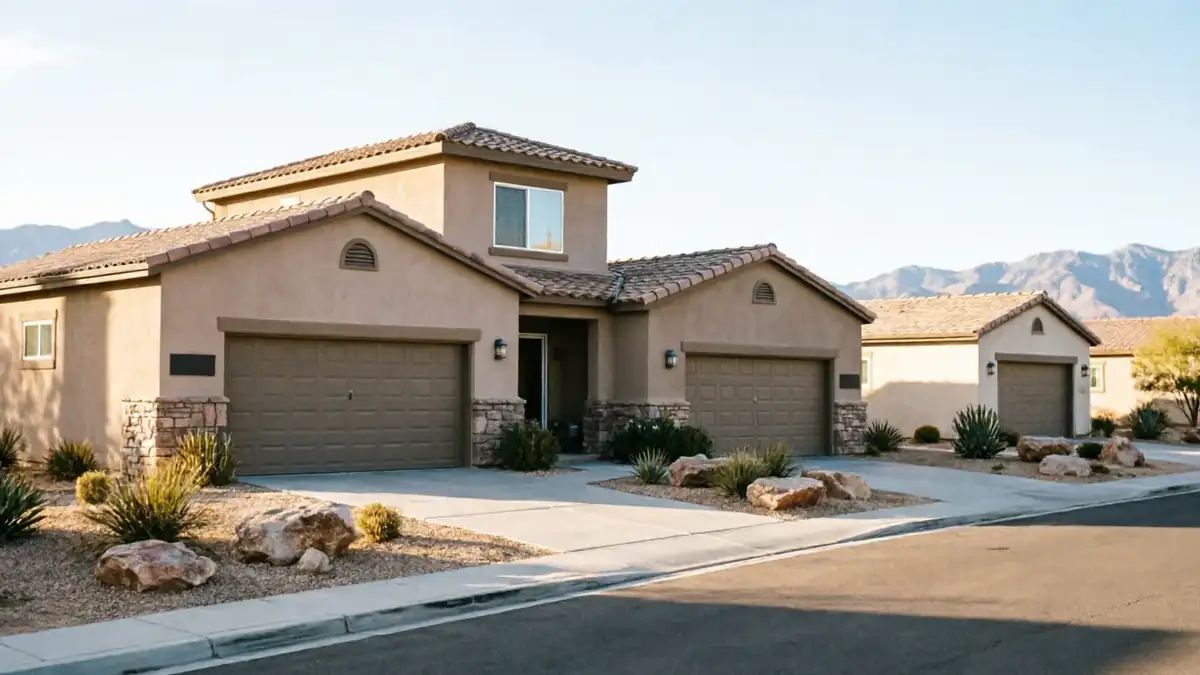
Morongo Valley's housing stock centers on 1973, more than a decade earlier than the 1986 median for the wider service area we cover out of Palm Springs. That one number tells you most of what you need to know before a truck even shows up. A home built in the early 1970s almost never has the same door, track, or opener as one built in the late '80s or '90s, and the difference matters when you're trying to figure out why a door won't open on a 108-degree afternoon.
There are about 1,695 households in Morongo Valley, a small slice of the roughly 42,010 across the whole area we serve. Median household income here runs $56,821, noticeably under the $69,704 figure for the service area overall. That gap shows up in the kind of calls we get - more requests to repair what's there, fewer requests to replace it outright, and a real interest in knowing whether a $40 part fixes the problem before anyone talks about a new door.
None of this is unique to one street or one subdivision. It's the baseline for the town, and it's why a page written for Palm Springs or for a newer development ten miles away doesn't actually tell you anything useful about your own garage door.
What the Housing Means for Your Door
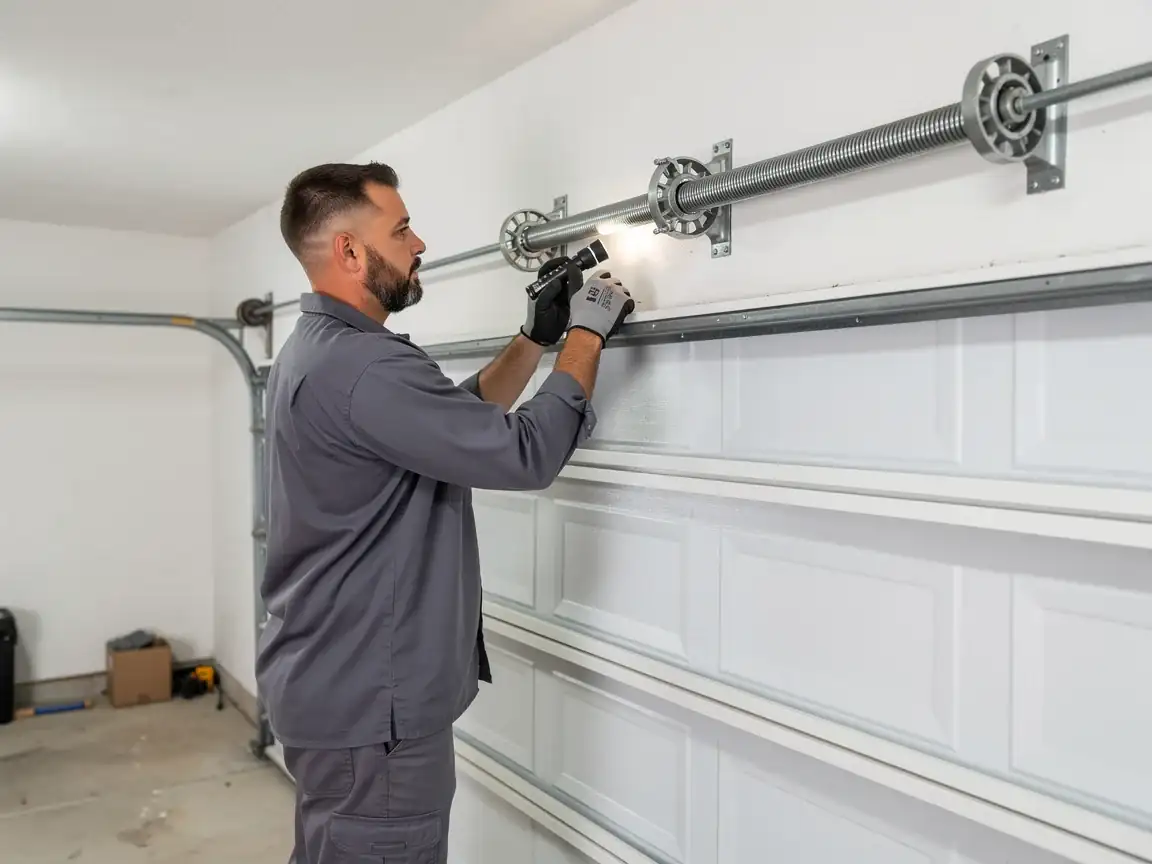
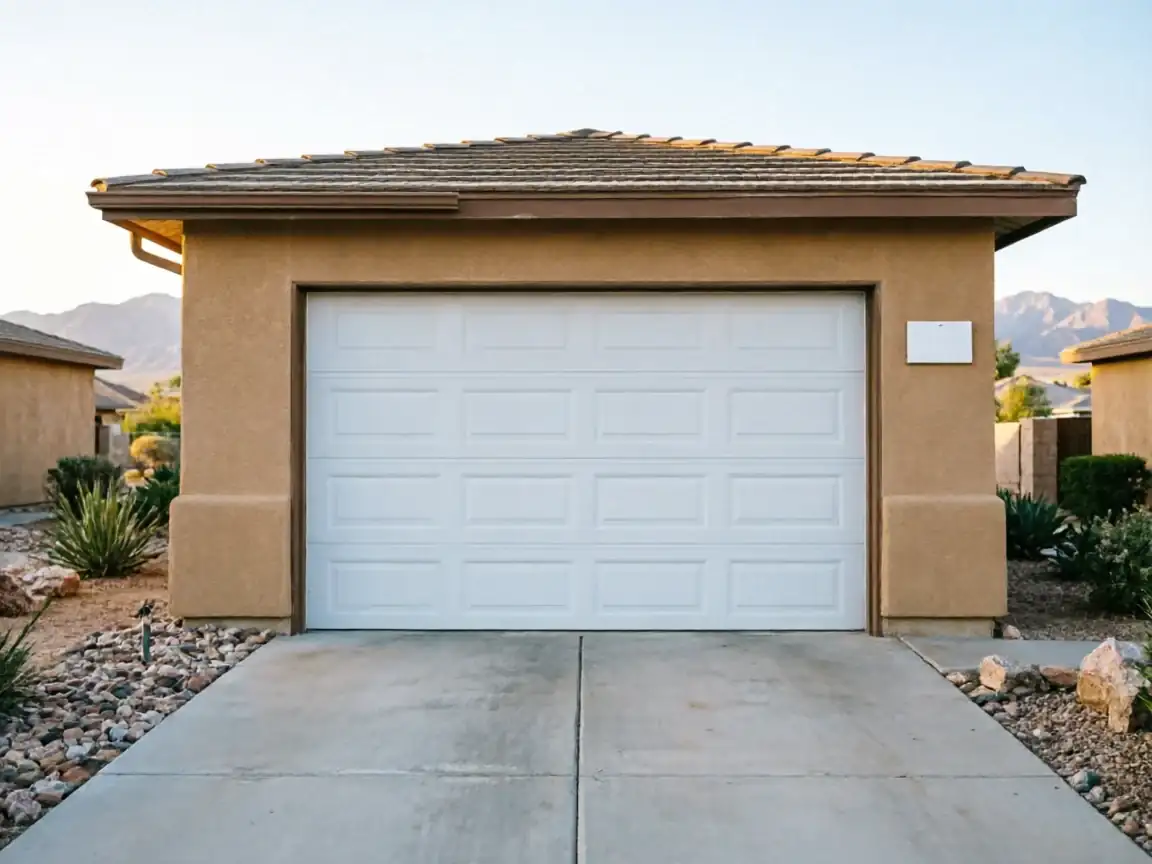
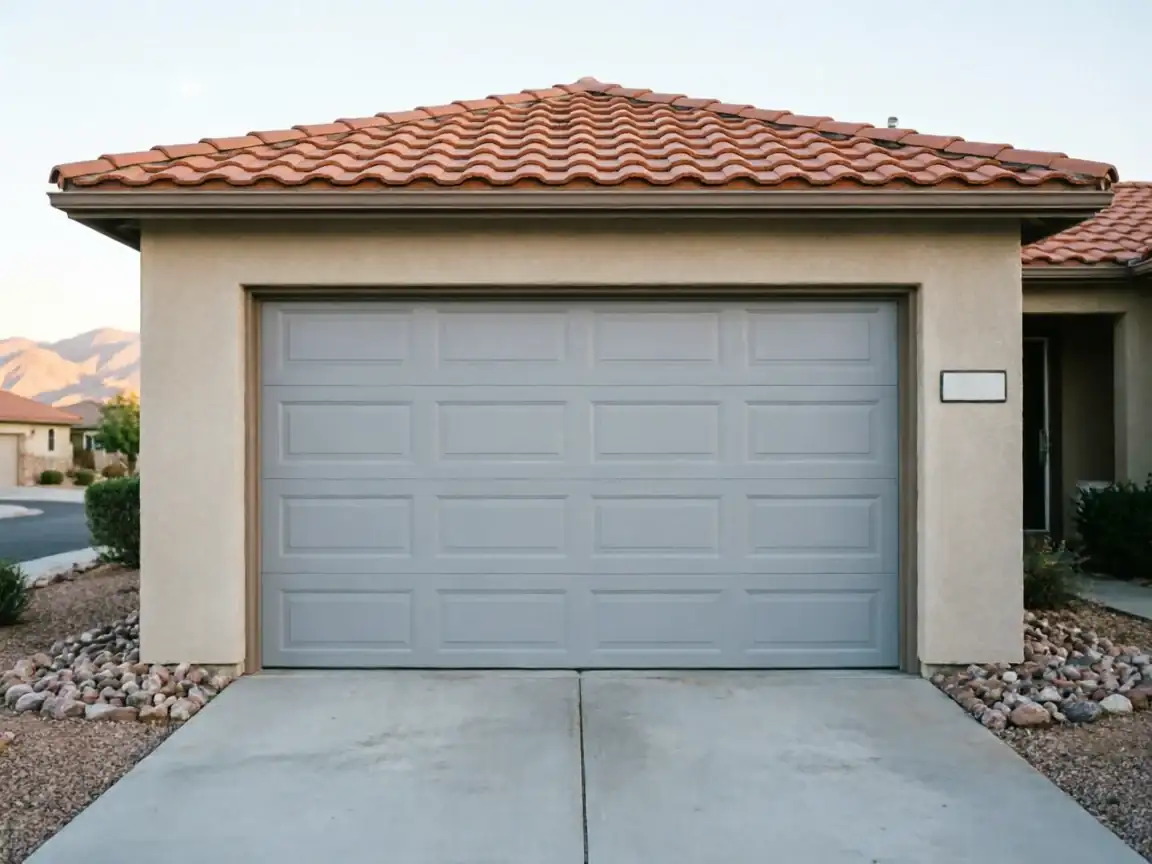
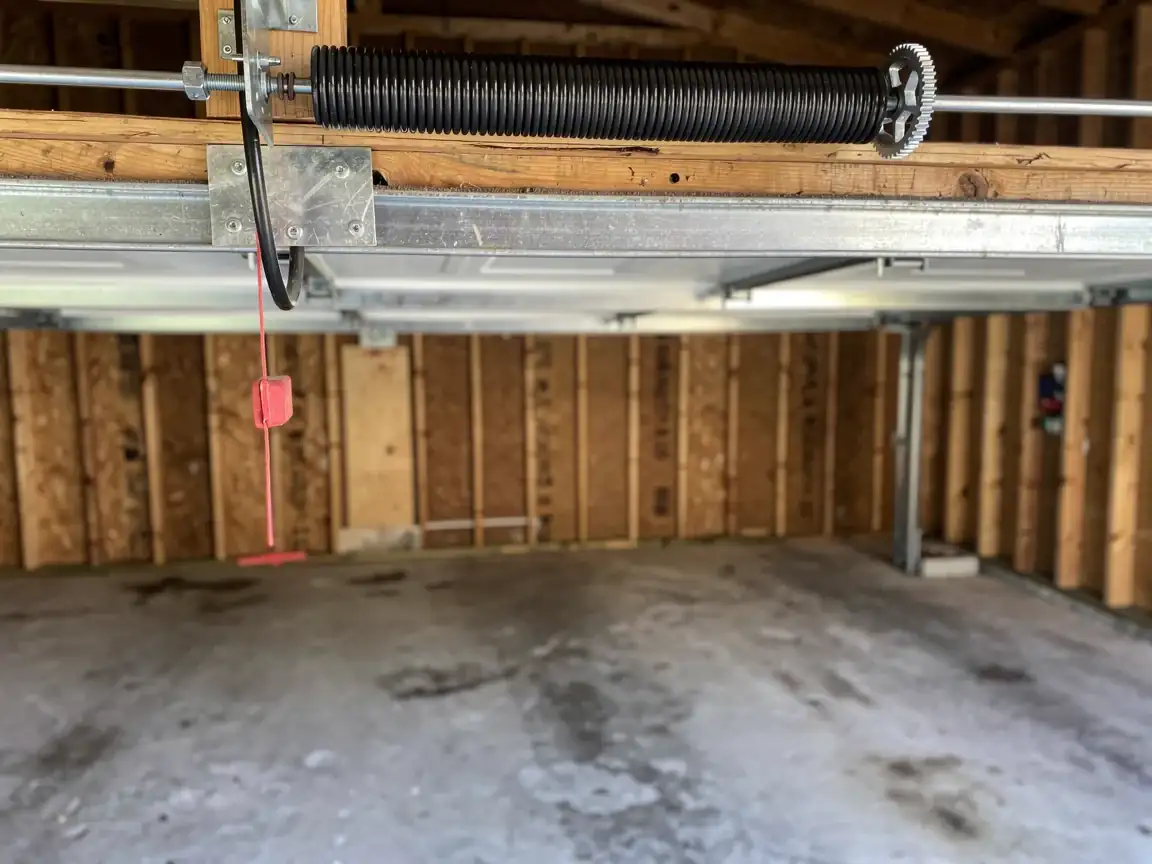
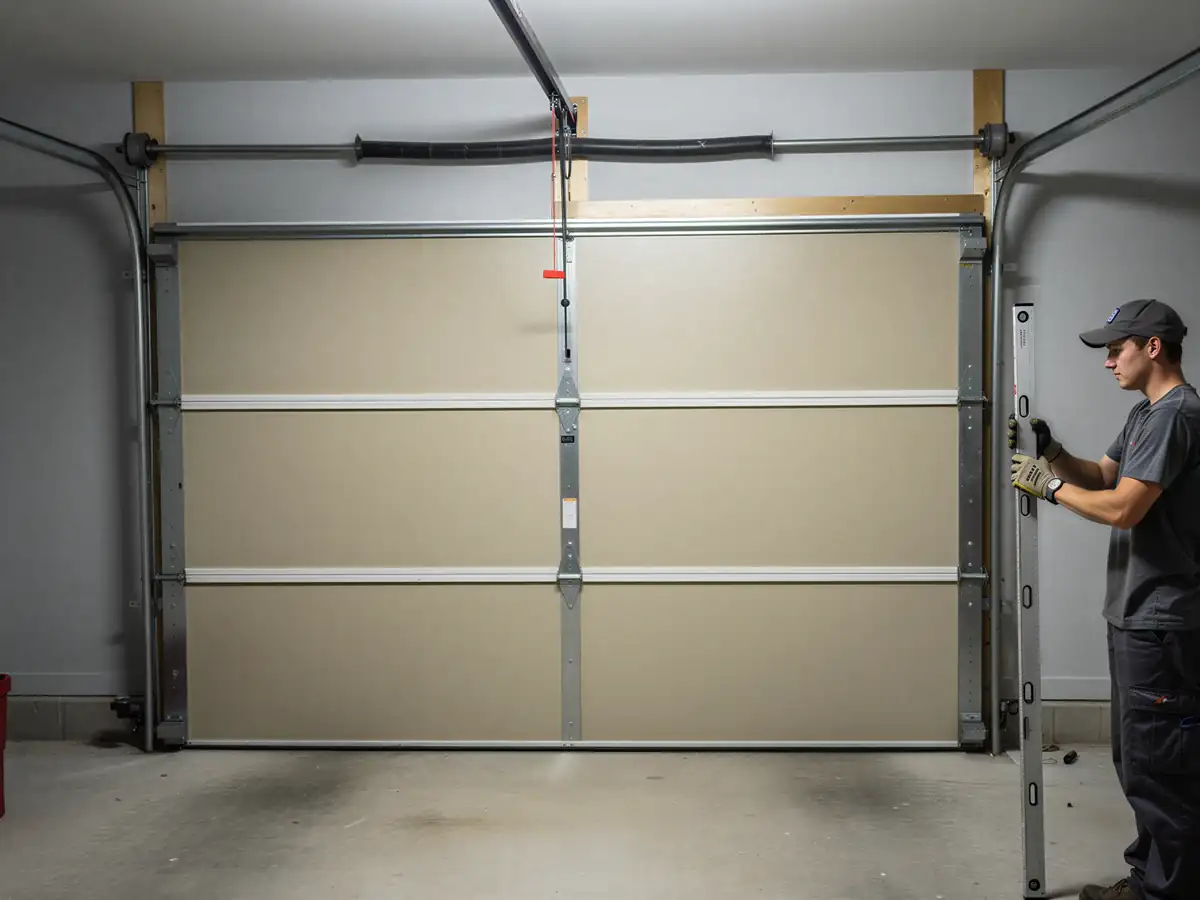
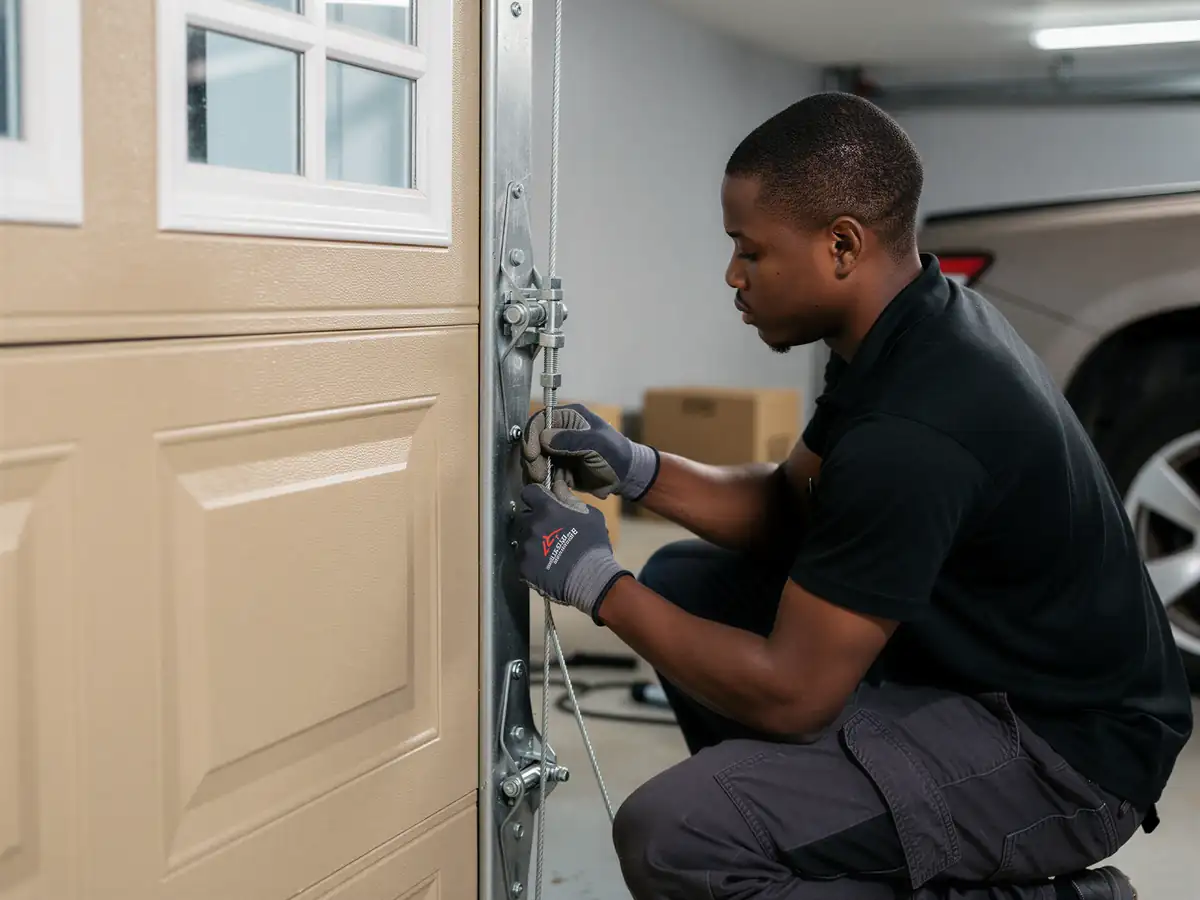
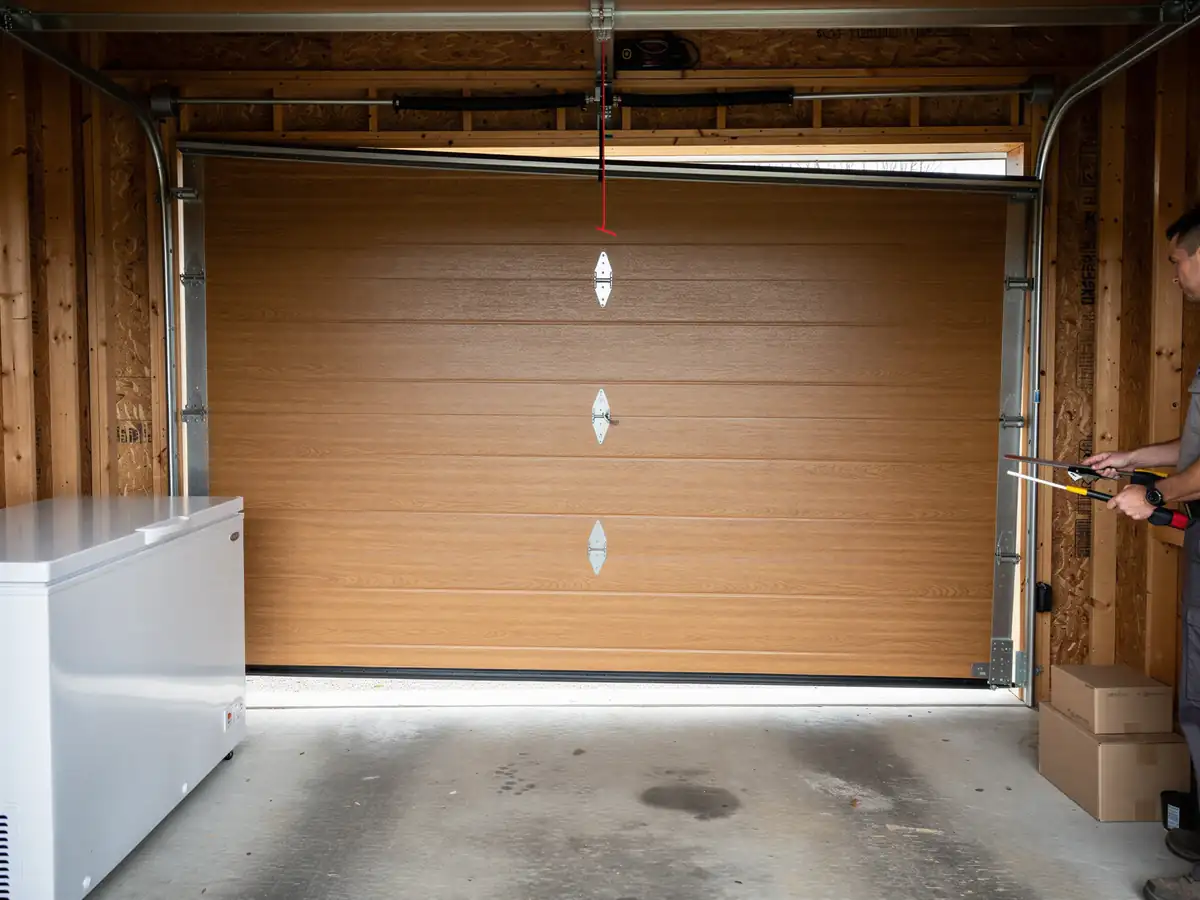
A door that went in around 1973 was very likely installed with extension springs mounted along the horizontal track, not the torsion spring over the header that's been standard since the 1990s. Extension spring systems are simpler, cheaper to fix, and also more prone to snapping cables and uneven lift as the rubber rollers and galvanized coating age out. If your door drops crooked or one side lags behind the other when it opens, that's usually the tell.
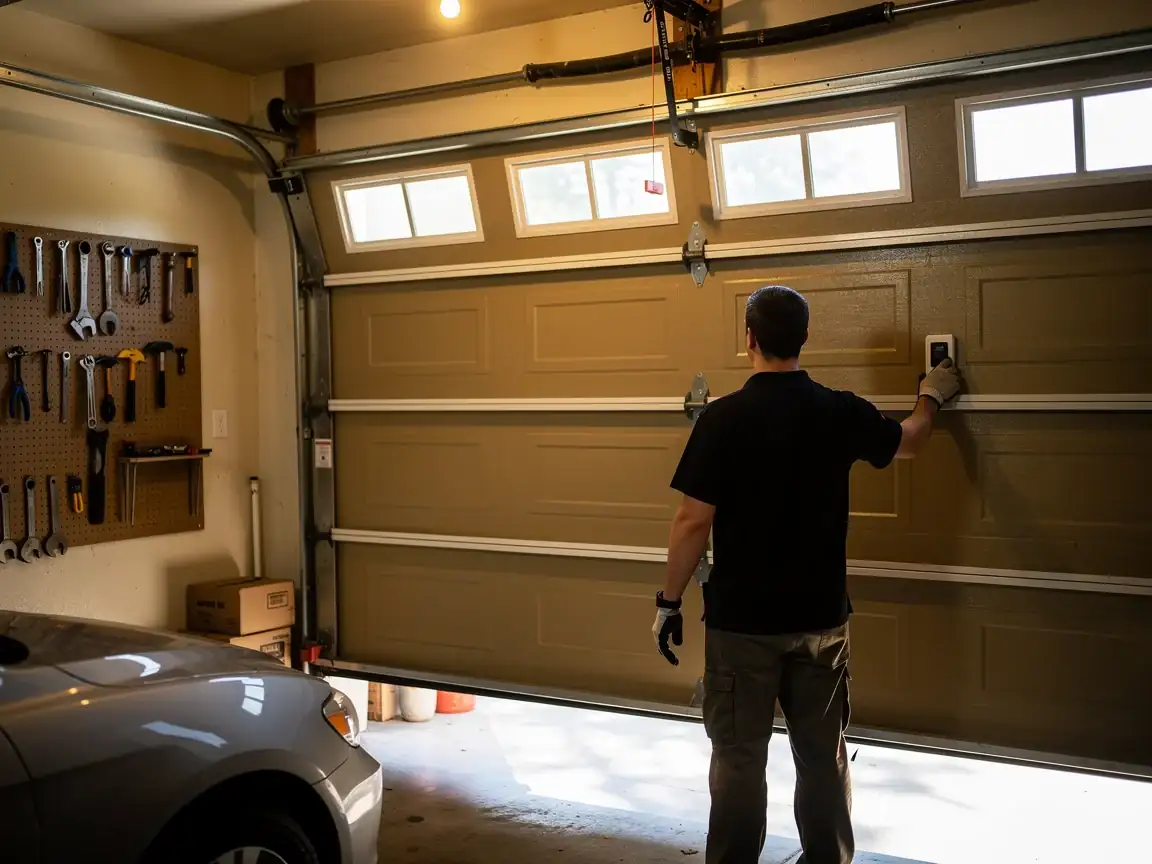
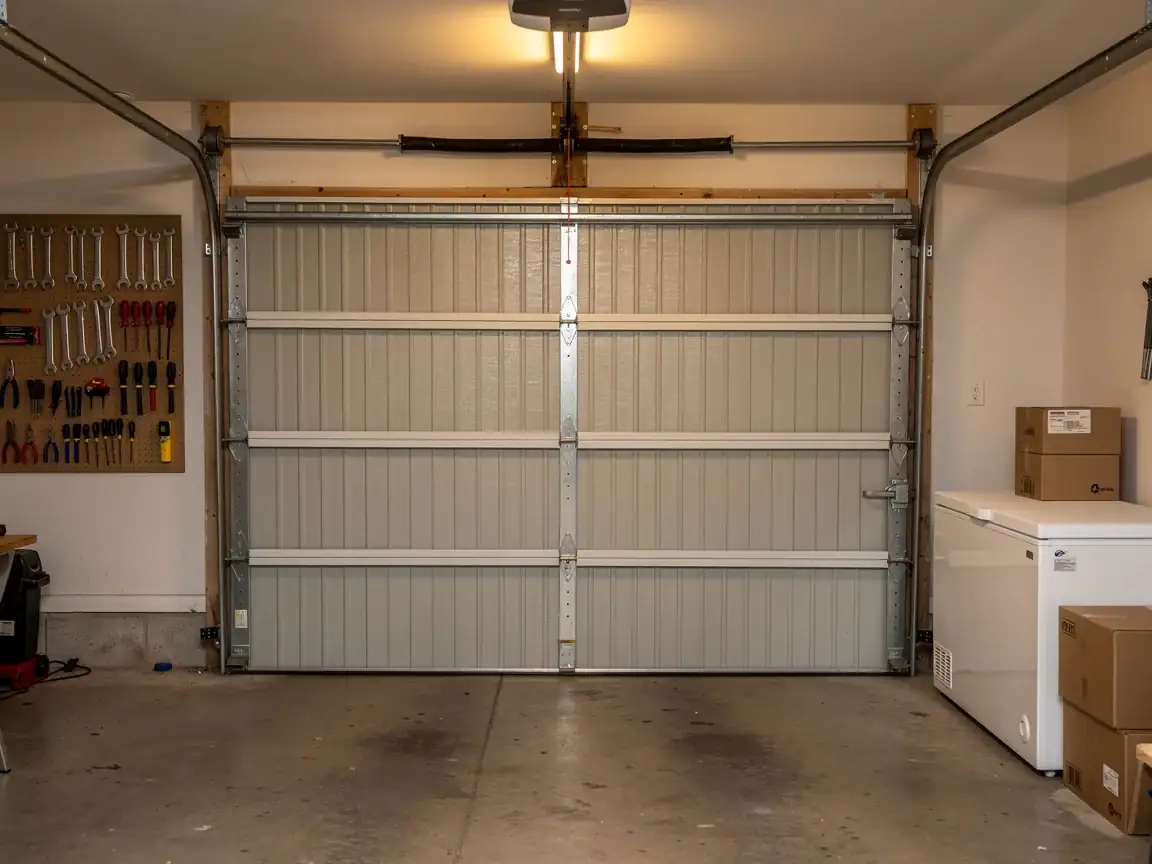
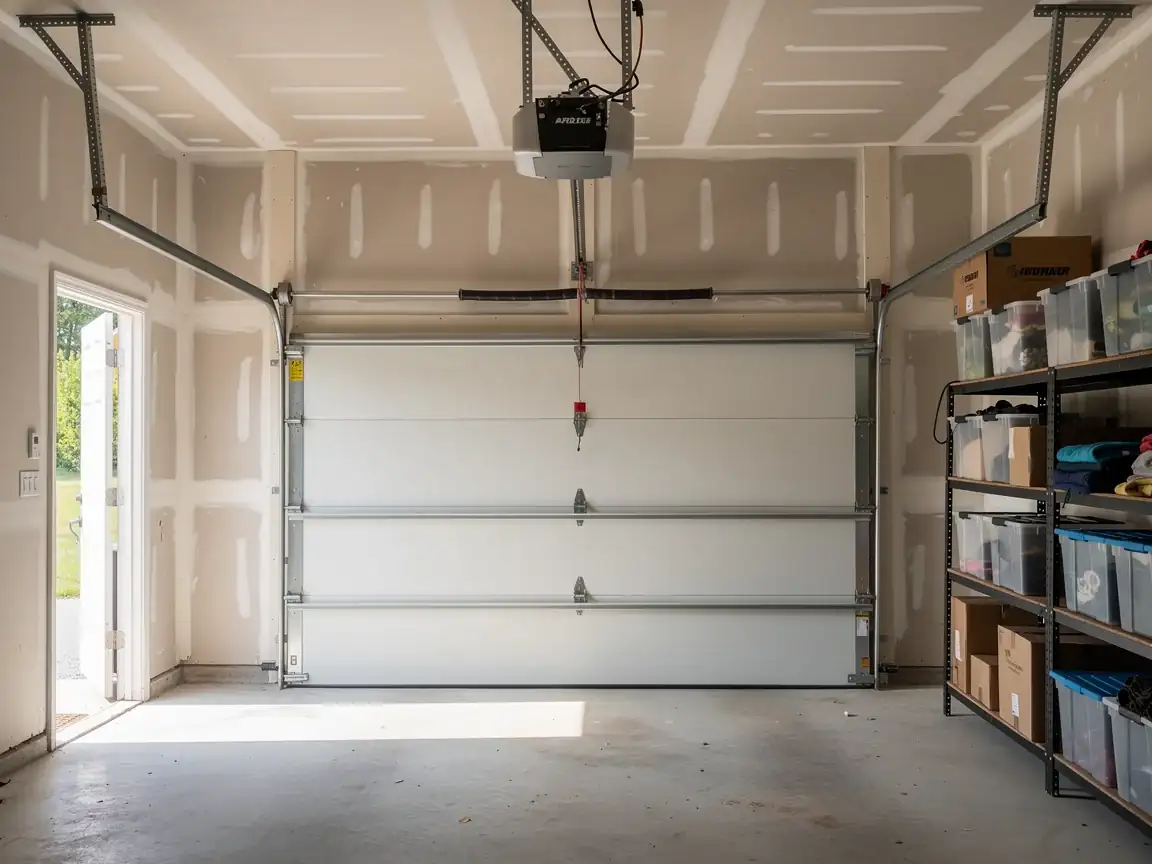
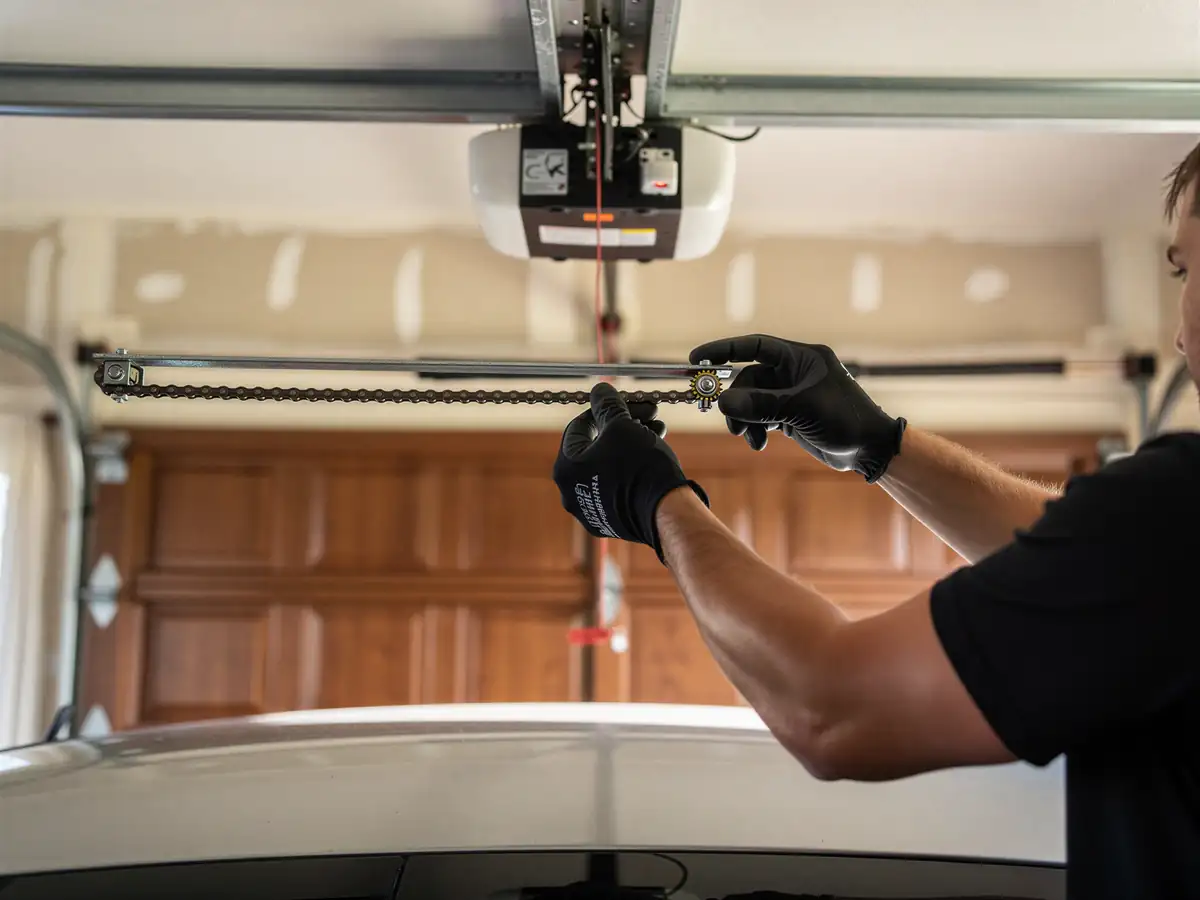
Openers from that era, where they haven't already been swapped once, are chain-drive units with none of the safety reversal sensors required on anything sold today. We can often keep an older opener running, but when the circuit board or the drive gear goes, a direct replacement part frequently doesn't exist anymore - that's the honest limitation here, and it means some of these jobs end with a new opener even when the owner called about something smaller.
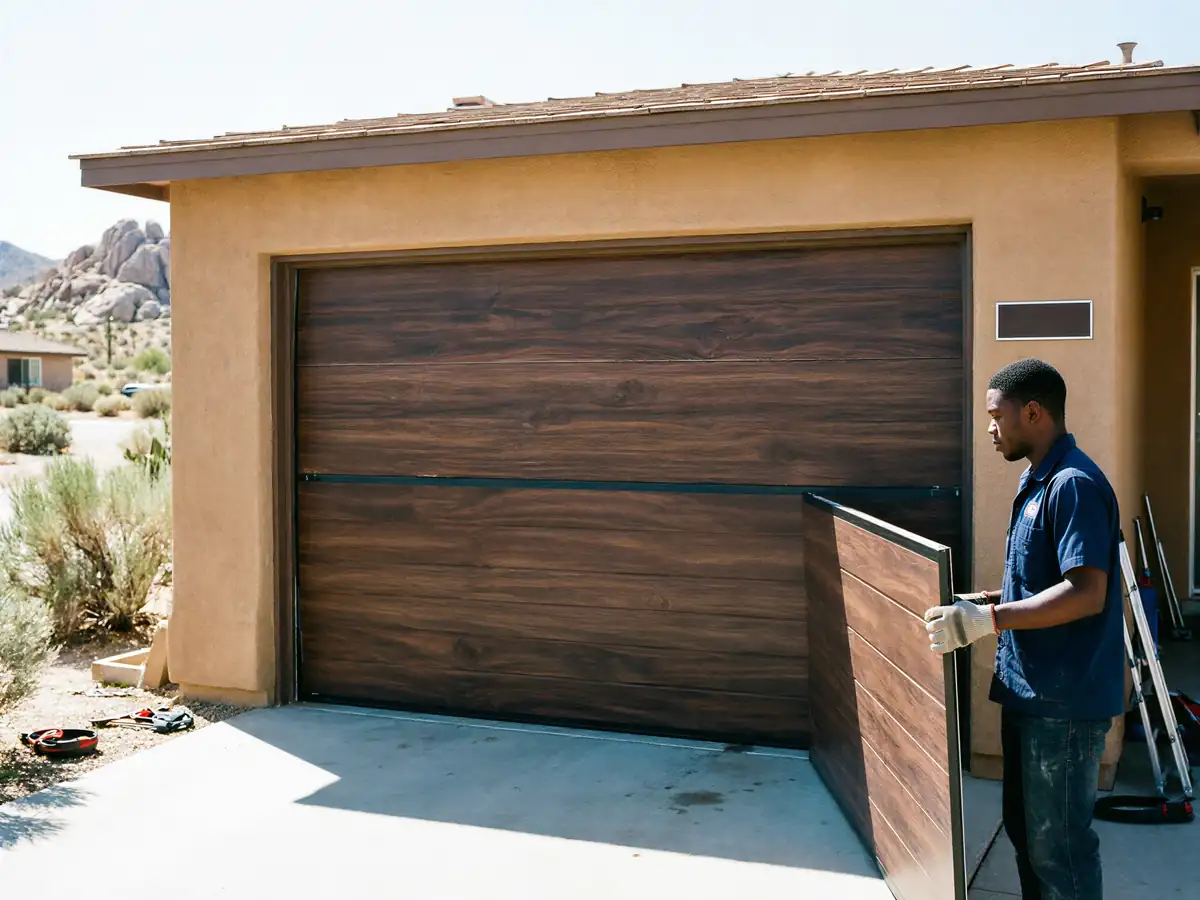
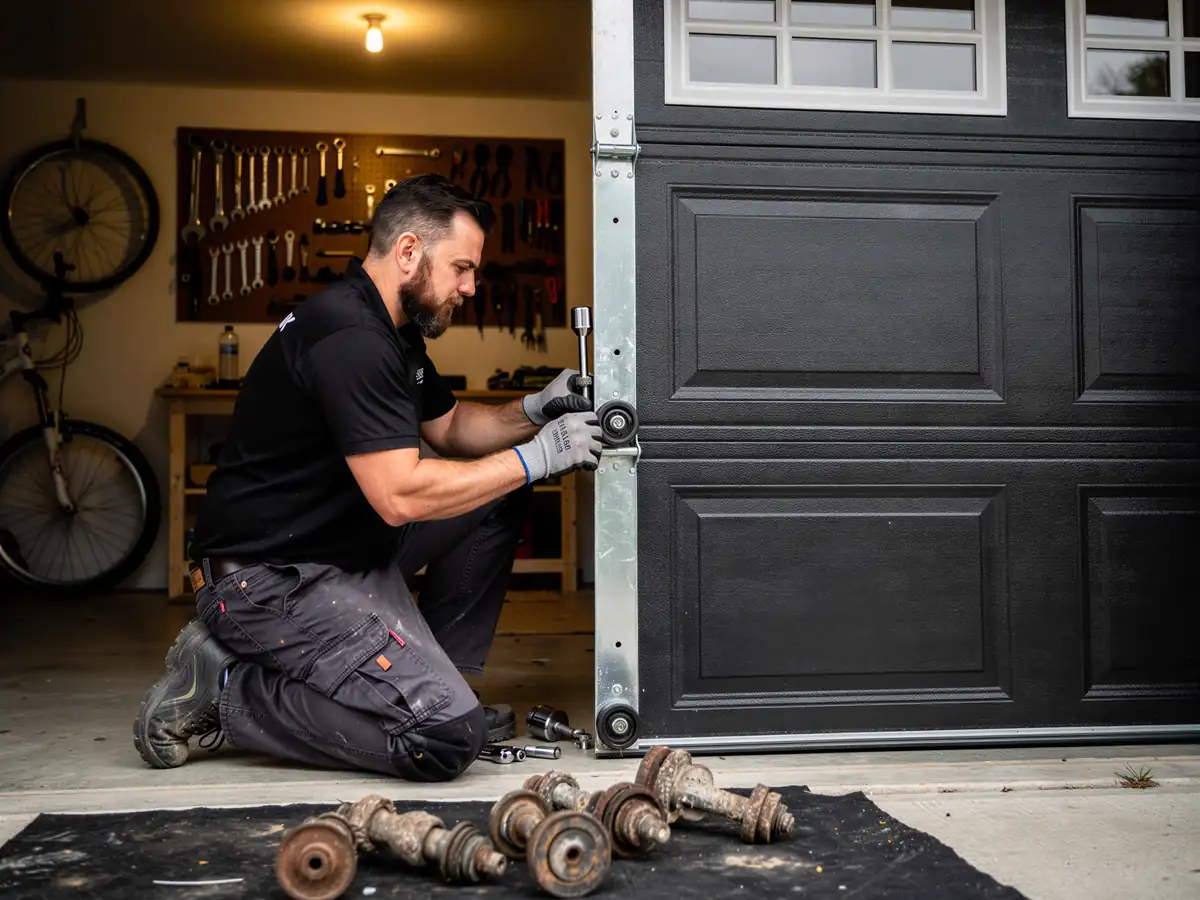
Heat is the other factor. The climate band here runs severe on the heat side, and that accelerates lubricant breakdown on both old and new hardware - dried-out rollers, hardened weatherstripping, grease that's gone gummy inside a steel track. On a 50-year-old door, heat damage compounds whatever's already worn from age.
Getting Here
We run out of Palm Springs
And Morongo Valley sits about 19 miles out - one of the longer drives in the area we cover, on par with towns like Anza. We don't keep a crew stationed here, and we're not going to pretend otherwise; every job means a truck making that drive, which is part of why we ask for enough detail on the phone to bring the right spring, cable, or opener part the first time rather than the second.
- 19 miles
That distance also shapes what we can promise
We won't quote a response window we can't back up for a town this far out, and we won't claim history in Morongo Valley we don't have. What we can tell you is that the trip is a known quantity for us, not a special case, and that the parts we carry are chosen with older desert housing stock like this in mind - not just whatever fits a newer build closer to town.
Older vs Newer Streets
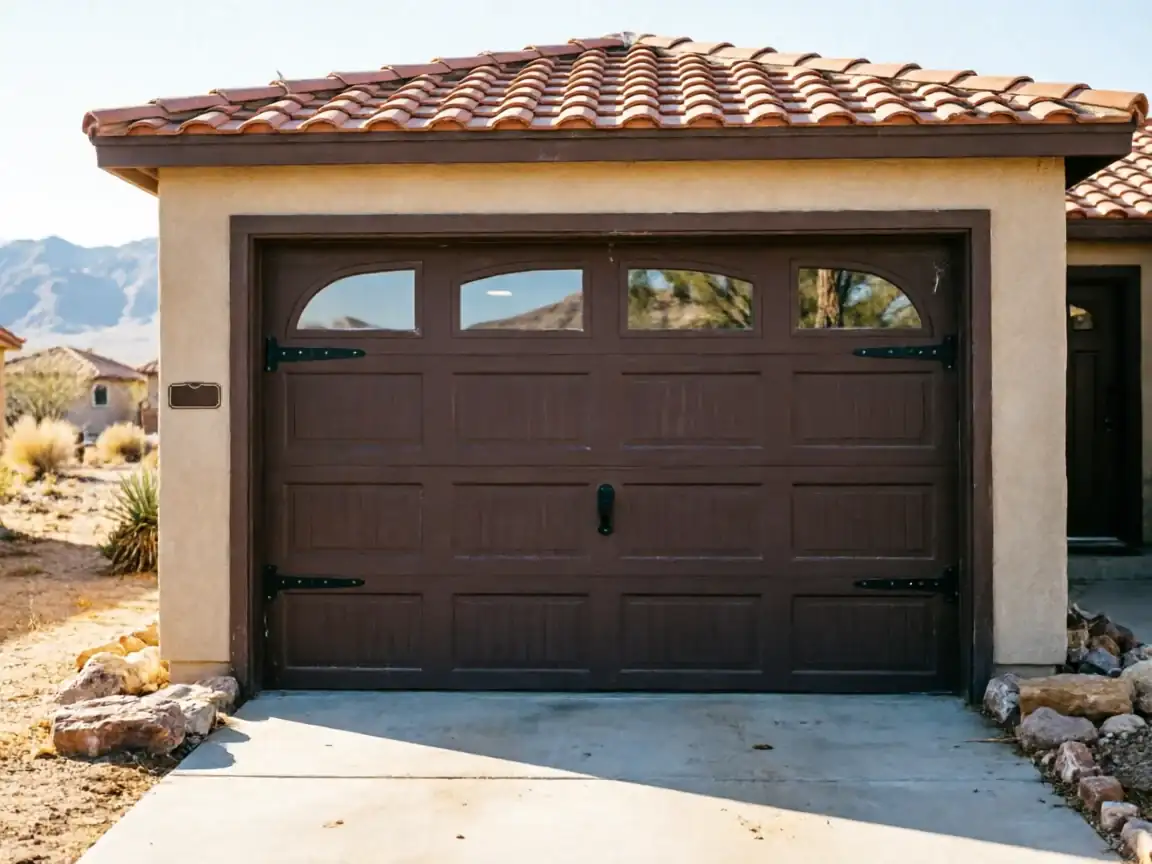
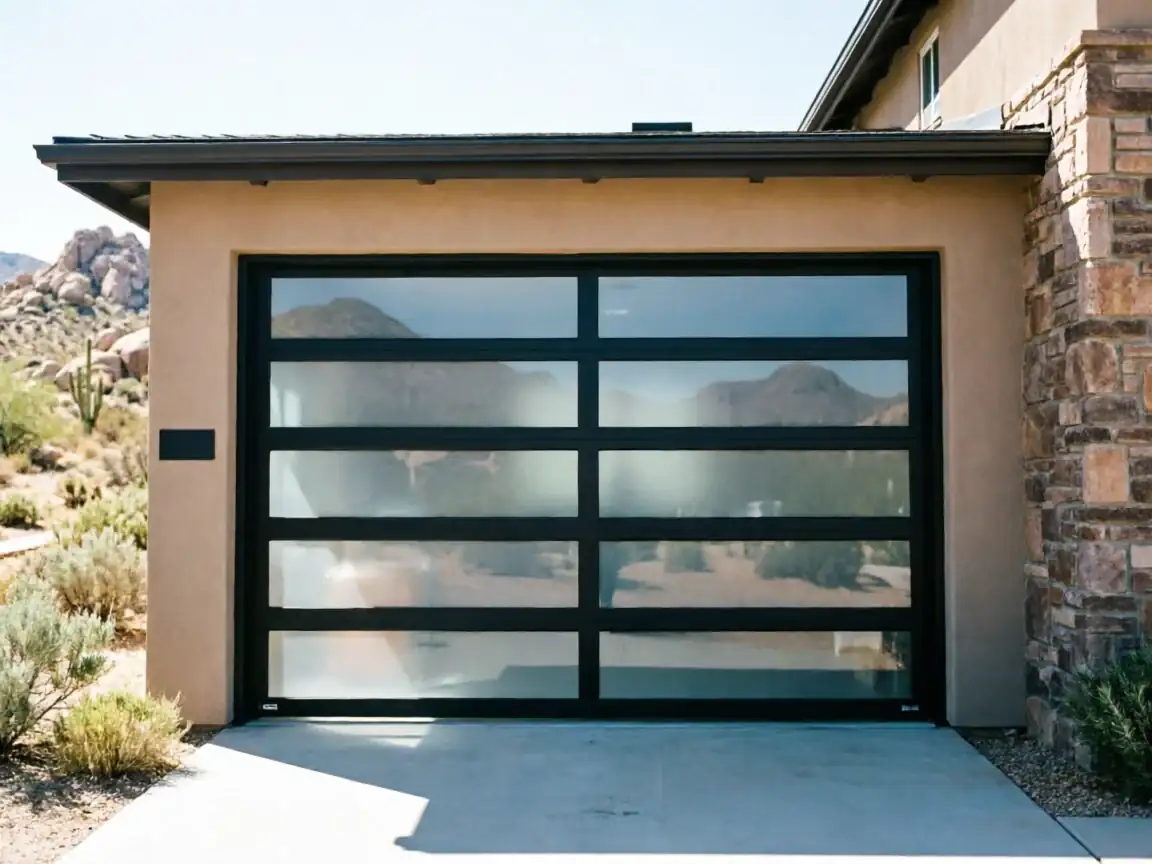
Not every door in Morongo Valley dates to 1973. The service area's housing spans 1968 to 1999, and even within one town you'll find a handful of homes built later, usually with torsion springs over the header and openers with modern safety sensors already built in. Those newer installs behave differently when something breaks - the fix is more likely a logic board or a safety sensor realignment than a snapped cable.
The older majority is where the real pattern shows up: extension springs, chain drives, steel sectional doors with rollers that have outlasted several owners. If you know roughly when your house was built, you've got a decent head start on what's likely wrong before anyone looks at the door. A house from the early '70s and a house from the late '90s a few streets over can have almost nothing in common hardware-wise, which is exactly why we ask the build year question on every call out here rather than assuming.