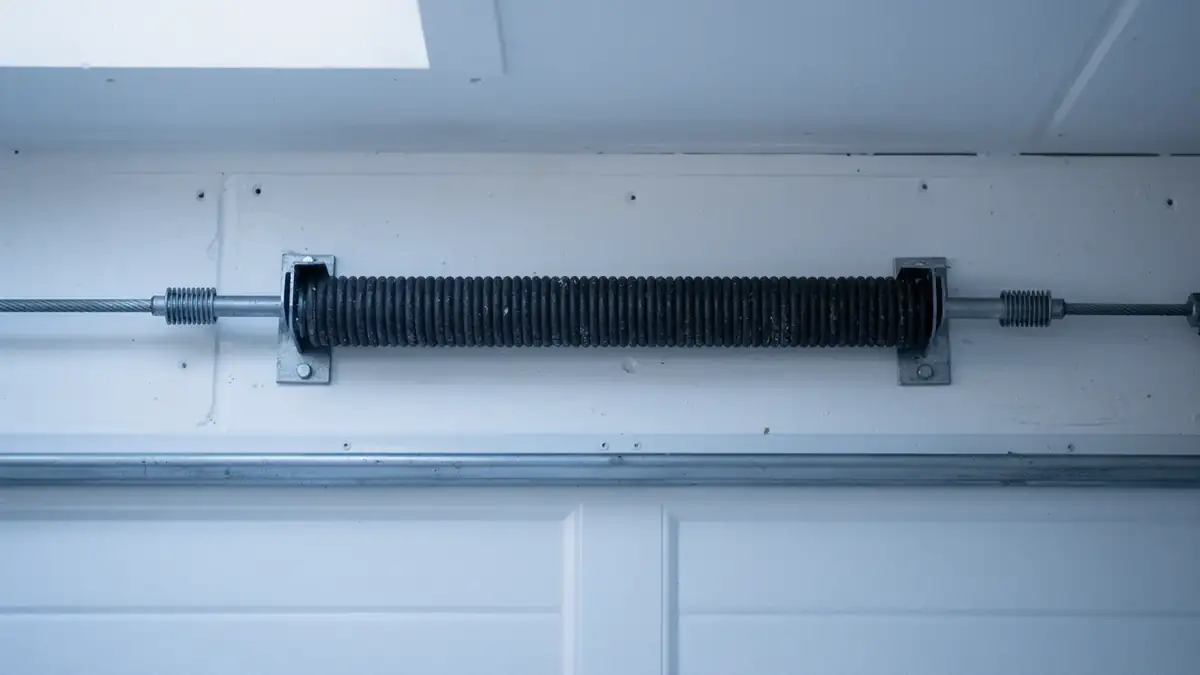
What to Look At First
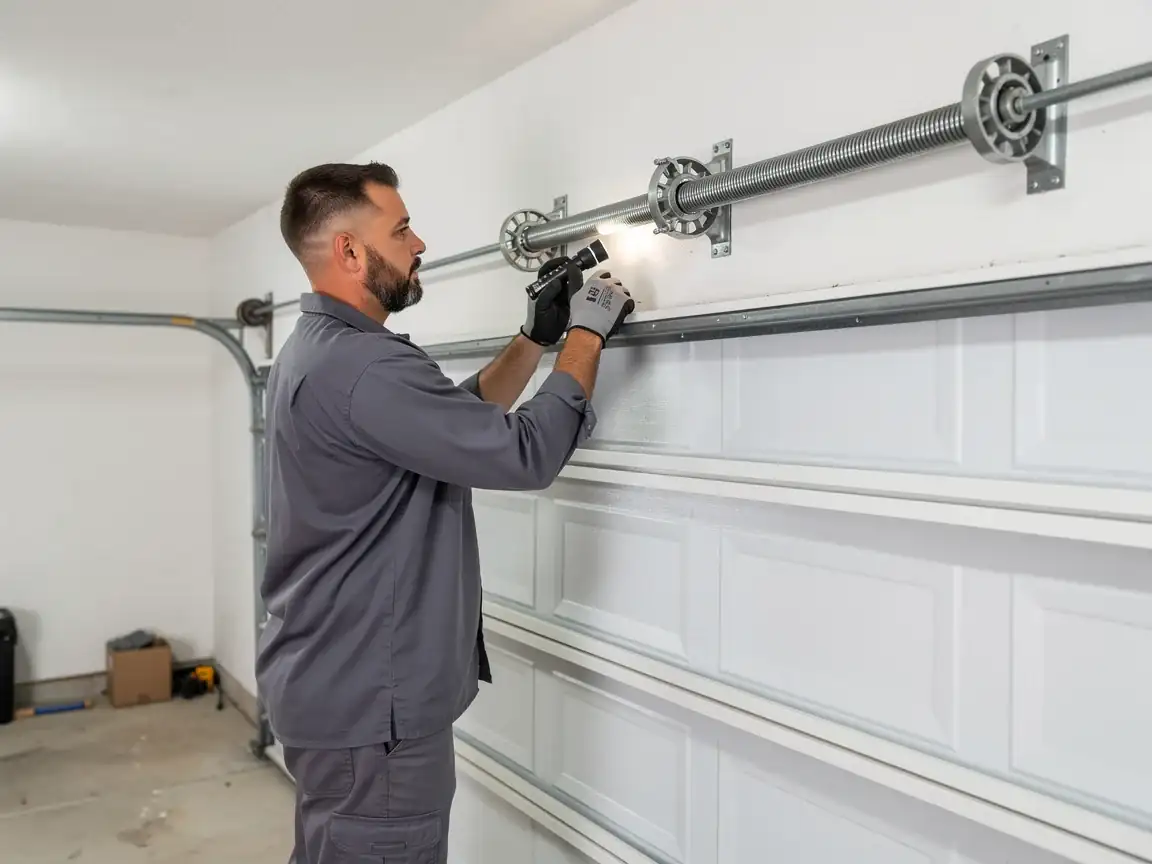
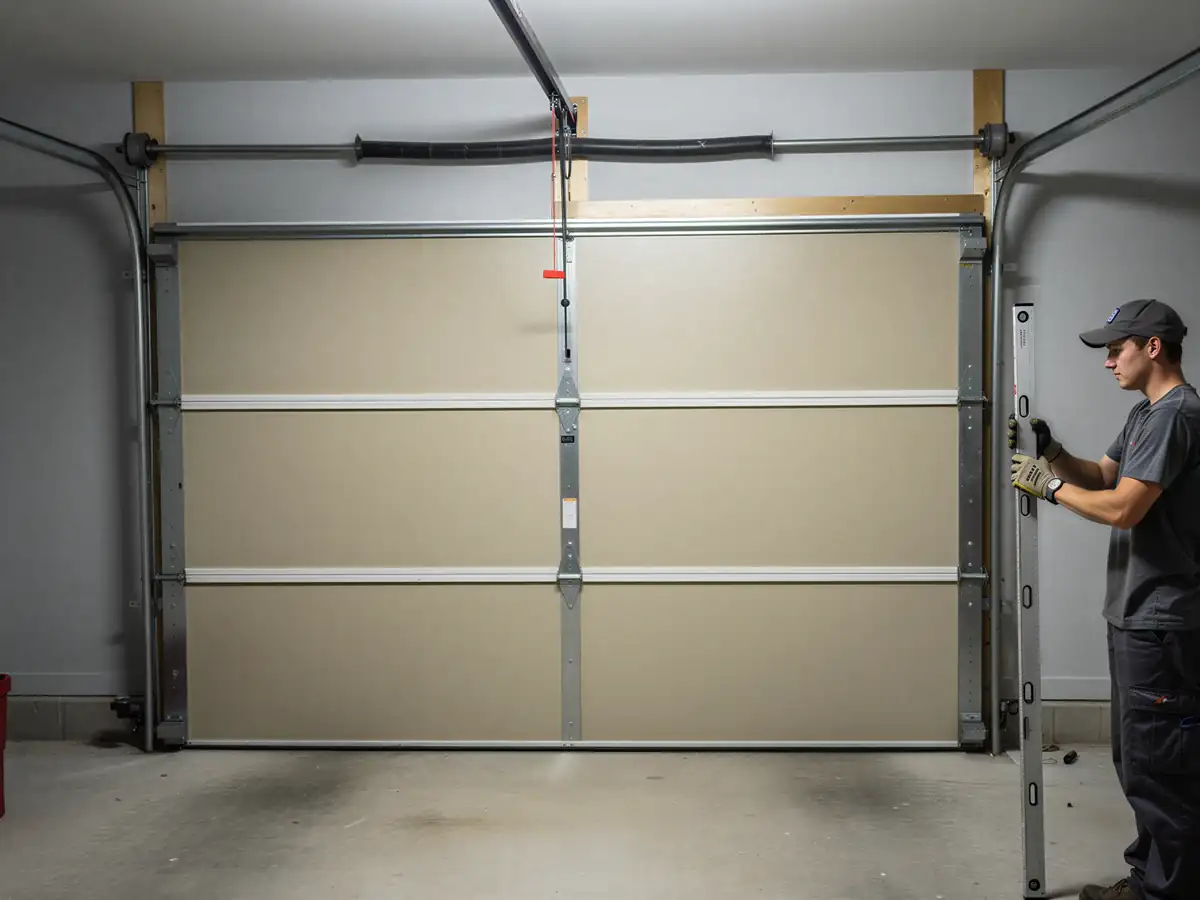
Start with the coil itself. Houses in this service area went up mostly between 1968 and 1999, with the typical build year sitting around 1986, so a lot of the torsion springs still on these doors are original hardware, or a straight swap from decades back. Look for a visible gap in the coil when the door is down - that's a broken spring, full stop. Look next at the winding cones on either end of the torsion bar; rust streaking or a cone that's shifted off center tells you the spring has been working harder than it should.
If the door is from the extension-spring era rather than torsion, check the safety cables running through the spring. Older installs in this age range sometimes never got the containment cable added later. That's not a repair you want to put off once you notice it missing.
Also check the winding unit for grease buildup gone gummy and dark. That's a sign the lubricant has broken down, which happens faster here than in a lot of places, and it's worth knowing before you decide whether this is a five-minute fix or something bigger.
When It Stops Being a DIY Job
A torsion spring under tension can put someone in the hospital, and that doesn't change by town. What does change here is how often that tension is uneven. On a lot of the 1980s and 90s-era doors common across the 13 areas we cover, the two springs on a double door were matched when installed but have aged at different rates since - one replaced at some point, one original. Winding a new spring next to an old one without knowing the difference in wind count is how people get hurt.
If you've got a winding bar, two bars (never one), and you know your spring's wire size and wind direction, a single spring swap on a newer door is within reach for a careful owner. If you don't know those three things, or the door is a double with a center bracket, that's the point to stop and call a crew that works these doors every day. We won't talk you out of trying the parts you can handle - but the cones and the bar are not the place to learn by trial and error.
What Local Conditions Do
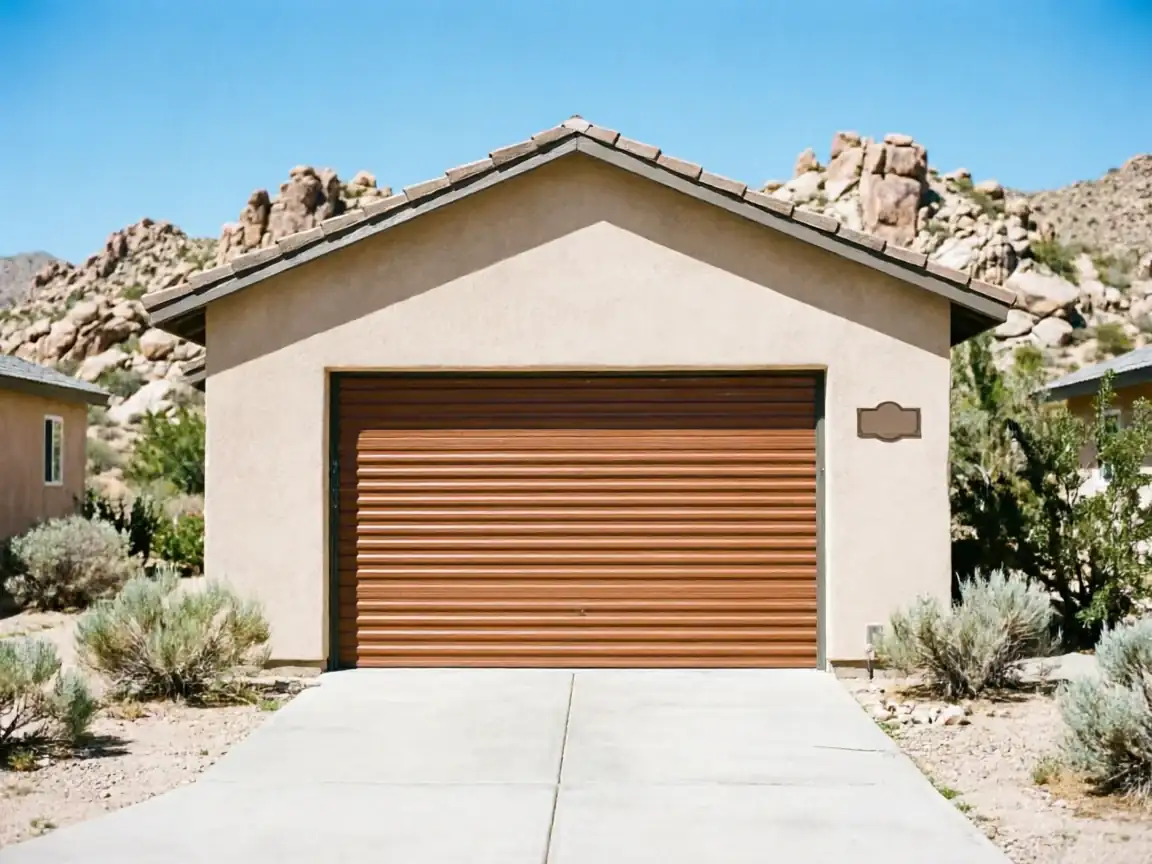
Palm Springs sits in a severe heat band
And that matters more for springs than most owners expect. Sustained high temperatures dry out the lubricant on the coil faster than a milder climate would, and metal that heats and cools through a wide daily swing fatigues sooner than metal that sits at a steady temperature. A spring rated for, say, 10,000 cycles doesn't always get there here - it gets there faster, then fails without much warning.
Garages that sit closed up all day through the hottest stretch of the year also cook the opener's electronics and the spring's finish at the same time
Which is part of why you'll see more than one component go out in the same season on an older door. None of this means the hardware is bad. It means the interval between spring checks should be shorter than the sticker on the spring suggests, especially on a door that's already past the midpoint of its service life.
The Situation
Across the roughly 42,010 households and 26,565 owner-occupied houses in this service area, most garages are holding original or first-replacement hardware from that 1968-1999 build window. With a median household income of $69,704, a lot of owners are weighing a spring swap against a full door replacement rather than defaulting to the bigger job, and that's a reasonable call to make once you know the rest of the door - track, rollers, opener - is sound.
One limit worth being upfront about: we don't carry parts for every oldest torsion unit off the truck. Some of the original 1970s hardware uses wire sizes and cone styles that aren't stocked anymore, and that can mean a short wait on a part rather than a same-visit fix. If you're further out, toward Thousand Palms or Sky Valley, a slow spring failure can go unnoticed longer between visual checks simply because the garage gets less daily attention than one closer in. Worth a look next time you're out there.