What to Look At First
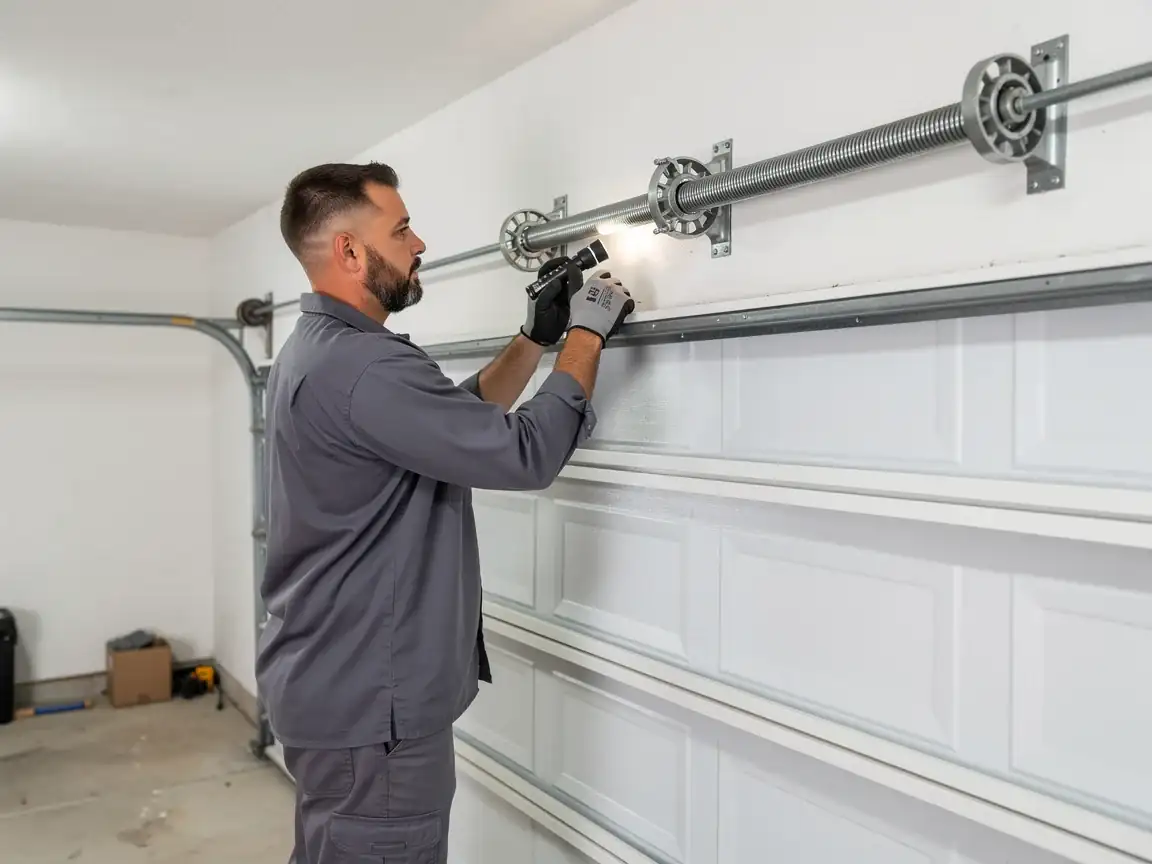
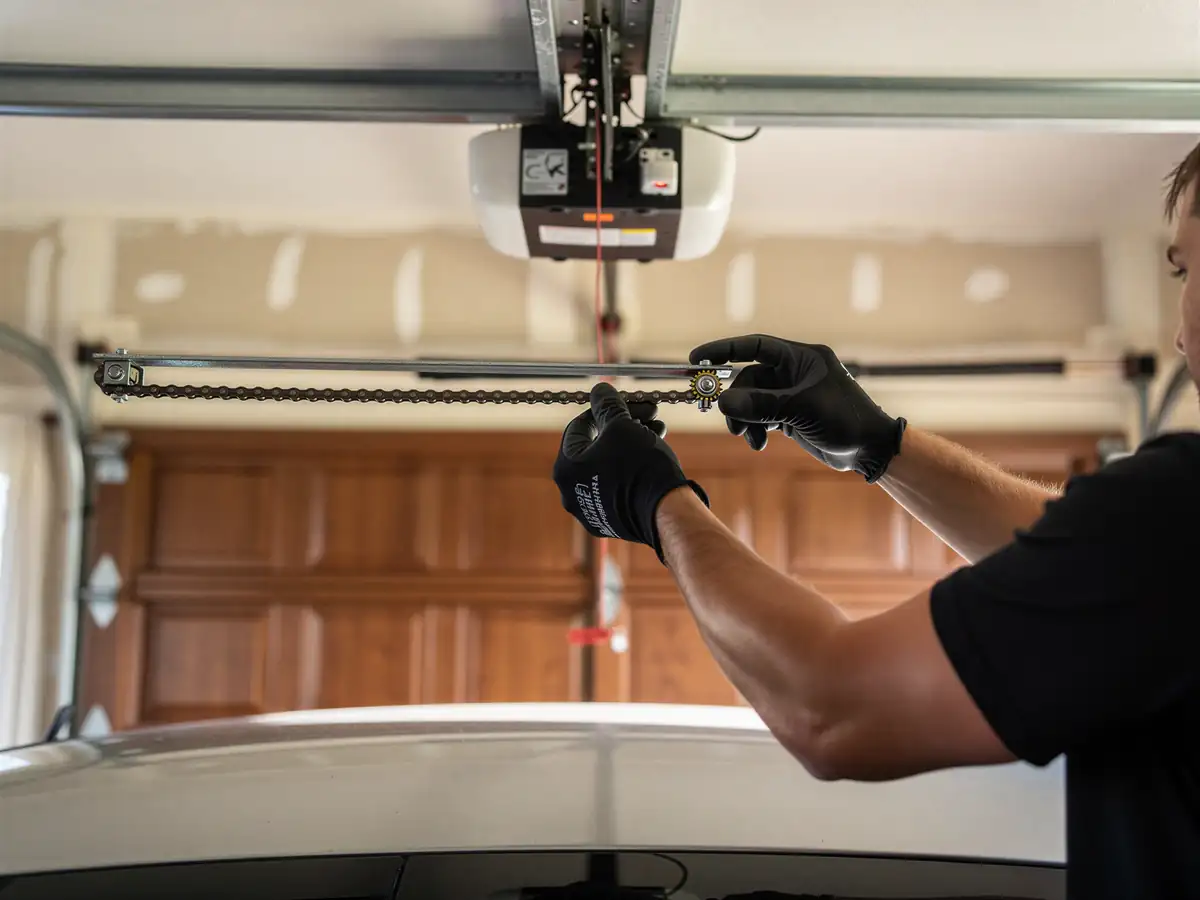
Most houses in this service area went up between 1968 and 1999, with the median landing around 1986. That matters because it tells you what's probably hanging over your car. A door from that era usually runs on a torsion spring rated for roughly 10,000 cycles, which sounds like a lot until you do the math on thirty-plus years of twice-a-day use. If you hear a sharp metallic pop followed by the door feeling heavier than it used to, that's the spring letting go, not the opener struggling.
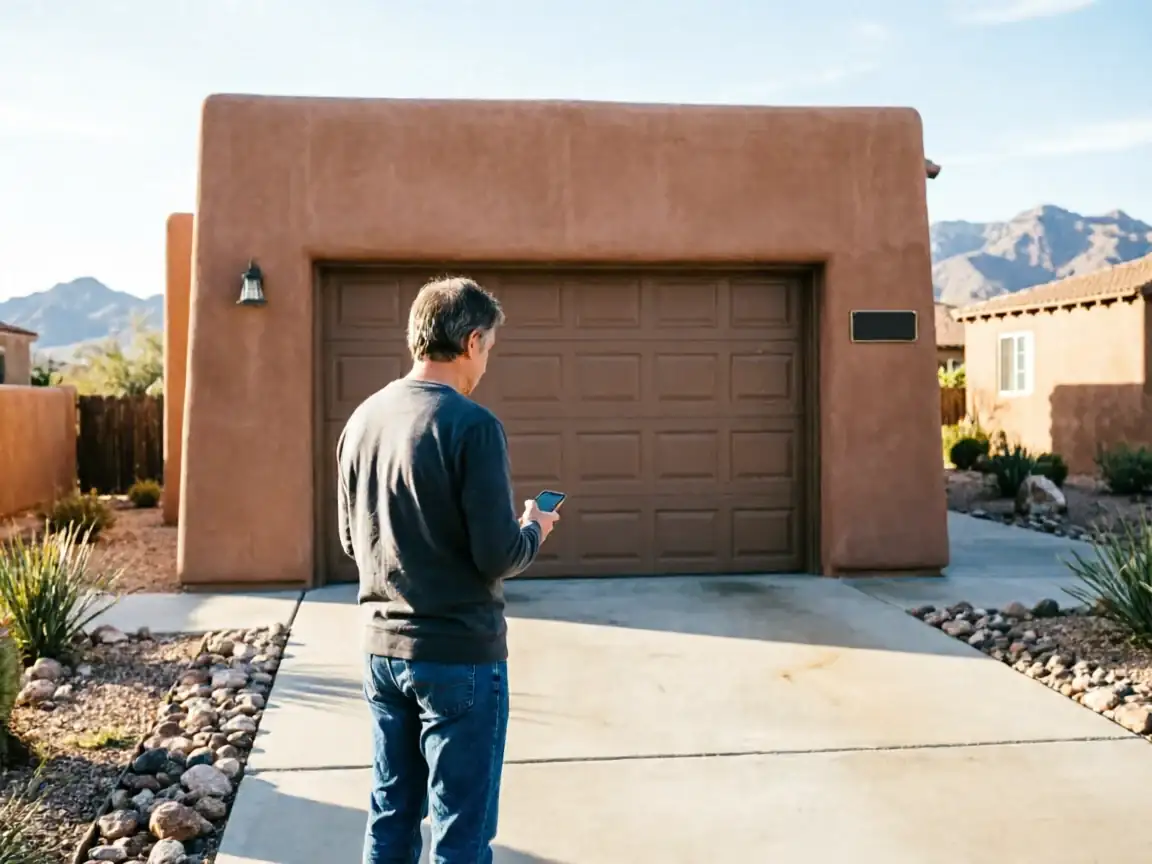
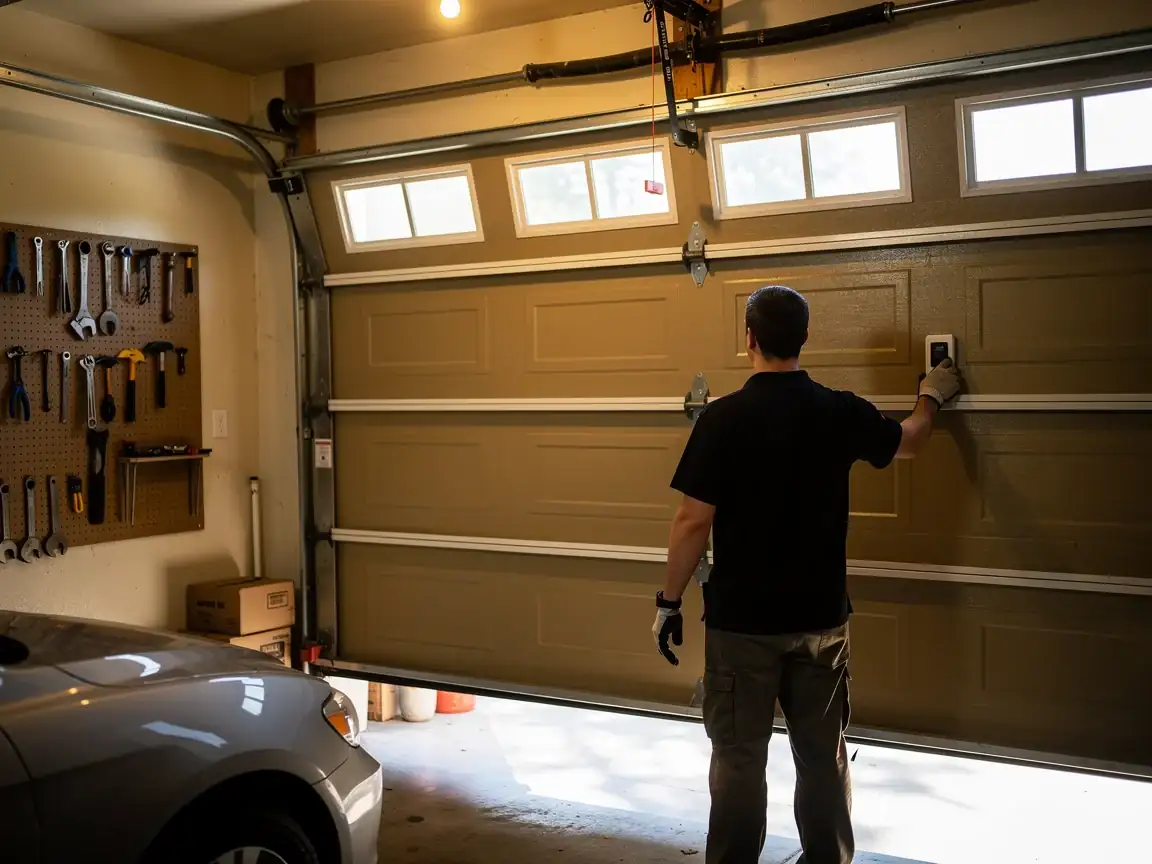
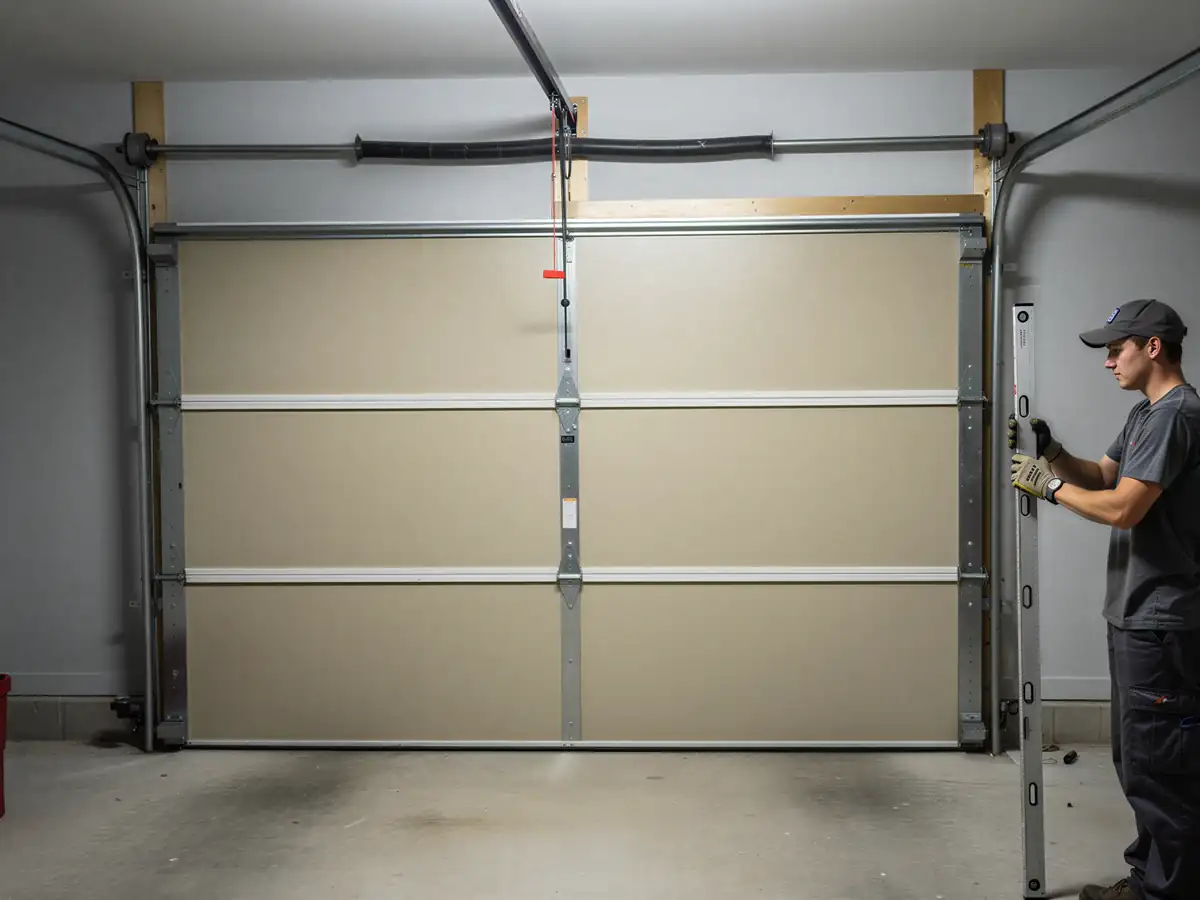
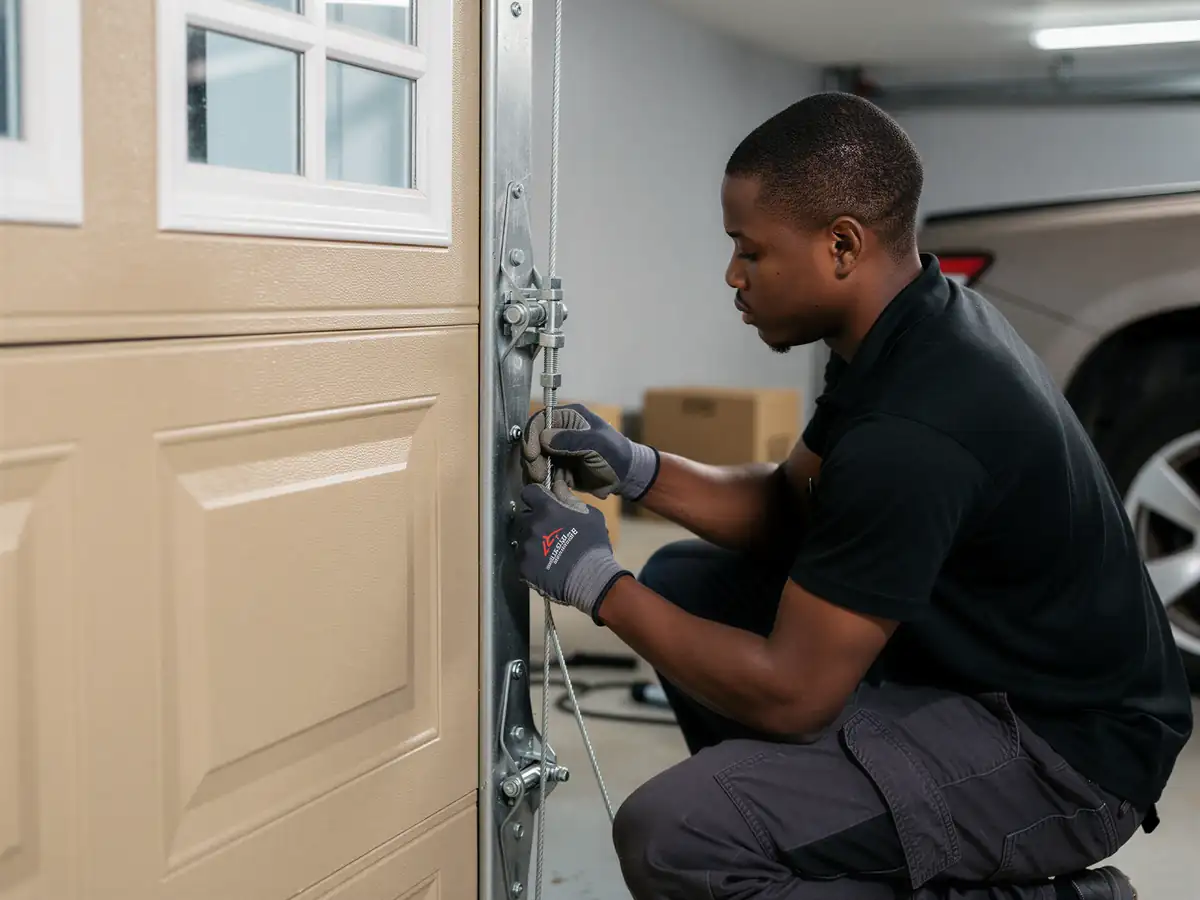
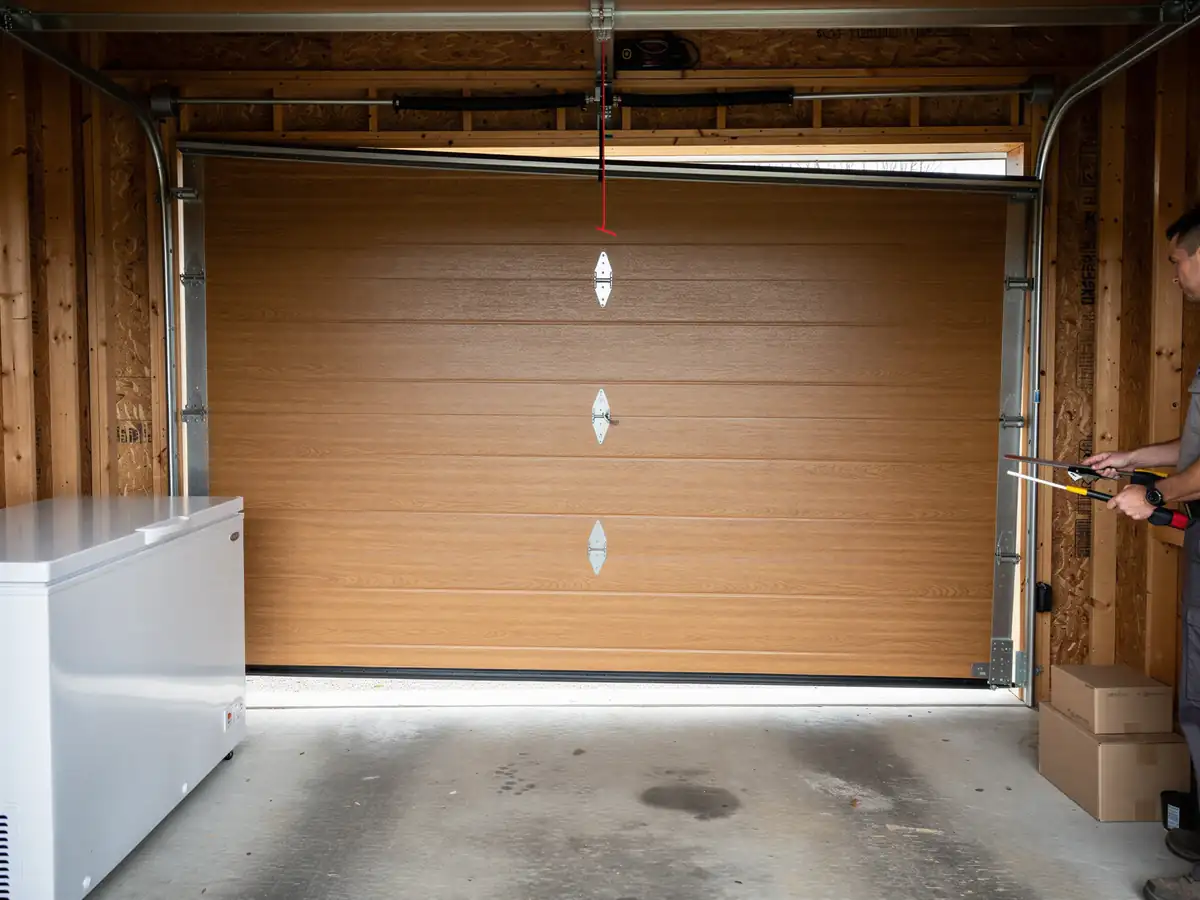
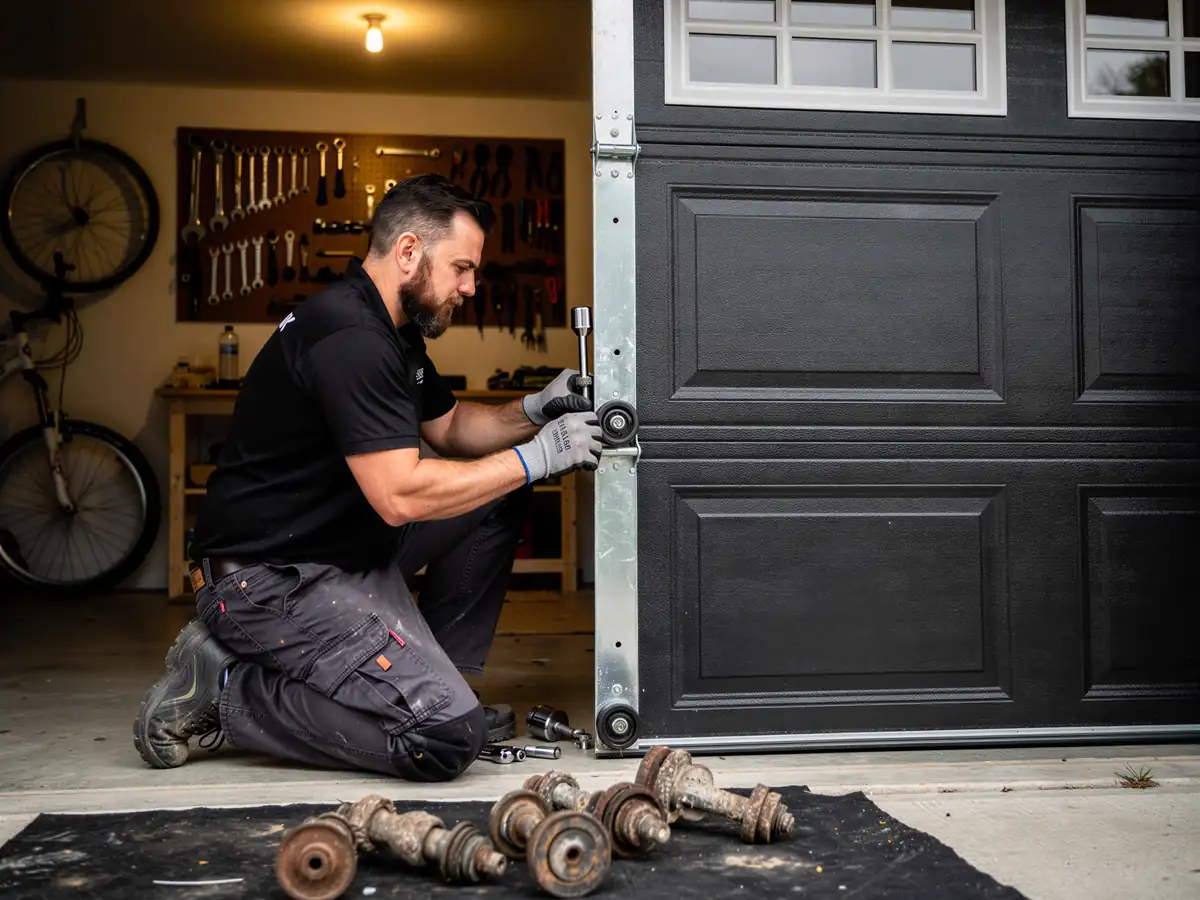
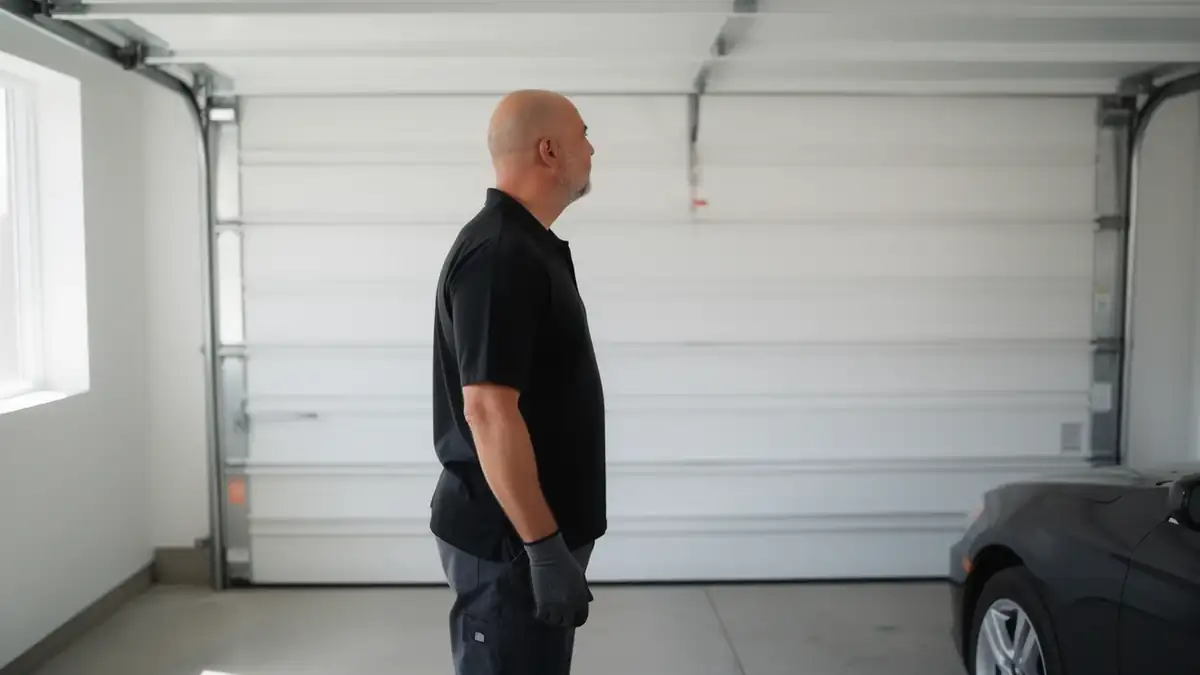
Before you touch anything, look at the track alignment and the cables on either side of the bottom bracket. A door that scrapes on one side as it travels usually has a bent track or a roller that's worn through its nylon sleeve, both common on doors installed across the 1980s and 90s stock that makes up most of the thirteen areas we work in. A rhythmic thunking once per rotation, timed to the door's travel, points at a flat spot on a roller or a bent section of track rather than the opener itself. Write down when the noise happens, not just what it sounds like. Timing tells you more than volume.
When It Stops Being a DIY Job
A torsion spring under tension can put someone in the hospital, and that's true no matter how handy you are. If the noise you're chasing is a loud bang followed by the door refusing to move, stop there. Don't unwind the spring, don't cut it, don't loosen the set screws on the winding cone. That's a wound-up piece of steel storing enough energy to break a wrist.
Cables are the same category. If a cable has jumped the drum or frayed, the door can drop unevenly and jam at an angle, and trying to force it back onto the track while the opener is still powered is how fingers get caught. We'll say plainly that a lot of the noise complaints we get called out for turn into a ten-minute lubrication job once we're there, and we'd rather tell you that over the phone than run a truck for it. But anything involving the spring, the cable, or a door that's come off one track and not the other is past the point where a tutorial video helps. Lead times on replacement torsion springs sized for the heavier insulated doors can run a few days if the size isn't one we carry on the truck, so a same-day fix isn't always realistic even once we've diagnosed it.
What Local Conditions Do
Heat here runs in the severe band
And that changes how a garage door ages compared to milder climates. Lithium grease on a torsion spring or on the roller stems dries out faster when the garage itself regularly sits well above 100 degrees for months at a time. A spring that would squeak quietly for another year somewhere cooler tends to go dry and start grinding here instead, and dry steel winding against dry steel is what that high, almost birdlike squeal on the way up actually is.
The heat also works on the door panel itself
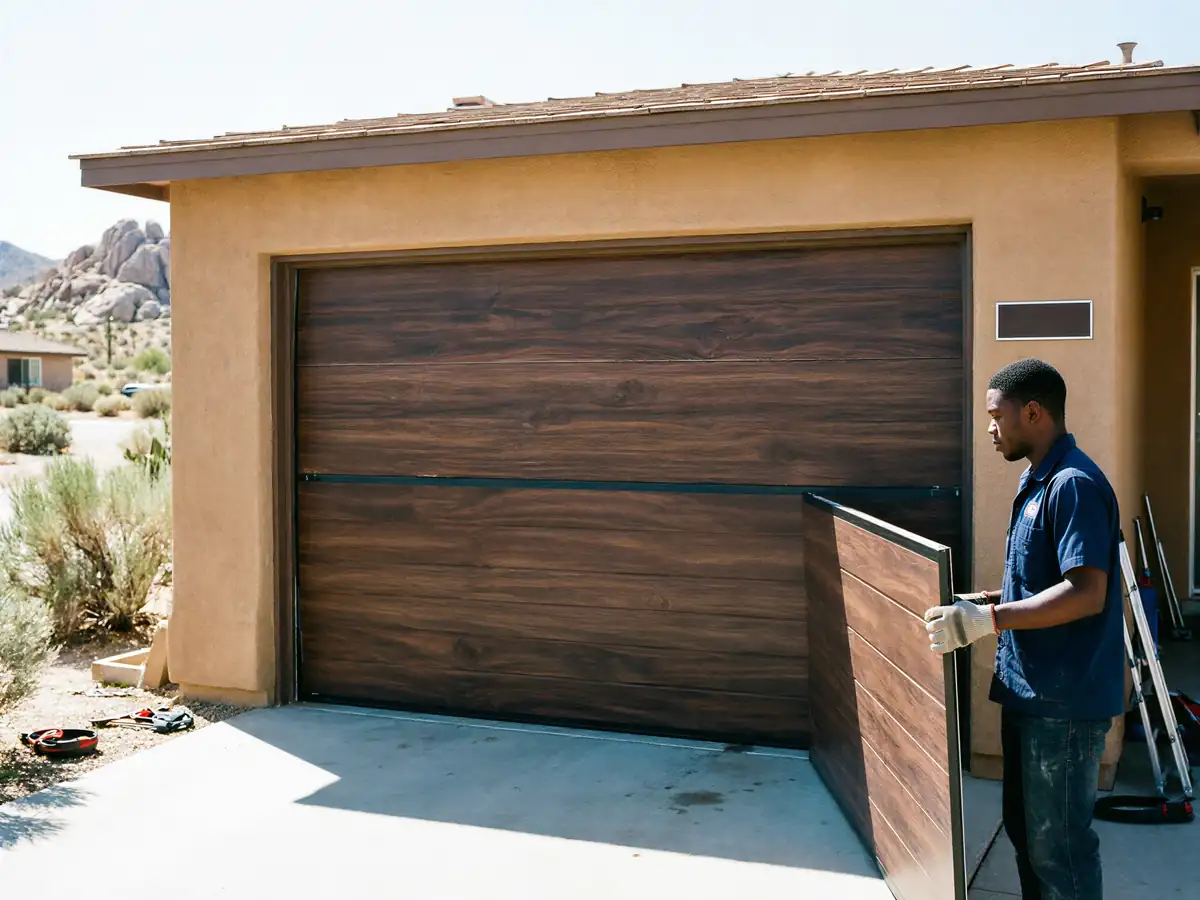
Especially on steel sectional doors facing south or west without much shade. Expansion and contraction loosen the hinge screws between panels over time, and a loose hinge shows up as a rattle that gets worse exactly at the point in the door's travel where that panel crosses the curve into the horizontal track. If your noise is worse in the afternoon than in the early morning, that's not your imagination. It's the metal itself moving a few thousandths of an inch as it heats up.
The Situation
We cover a service area with 42,010 households and 26,565 owner-occupied houses, and a large share of those were built in the window between 1968 and 1999 that defines the hardware we see most. Median household income here sits at $69,704, which is worth mentioning because it shapes a real decision point: on a door built before 1999, repairing a worn spring or roller set is usually the right call, but once the track itself is bent or the panels have delaminated from decades of heat, replacement costs less over time than chasing repairs on an old door.
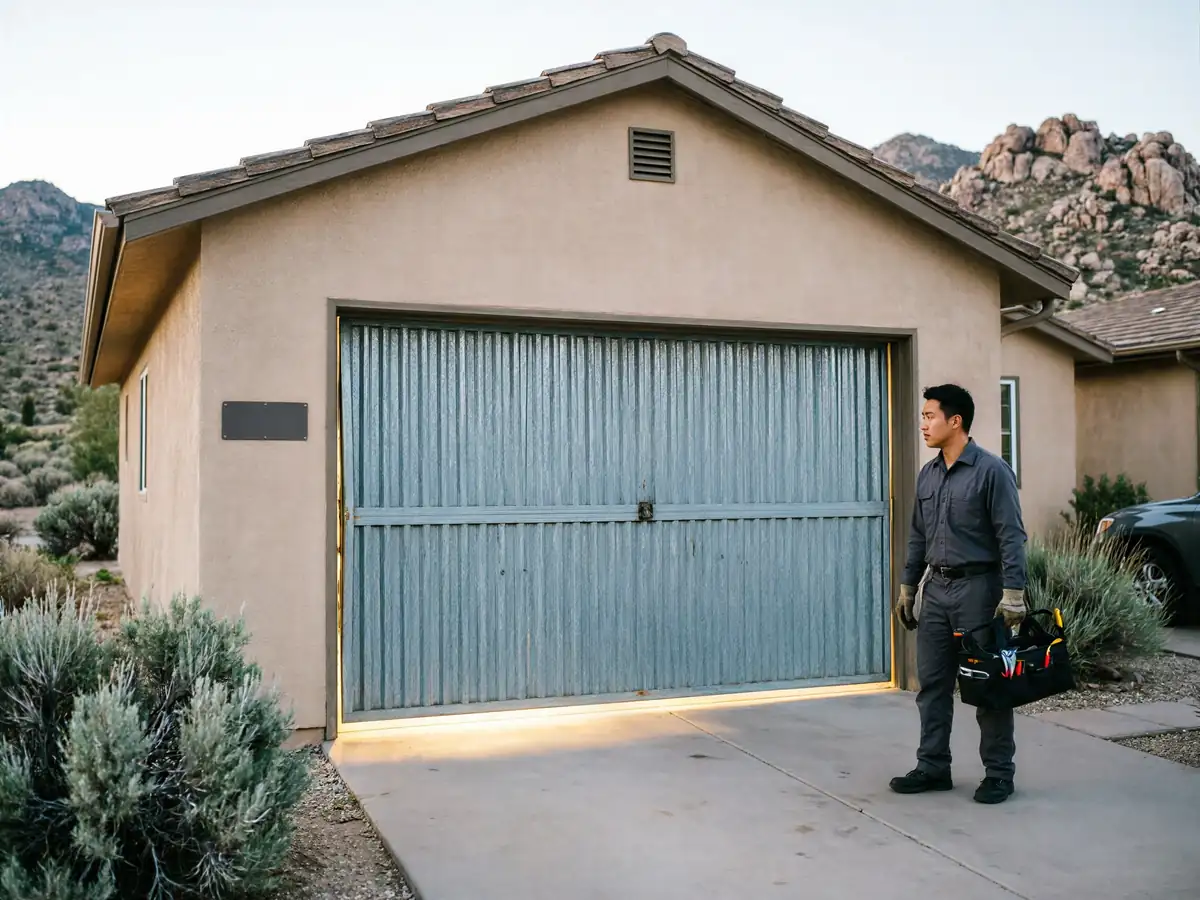
We run calls out toward Rancho Mirage and Garnet, both under 10 miles, and out past Thousand Palms and Desert Hot Springs around 11 miles, as well as toward Idyllwild-Pine Cove and Sky Valley further out. The farther calls take longer to reach, and we won't pretend otherwise. If your door is making noise and you're closer in, that's generally a same-day visit; if you're out past the 15-mile mark toward Bermuda Dunes or Cabazon, plan on scheduling rather than same-day.