Why This Fails Locally
Most houses across this service area went up between 1968 and 1999, with the median landing around 1986, and the 13 named communities we cover share that same build window. That era used steel rollers and early nylon rollers with metal stems, neither of which was built for the kind of sustained heat this valley sees. Our climate band is rated severe heat, and that matters for rollers specifically: the stem lubricant dries out faster, the nylon wheel itself can go brittle and crack at the edges, and steel rollers lose their galvanizing and start to pit. A door that rolls rough in July usually rolled fine in January - the heat is doing the work, not age alone. On a track that's seen 20-plus summers like this, you'll often find three or four rollers worn down to the bearing with the others close behind. This isn't a one-off defect, it's what happens to this housing stock in this climate, which is why roller wear is one of the most common calls we get across the whole service area, not just in one neighborhood.
Can You Do This Yourself
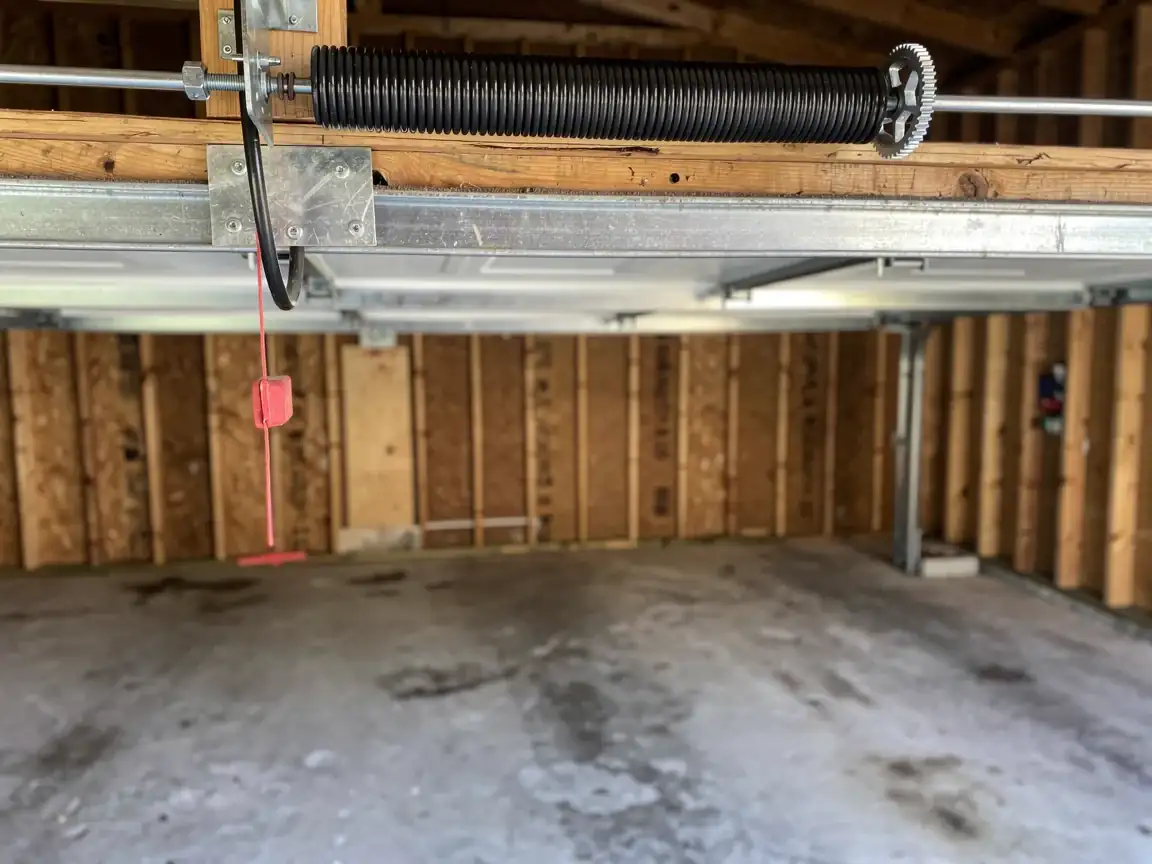
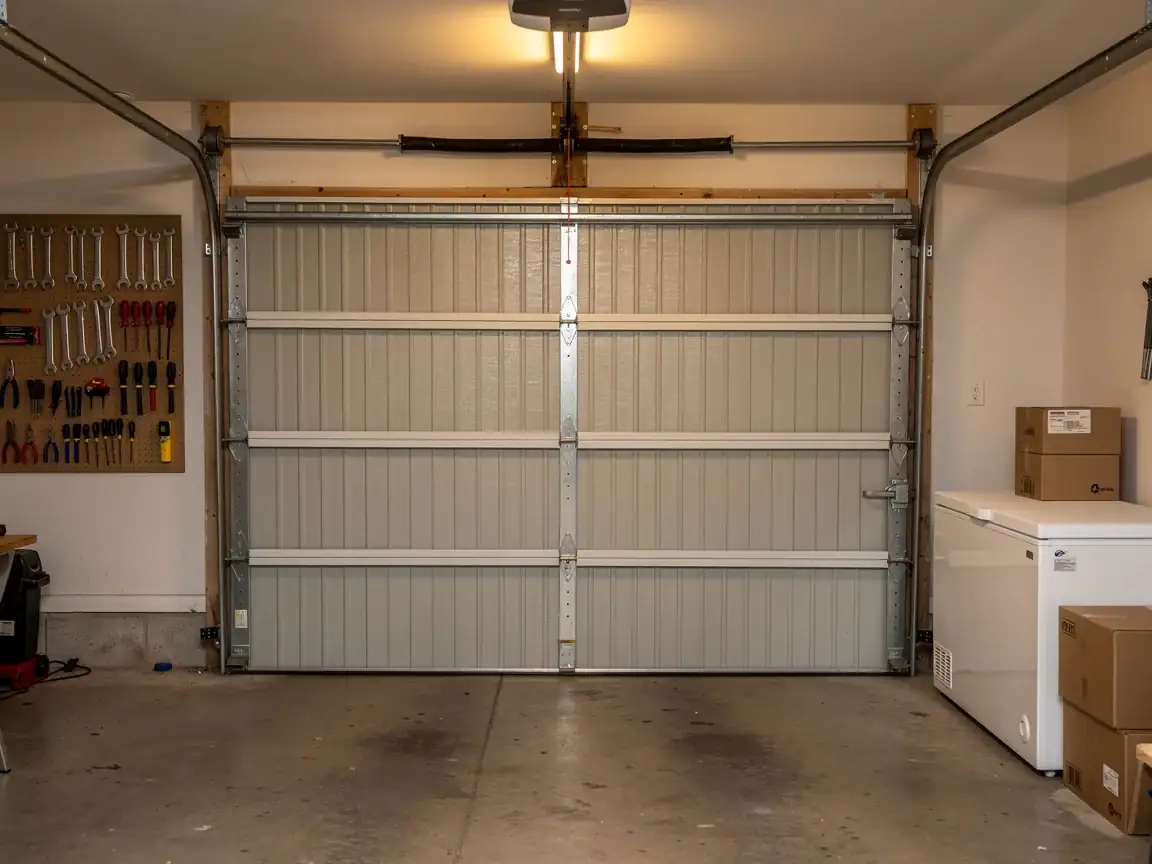
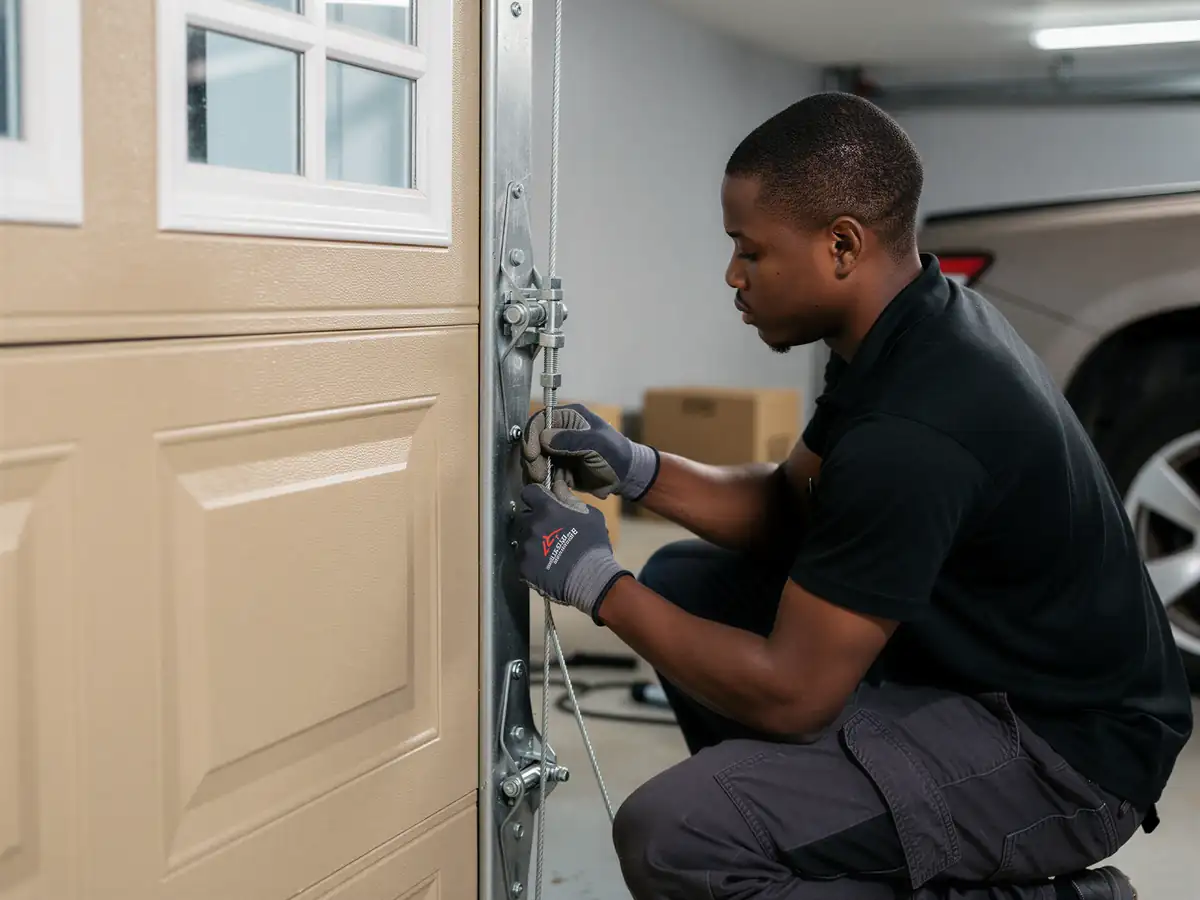
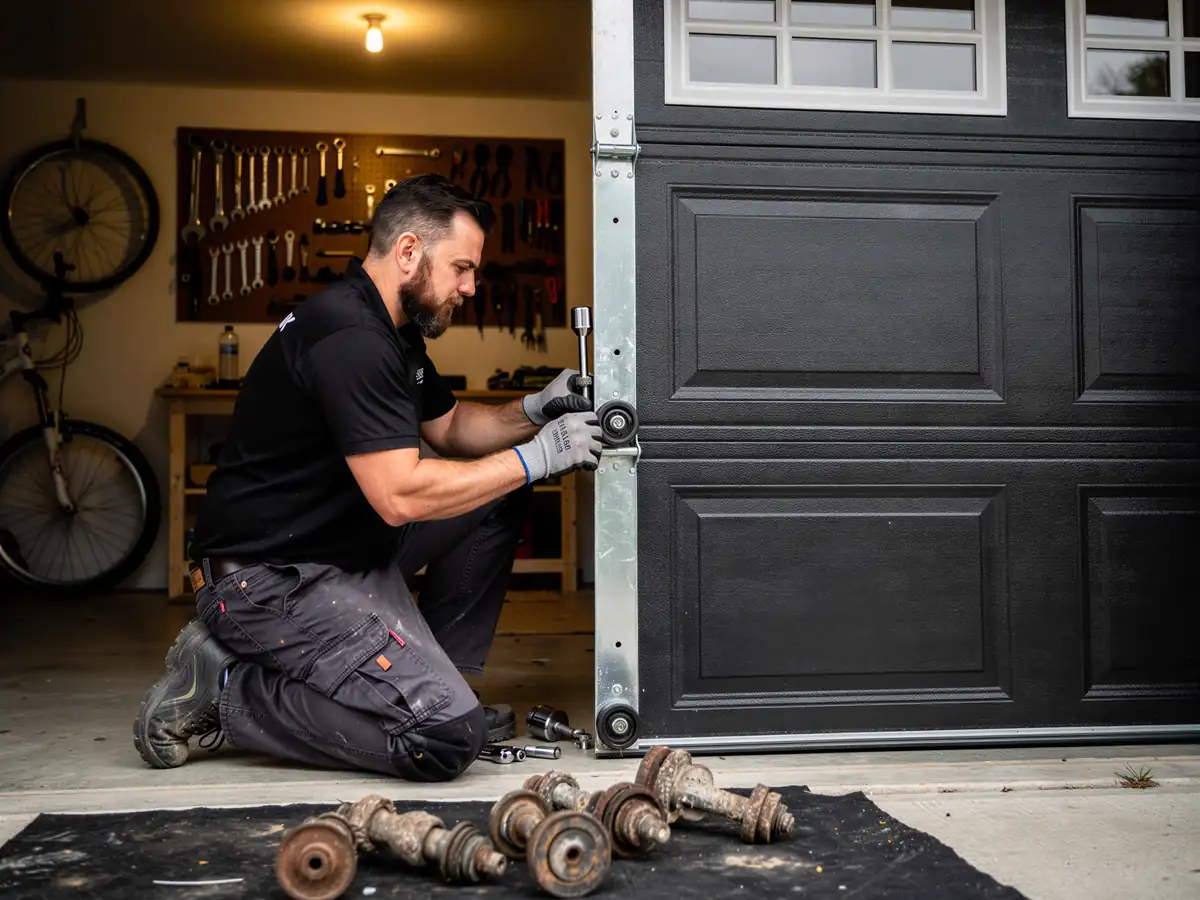
Replacing a roller on the bottom panel, away from the cable and spring, is a reasonable DIY job if you're comfortable with a ladder and a socket wrench - pull the hinge, slide the old roller out, slide the new one in, bolt it back. Where people get hurt is pulling a roller near the top bracket or on a panel still under spring tension, because the track bends slightly to free the roller and a loaded door can shift fast. If more than two or three rollers are worn, or if the door is binding and jumping the track, that's usually a sign the track itself is bent or out of alignment, and that's not a bolt-swap job anymore. Nylon rollers with sealed bearings cost more than steel but run quieter and don't need the periodic oiling steel rollers do - worth knowing before you buy a box of the wrong kind at the hardware store.
What You Are Seeing
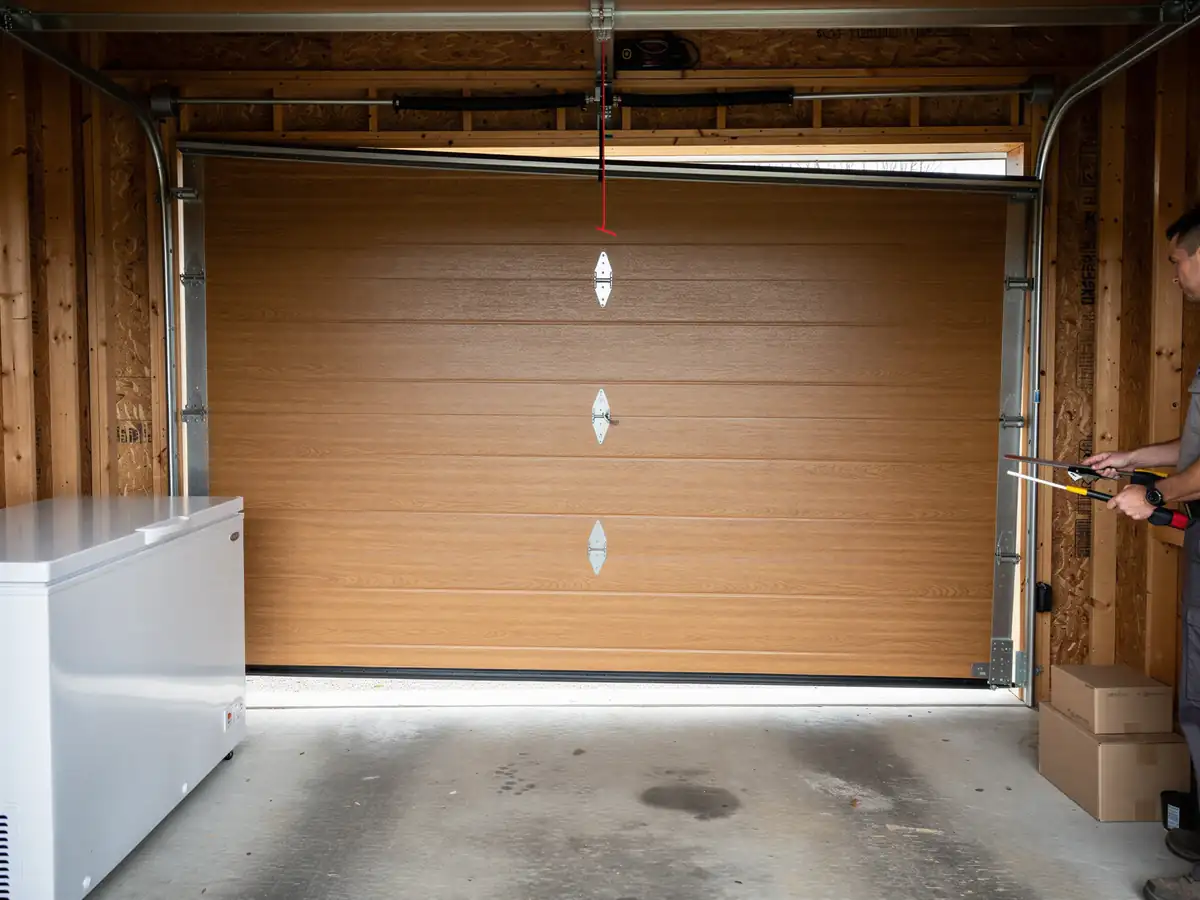
The classic sign is a door that's gotten loud - a grinding or clicking sound as it opens or closes that wasn't there a year ago. You might also see the door shudder or hesitate at certain points on the track, or notice it's started to lean slightly to one side as it moves. Flat spots on the roller wheel itself, visible if you look closely at the track, mean the roller has stopped turning and is dragging instead of rolling. None of this is an emergency the way a snapped spring is, but it gets worse on its own, and a dragging roller puts extra load on the opener motor and the cables, which is how a $20 part problem turns into a bigger bill if it sits too long.