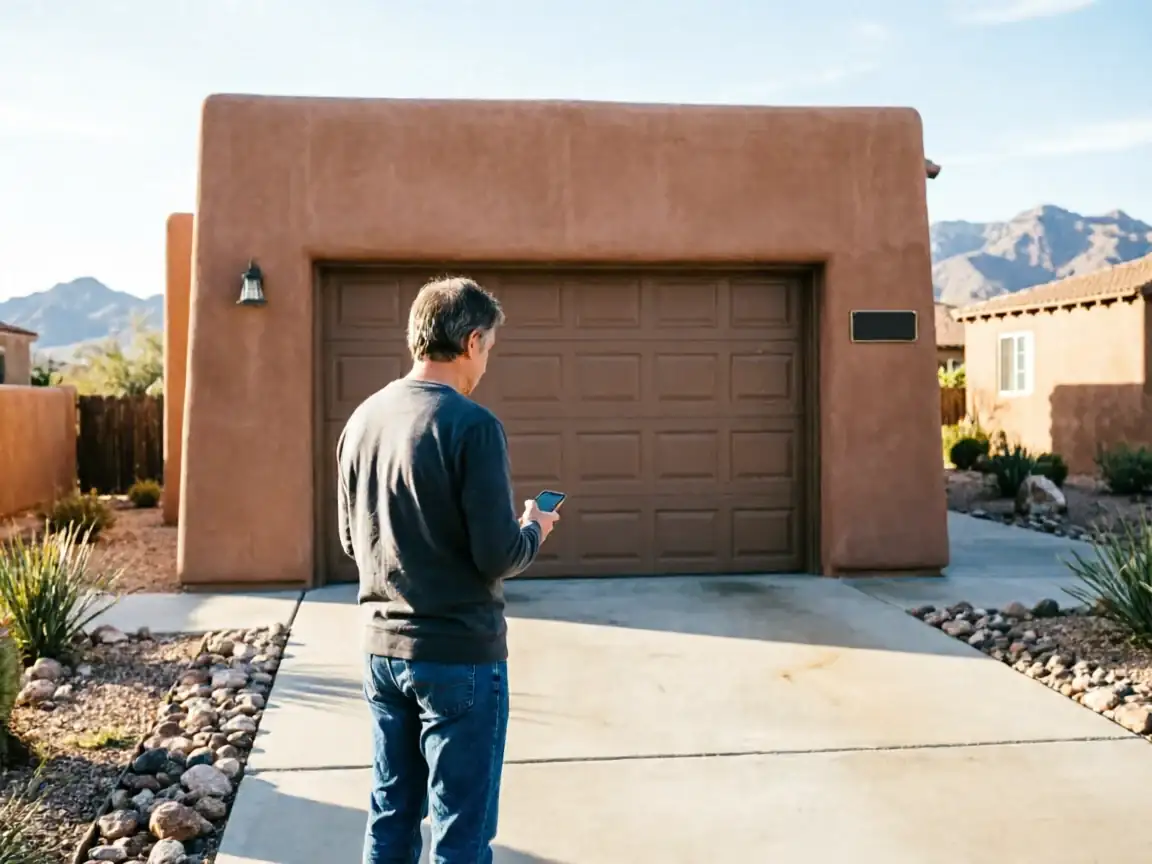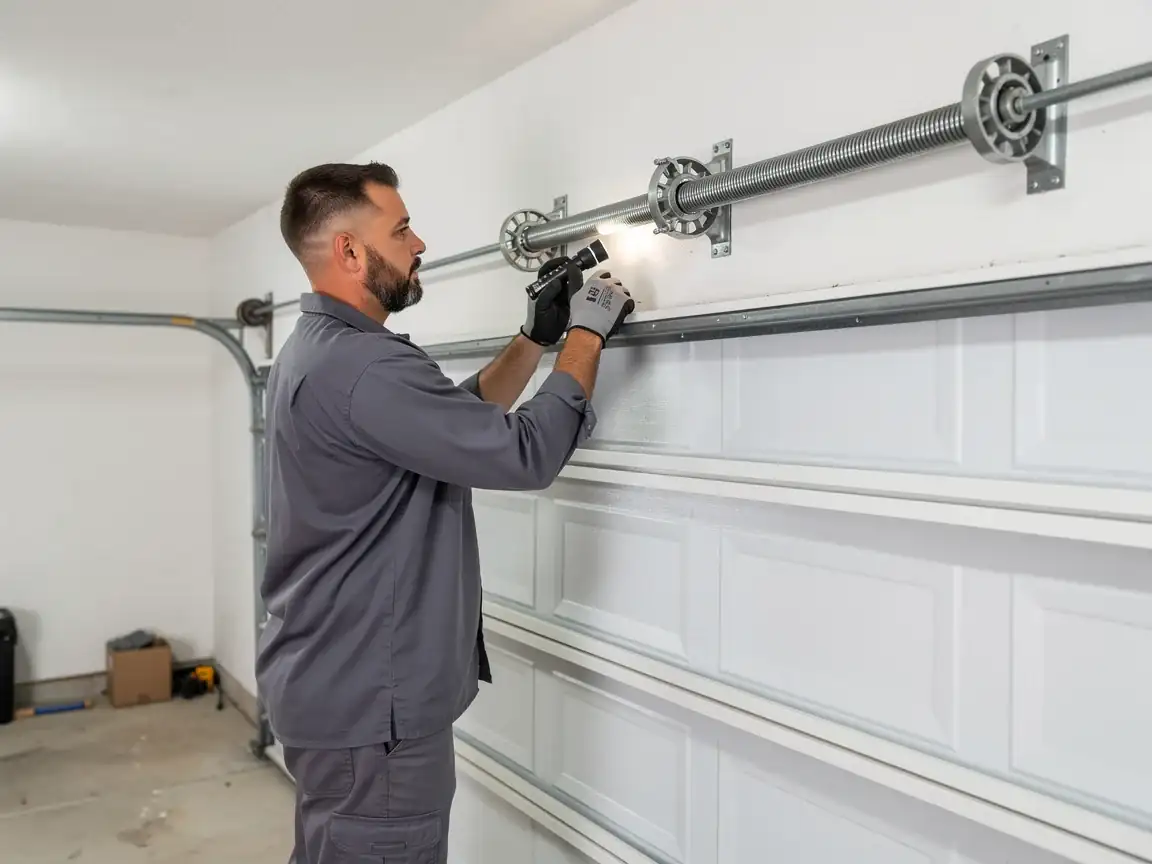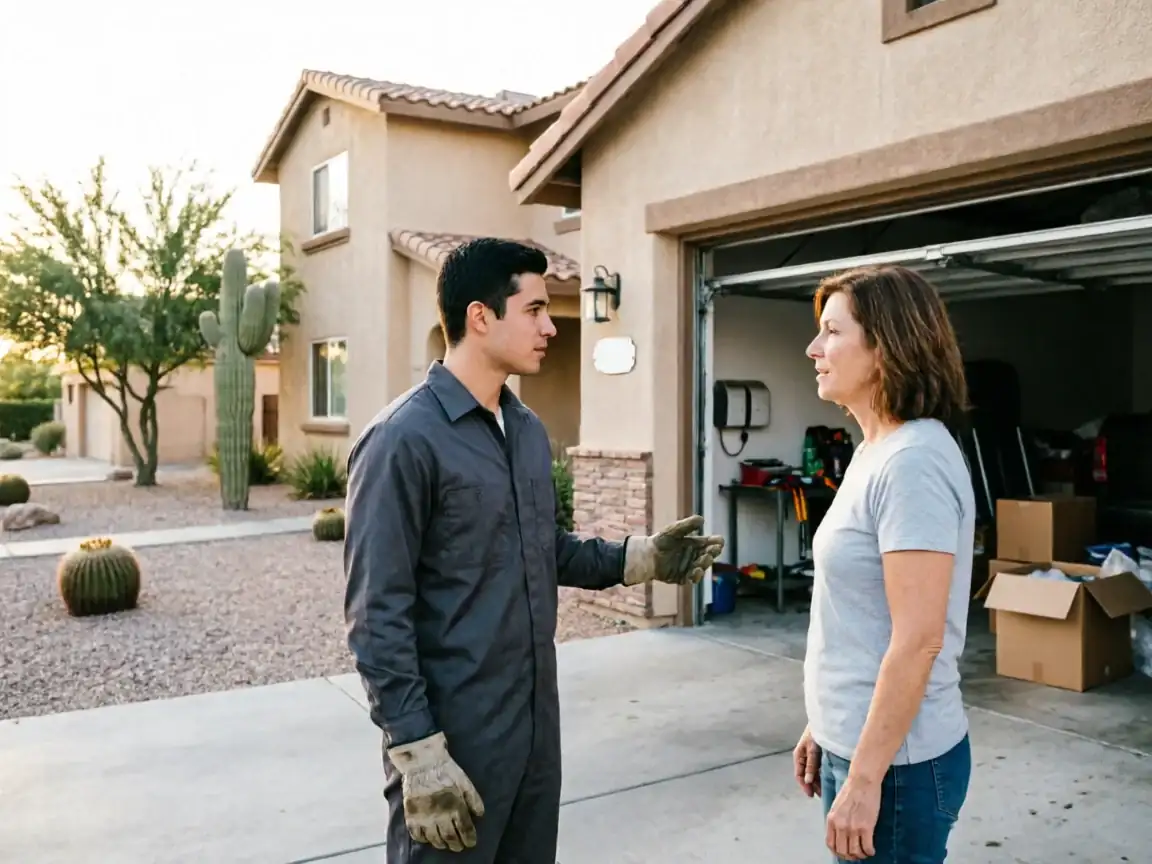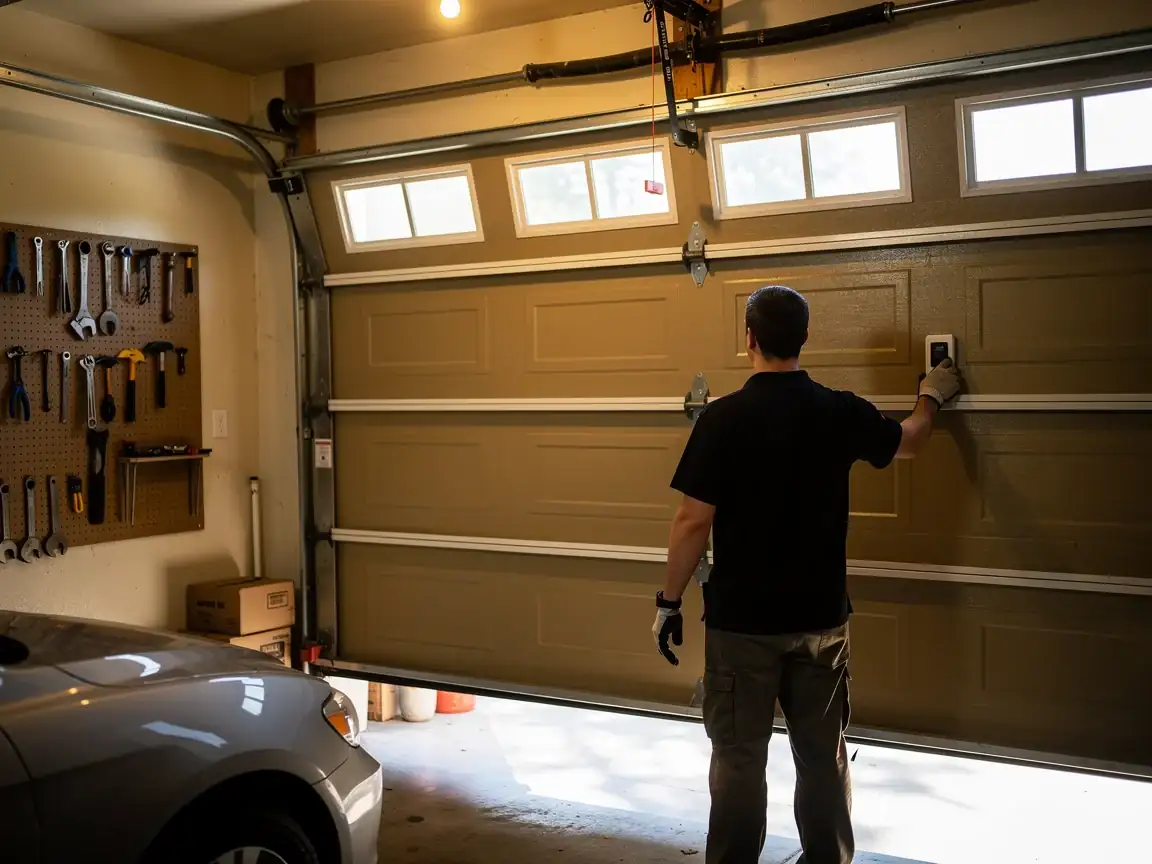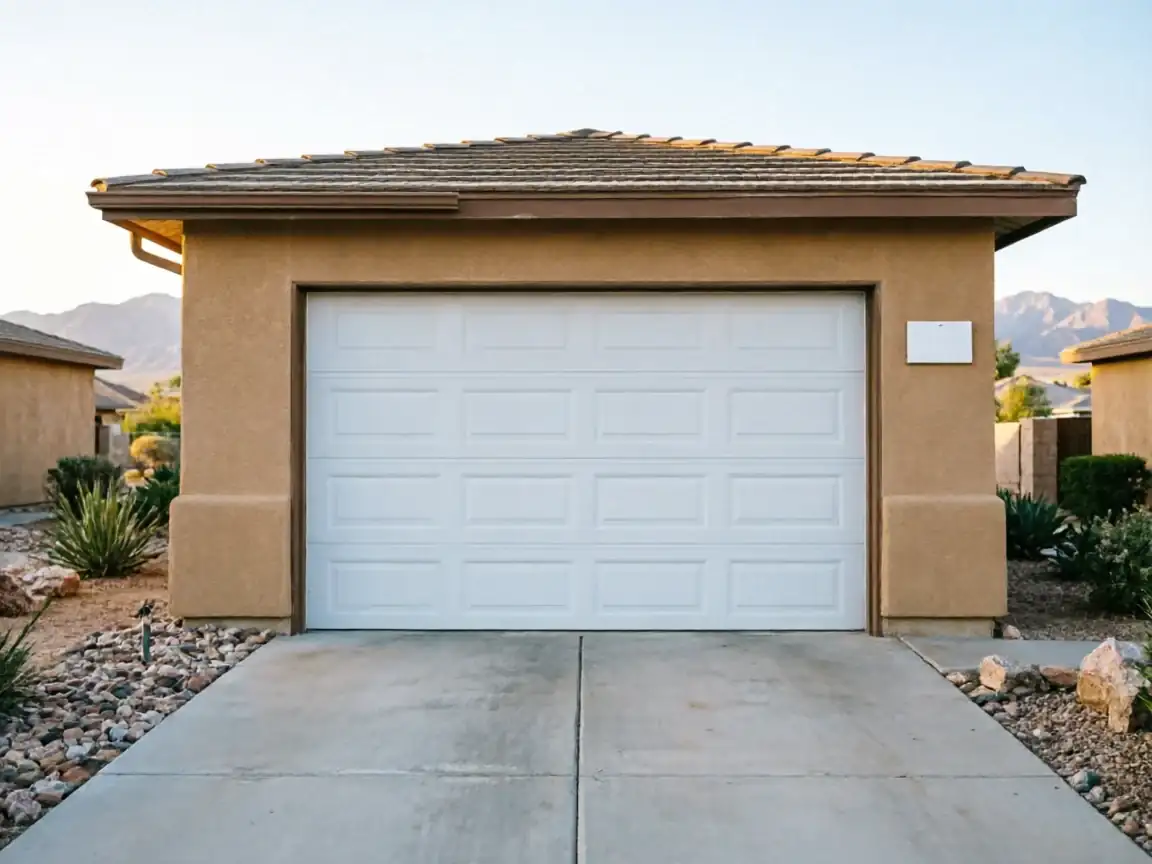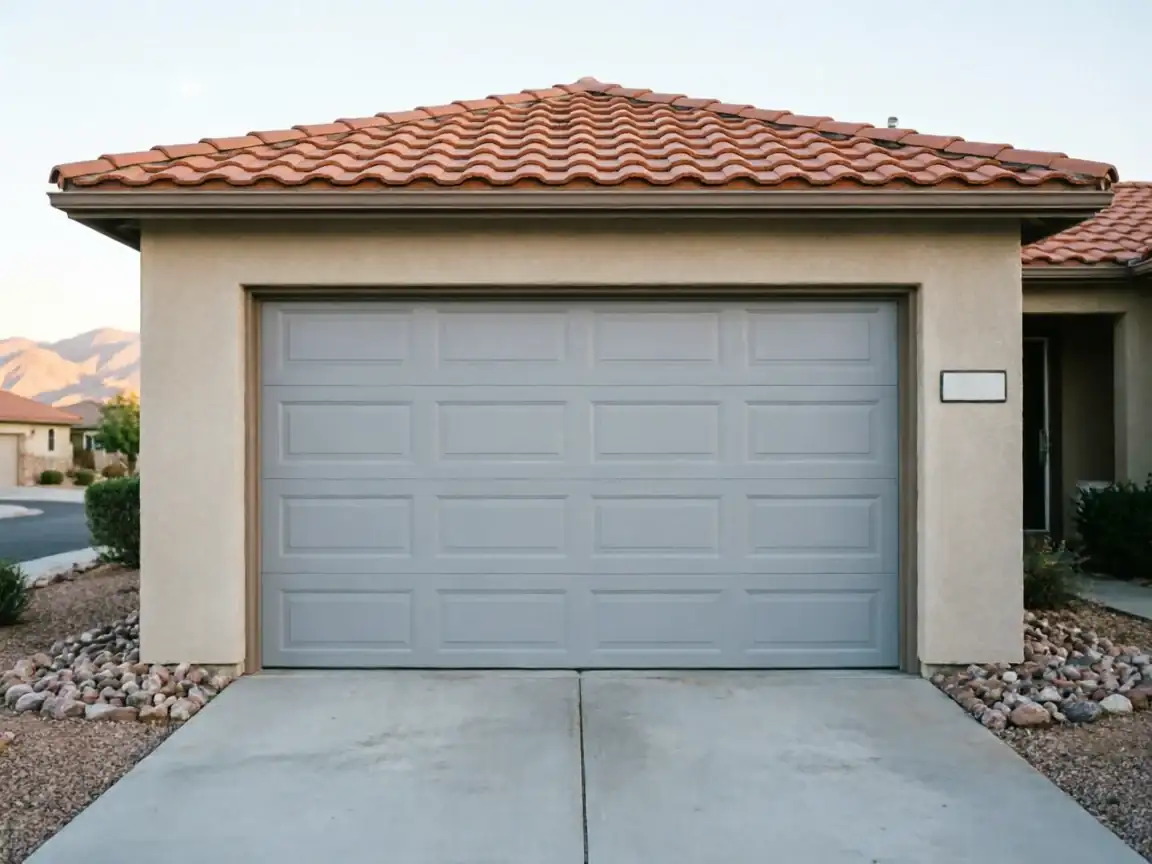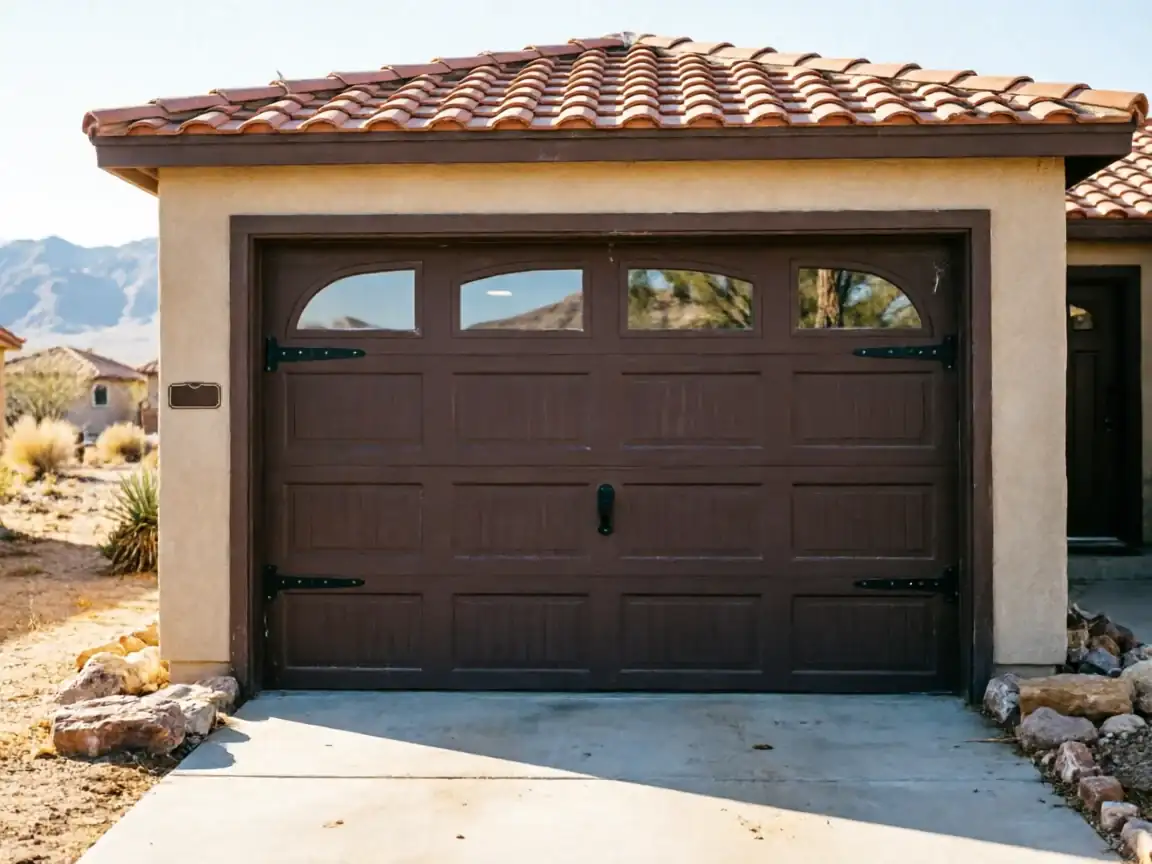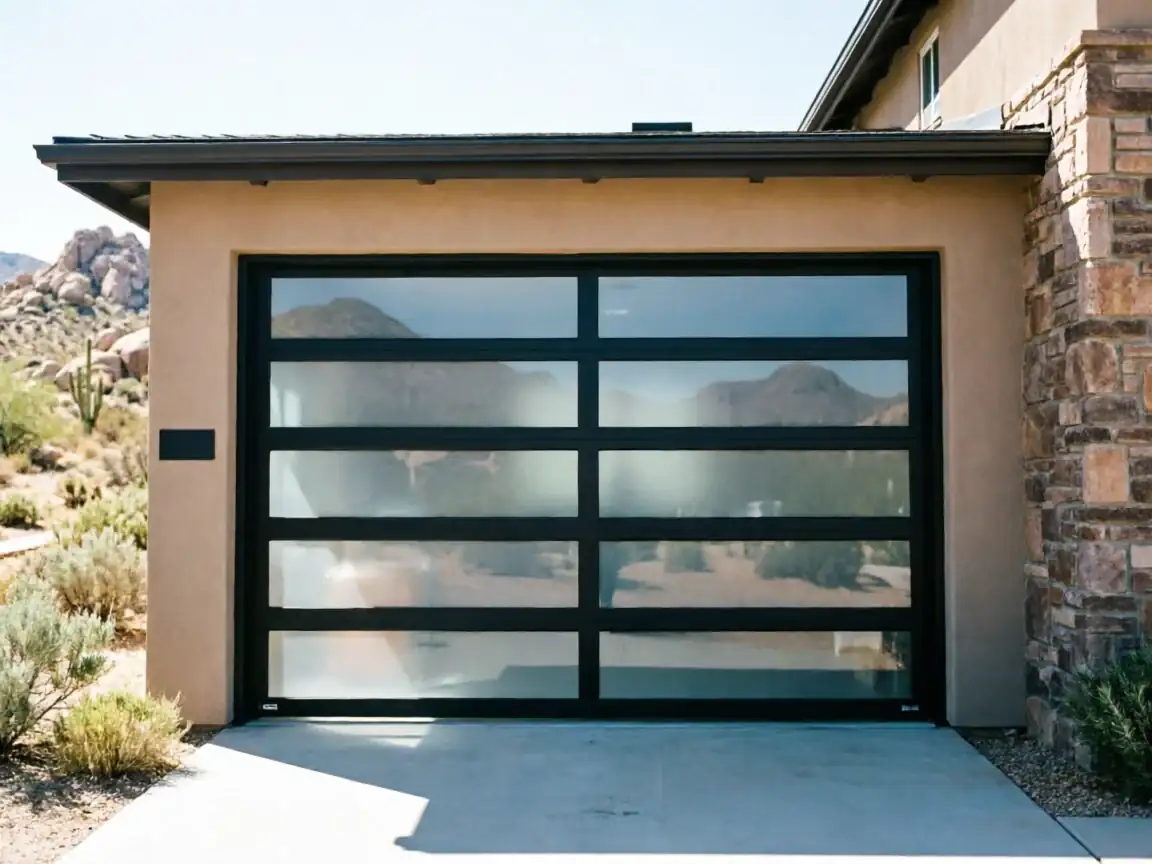
What You Are Seeing
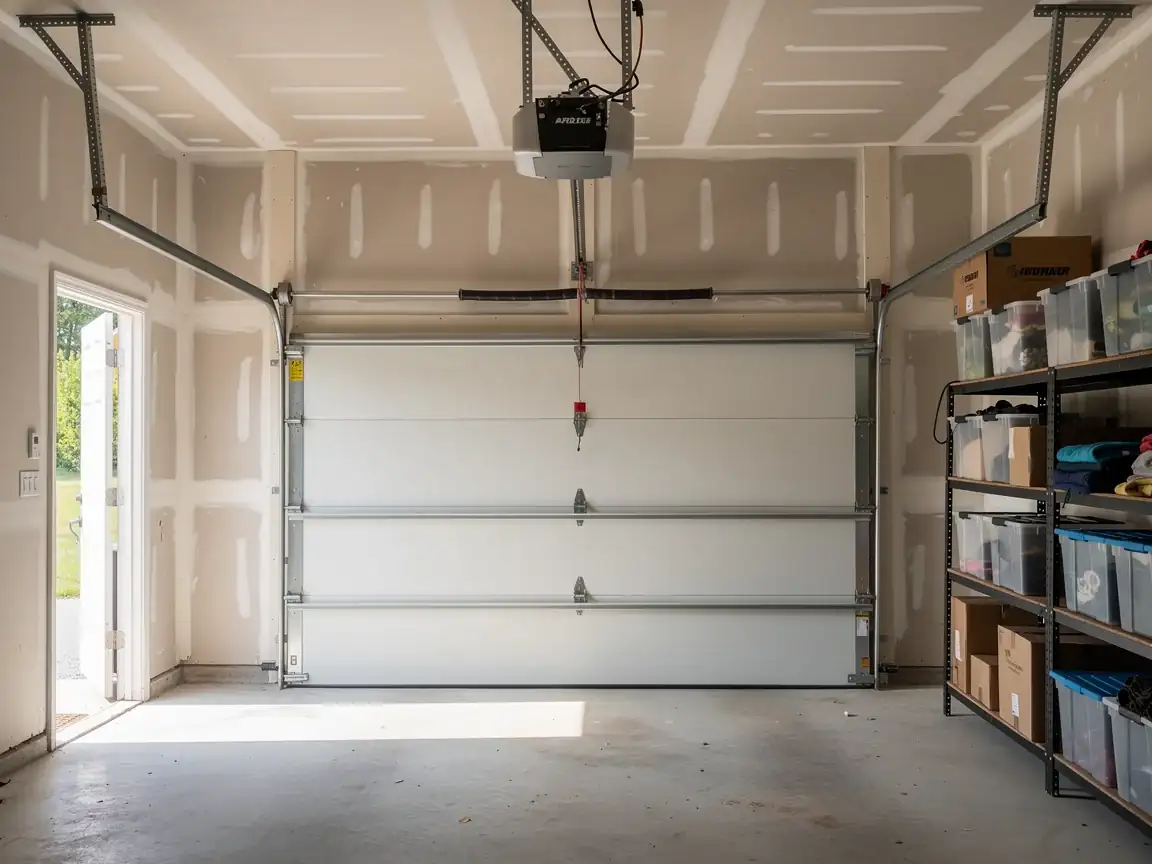
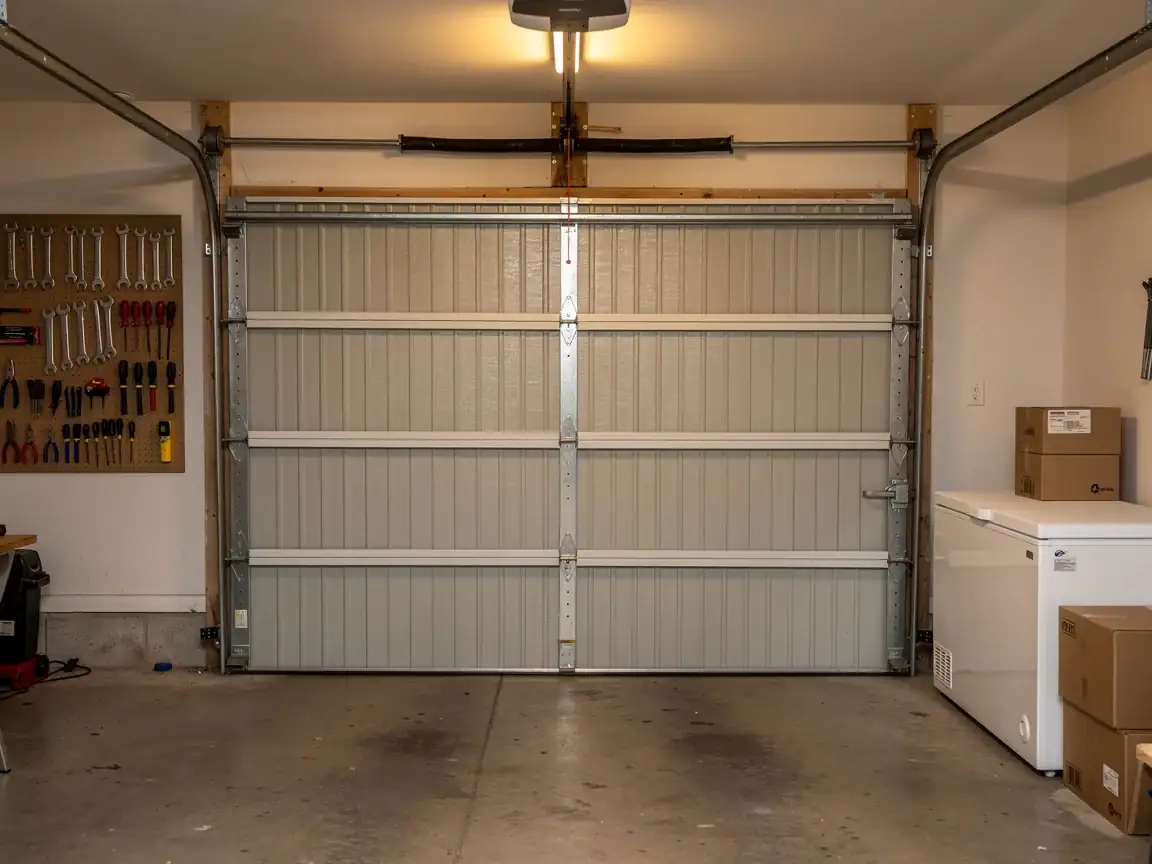
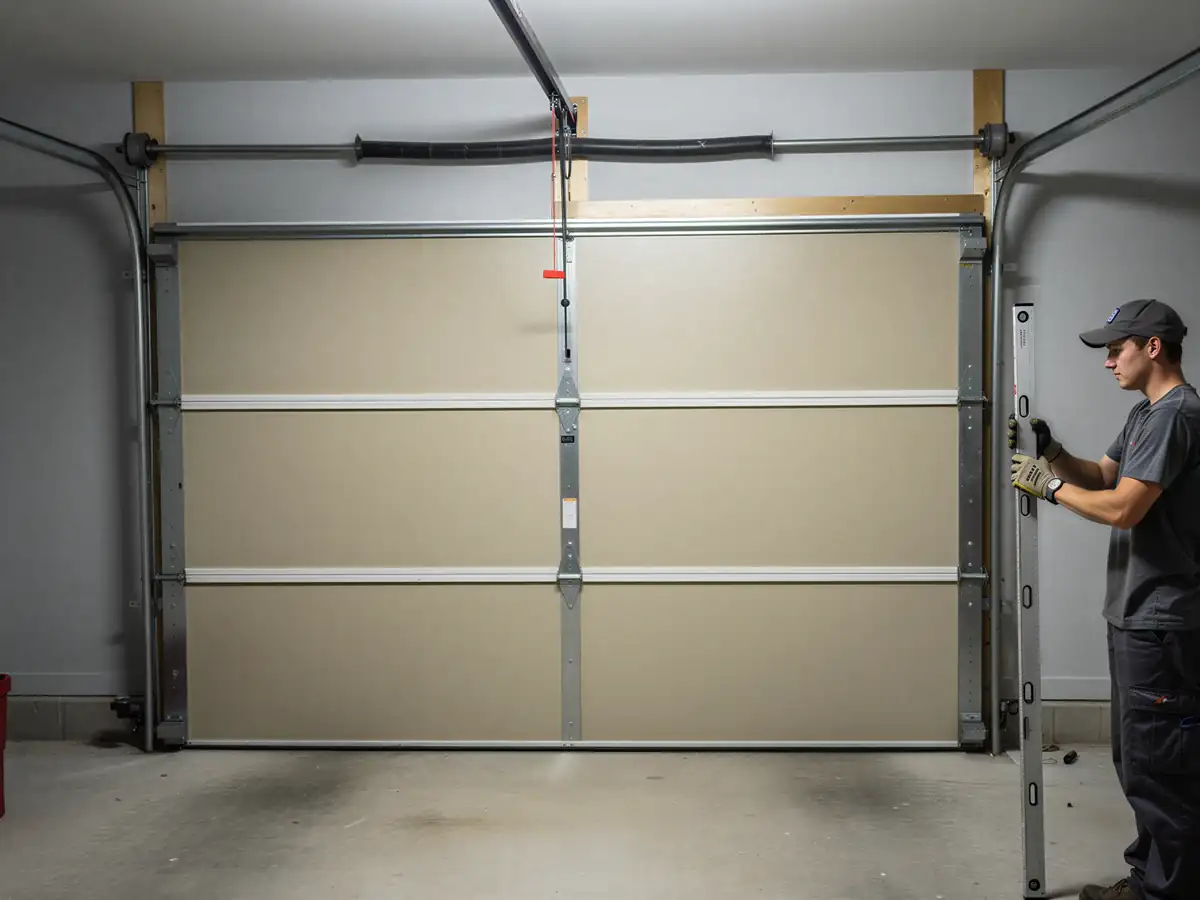
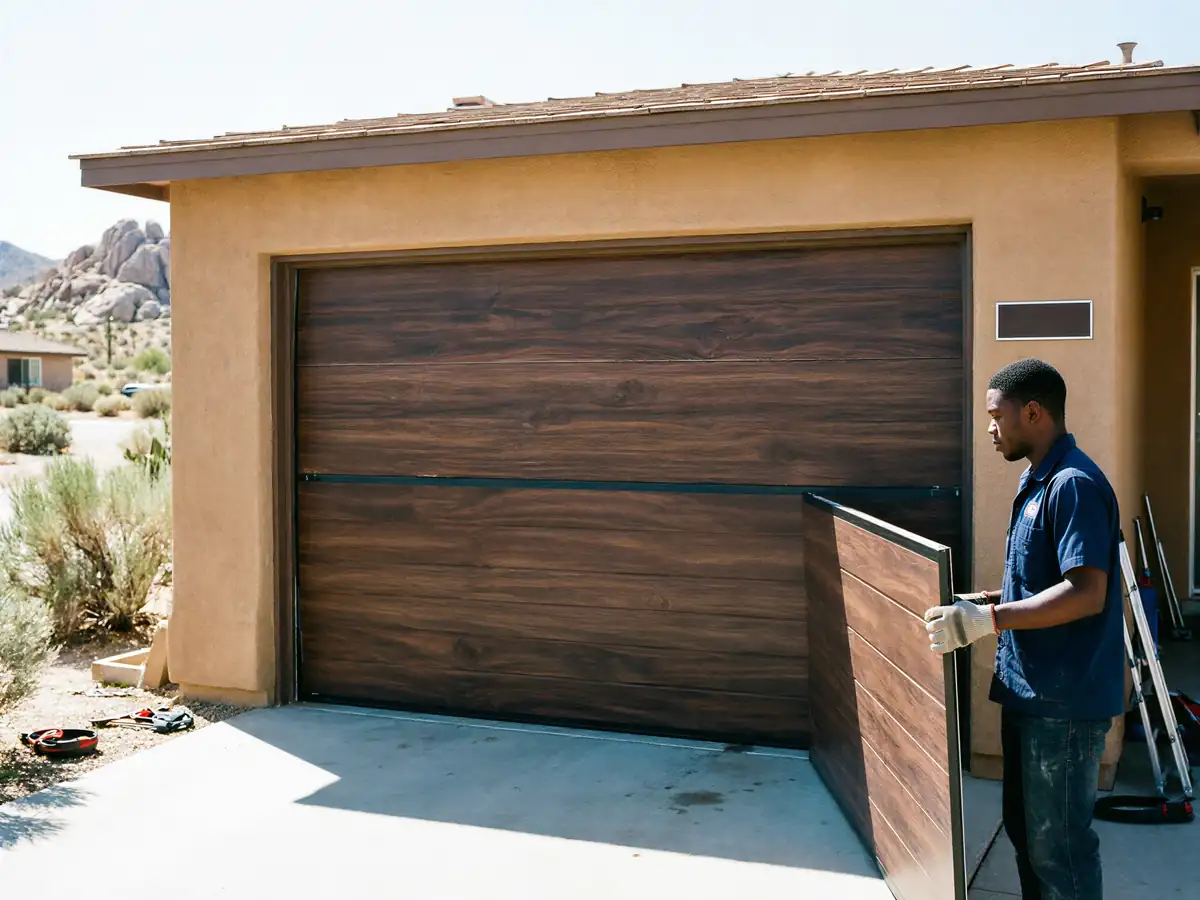
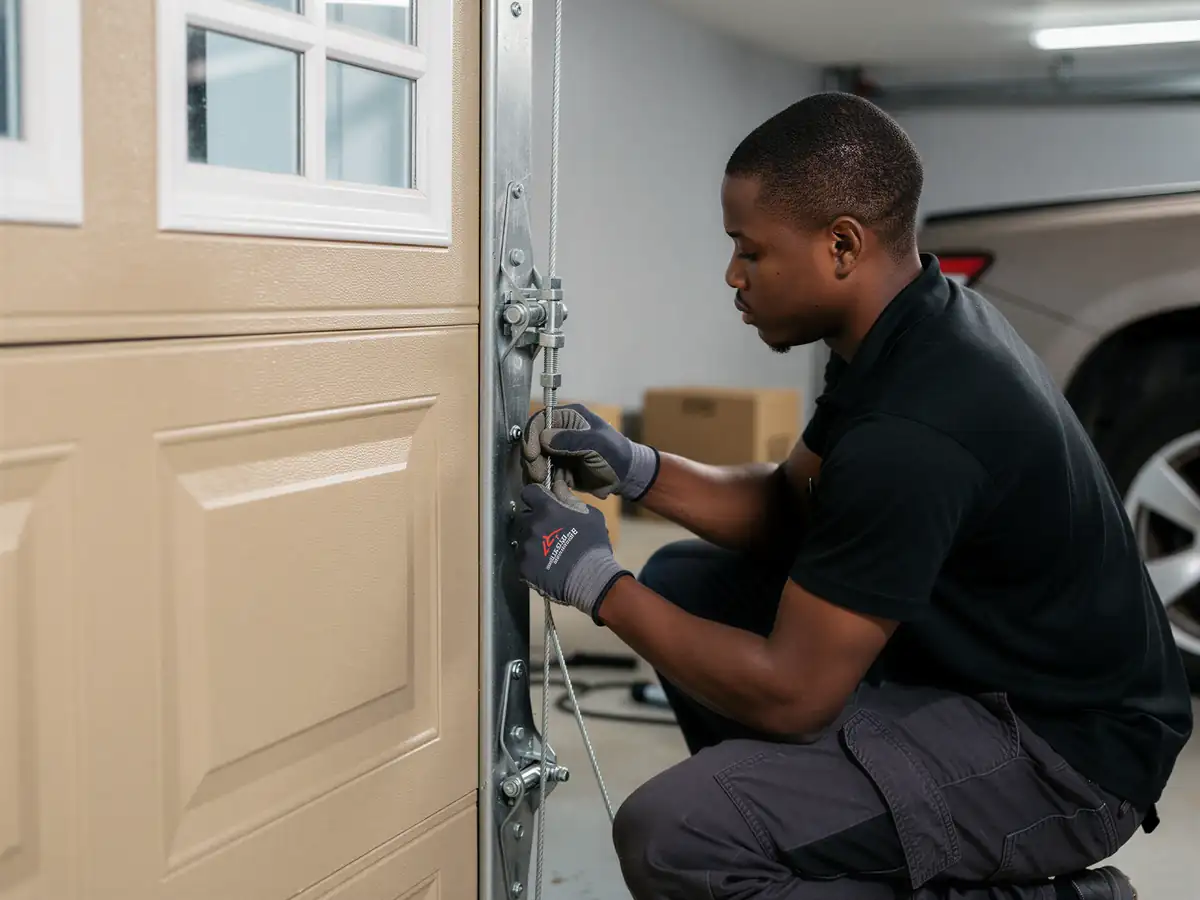
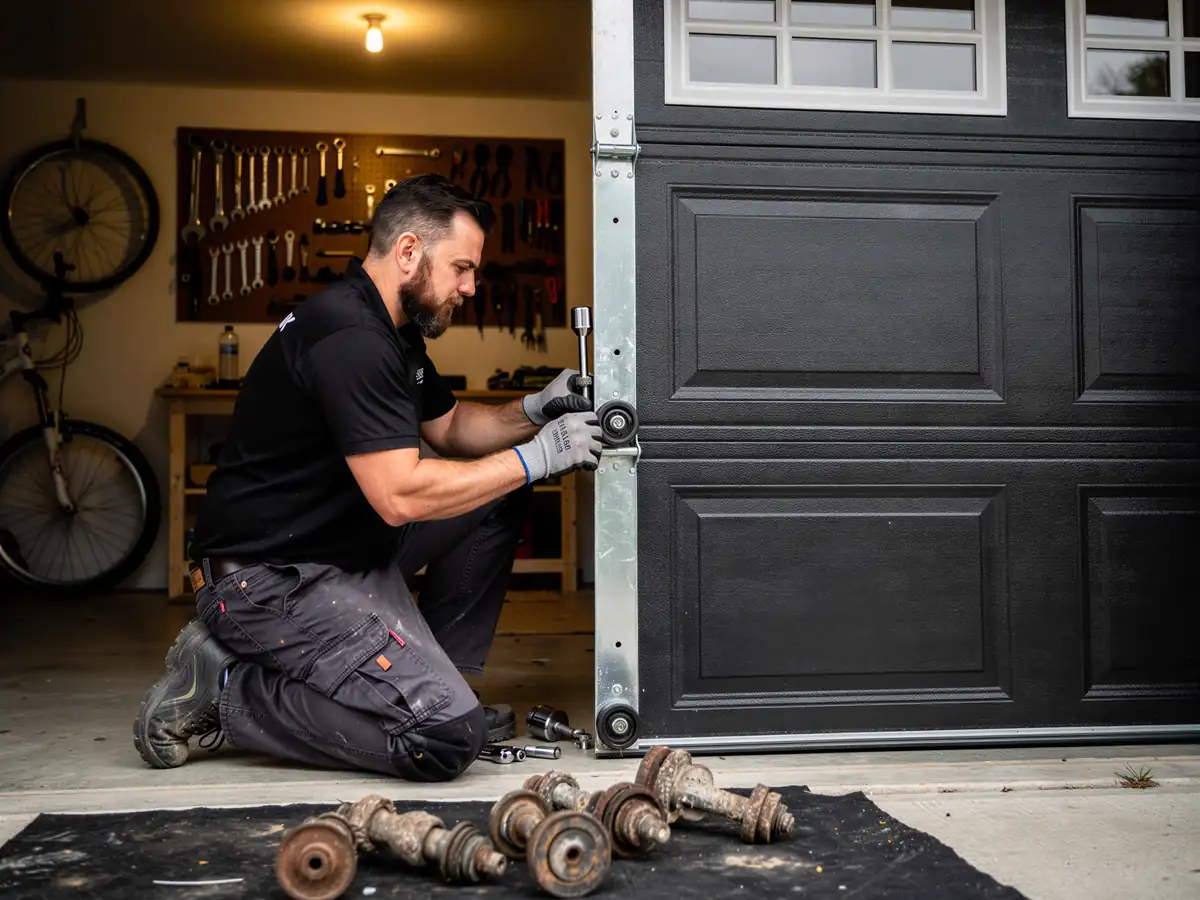
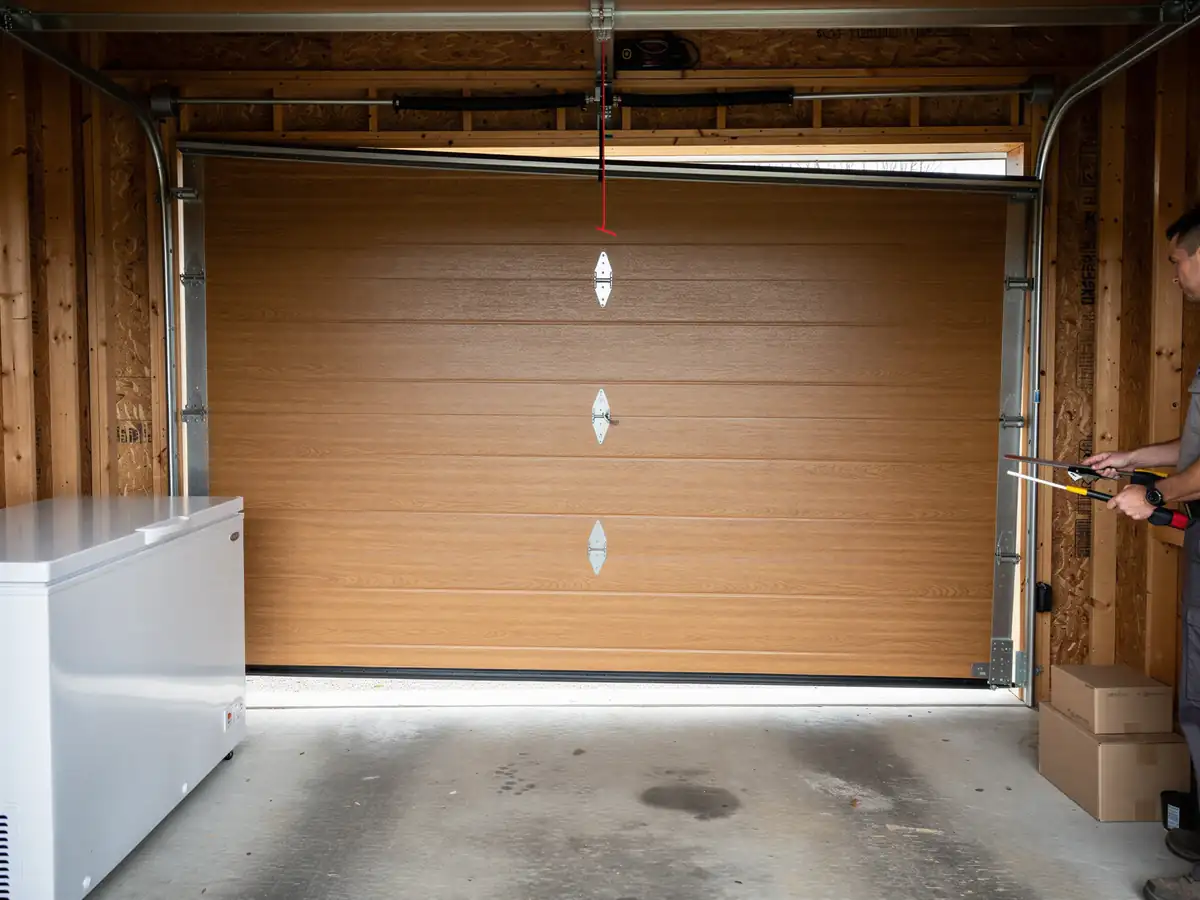
Most of what we see in Garnet isn't a door that popped a cable or snapped a spring - it's a door where one or both bottom rollers have climbed out of the vertical track, usually on one side only, leaving the panel racked at an angle in the opening. Garnet's housing stock runs newer than a lot of the surrounding desert - median build year sits around 1994, which puts most garages here on lighter-gauge steel track and nylon roller hardware rather than the heavier galvanized track you'd find on an older house. That lighter track holds up fine under normal use, but it has less tolerance for a bent section, and a bent section is exactly what pushes a roller out of the channel. The other common trigger is a loose track bracket - the fasteners holding track to the framing work loose over years of thermal cycling, and once a bracket shifts even a half inch, the roller has somewhere to go that isn't straight up and down. Either way, the door doesn't come off the track in one dramatic moment most of the time - it rides rough for a week or two, binding and jerking, before someone notices the roller is actually sitting outside the rail.
Can You Do This Yourself
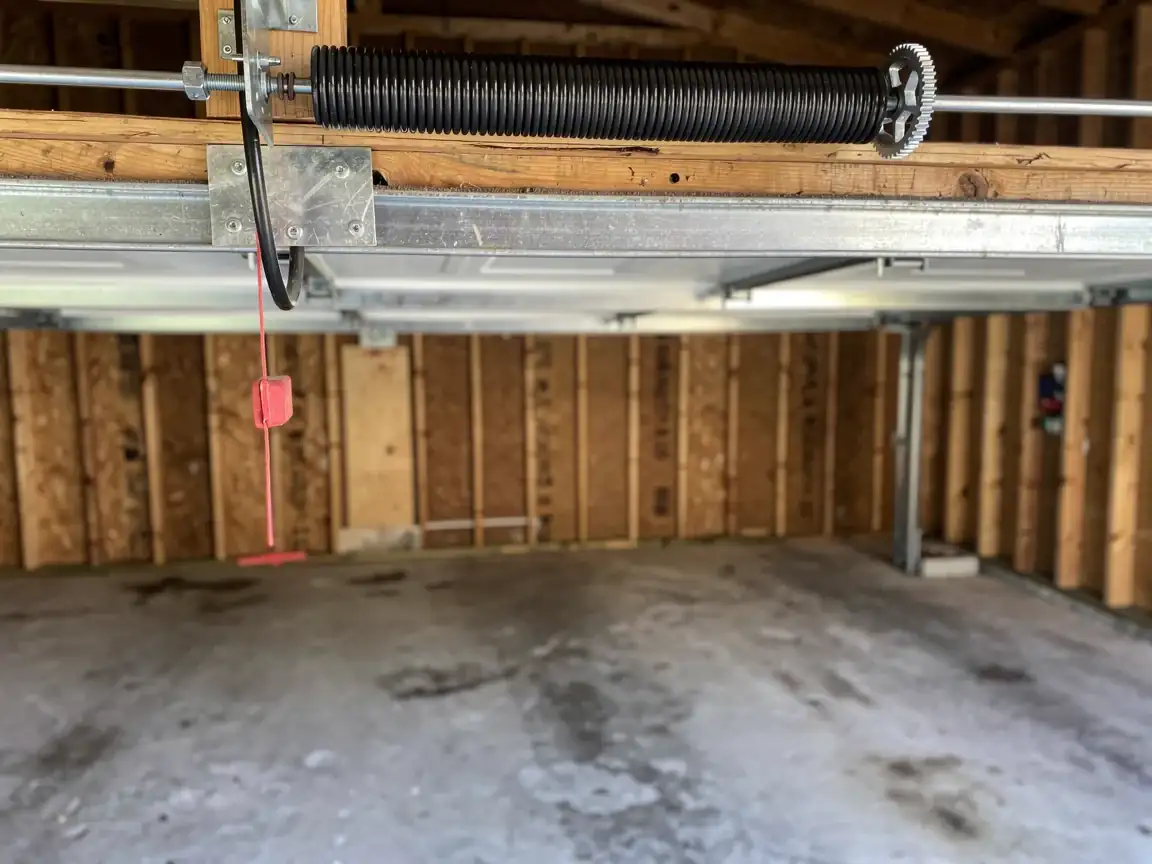
If the door is only off by a little - one roller slightly out, door still roughly square in the opening - some homeowners manage to walk it back in with a pry bar and a rubber mallet, working slowly with the opener disconnected. That's the ceiling of what's reasonable to try alone. If the track itself is bent, or if the door jumped the track because a cable let go or a spring is involved, stop. A torsion spring under tension and a door hanging crooked in its track is not a combination to troubleshoot solo - the door can drop without warning, and a bent track that gets forced back into position with hand tools usually just bends again in a different spot. With 2,119 households in Garnet, we see a steady mix of both situations: simple roller pop-outs that a careful homeowner handles themselves, and track damage that needs a replacement section, not a reset.
The Complications
Garnet sits in a severe-heat climate band, and that heat is doing quiet damage to track hardware you won't notice until it fails. Steel track expands and contracts through daily highs and overnight lows, and over enough cycles the fasteners holding it to the framing back out just slightly - not enough to see, enough to let the track flex under roller pressure. On a 1990s-built house, that's compounded by nylon rollers that have gone slightly brittle from the same heat exposure, so they're more likely to bind and jump rather than roll smoothly through a flex point. The other complication is sequence: if a roller came off because the track bent, and you only push the roller back in without addressing the bend, it comes off again, usually within days. We check both ends of that problem, not just the one that's visible.
How Long You Are Without the Door
If it's a clean roller re-seat with the track intact, the door is usable again the same visit - no parts needed, no return trip. If the track needs a replacement section, that's not always a part we're carrying on the truck for every job, since track comes in a few different profiles and gauges. In that case the door may need to stay closed or manually operated until the right section is on hand. We'd rather tell you that up front than promise a same-day fix we can't back up for every Garnet house we see.