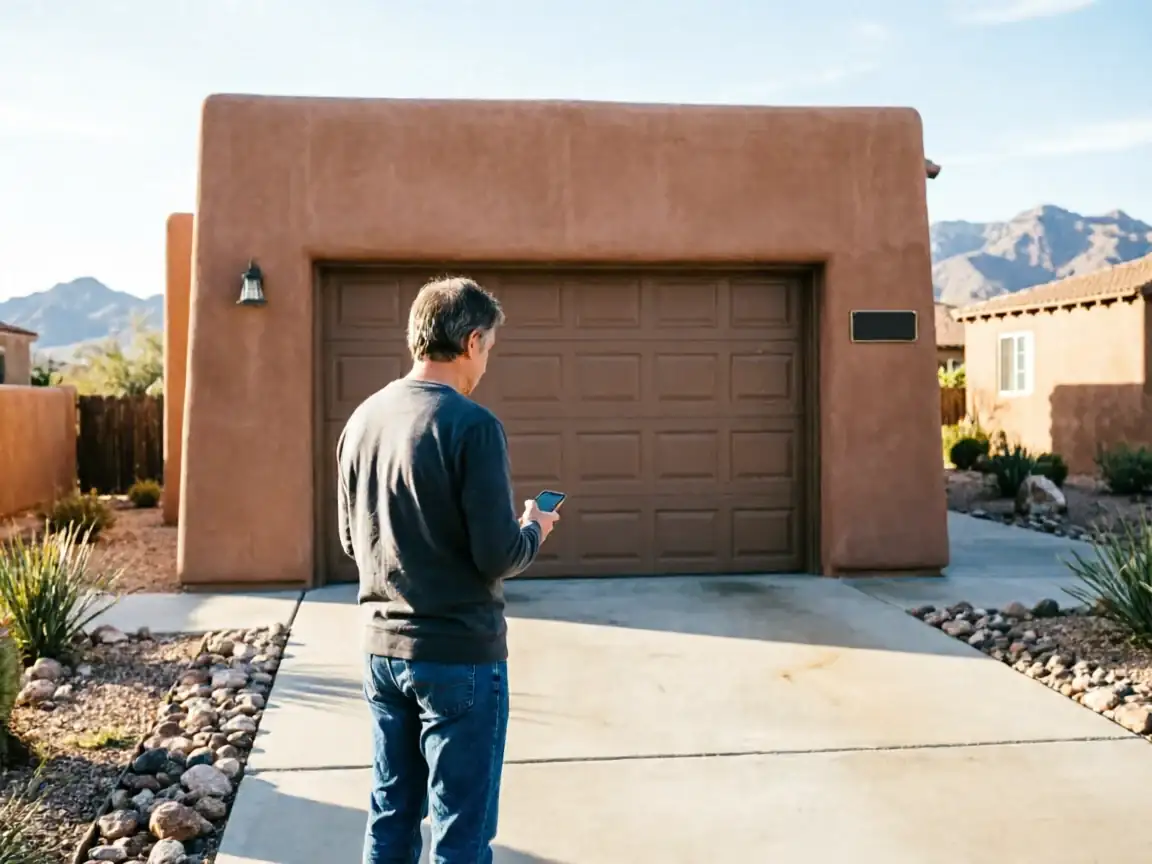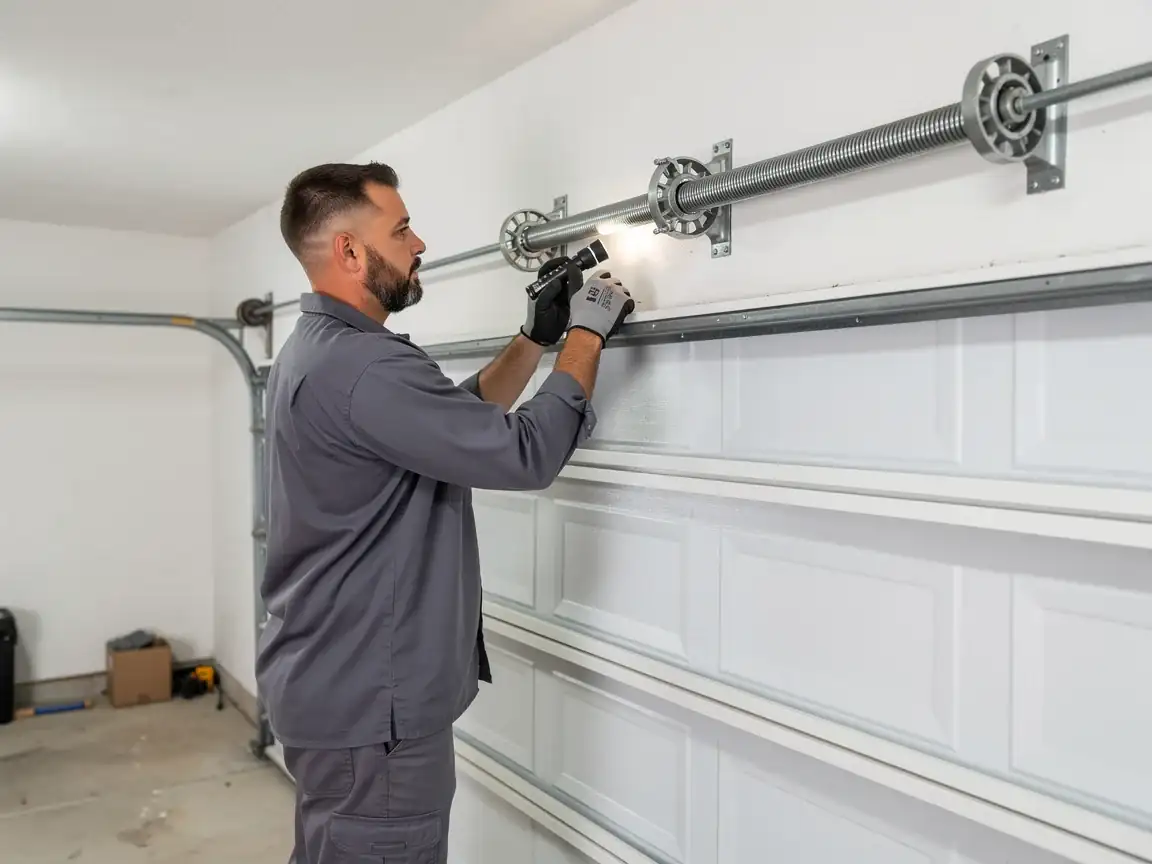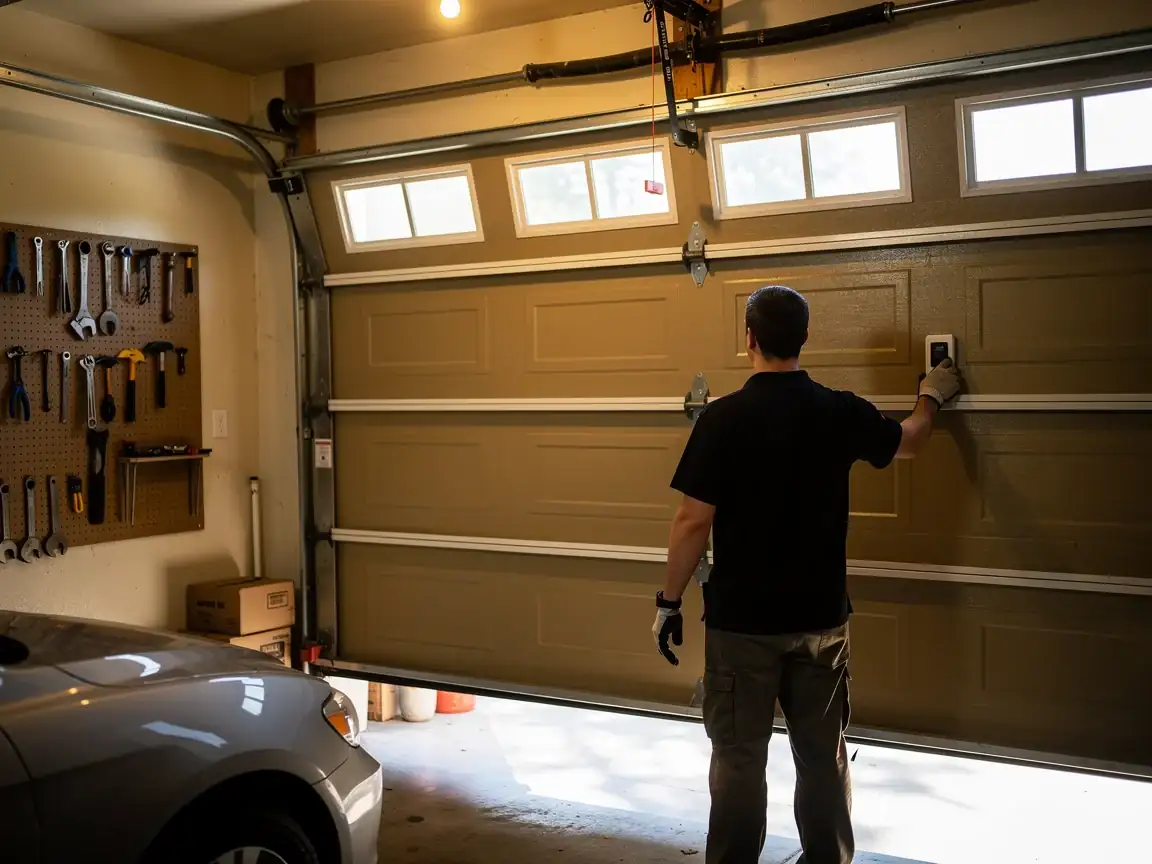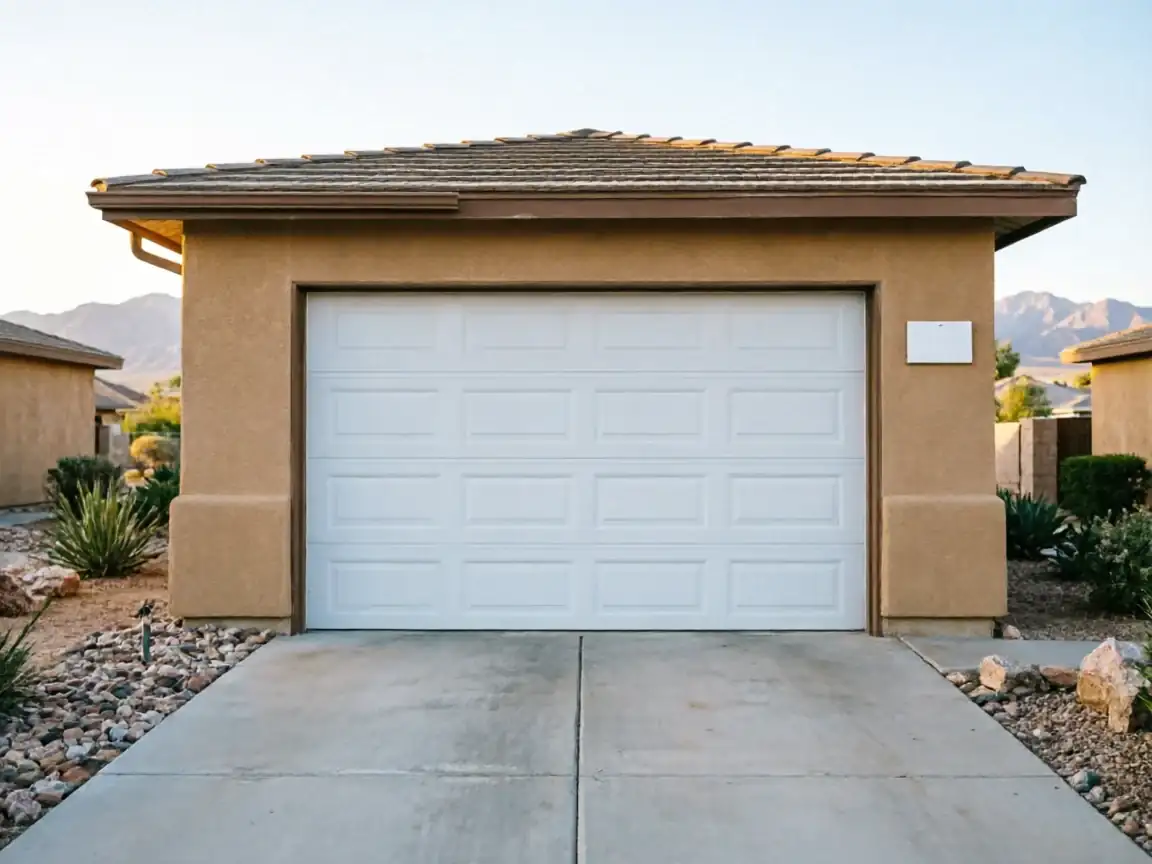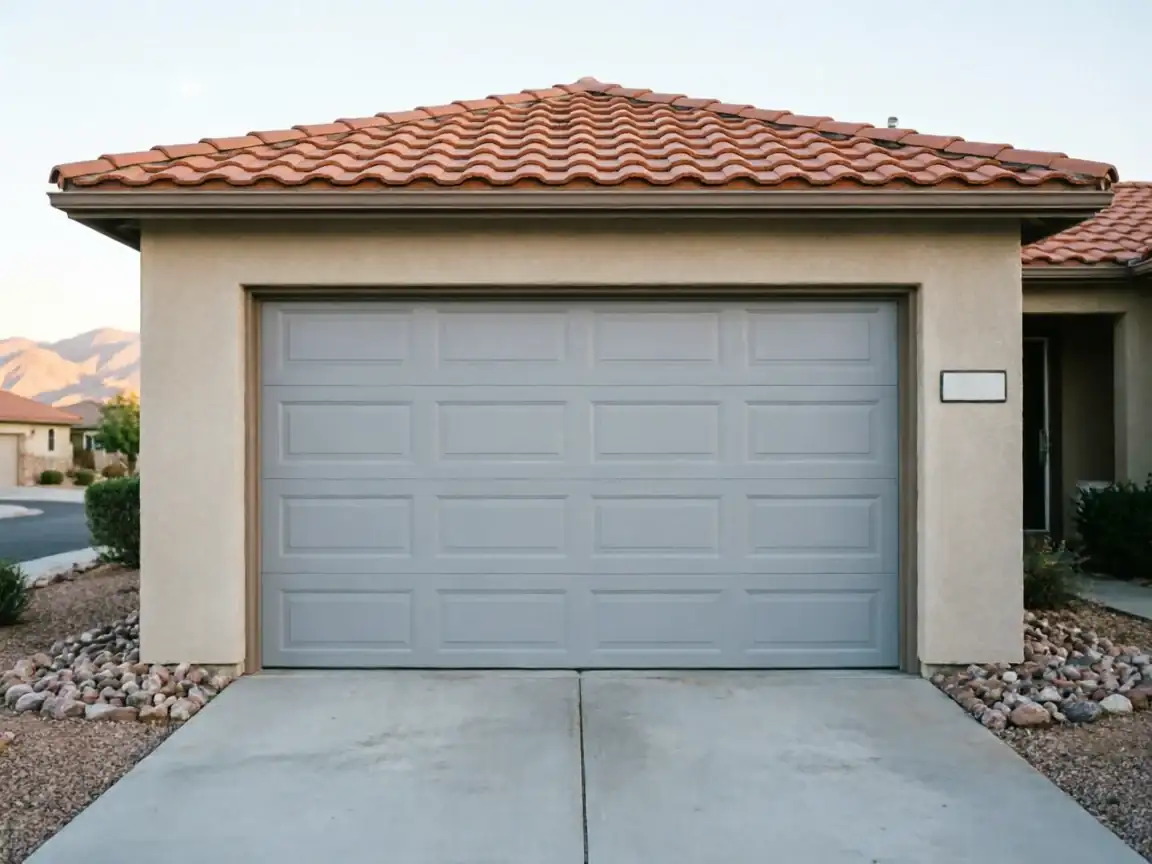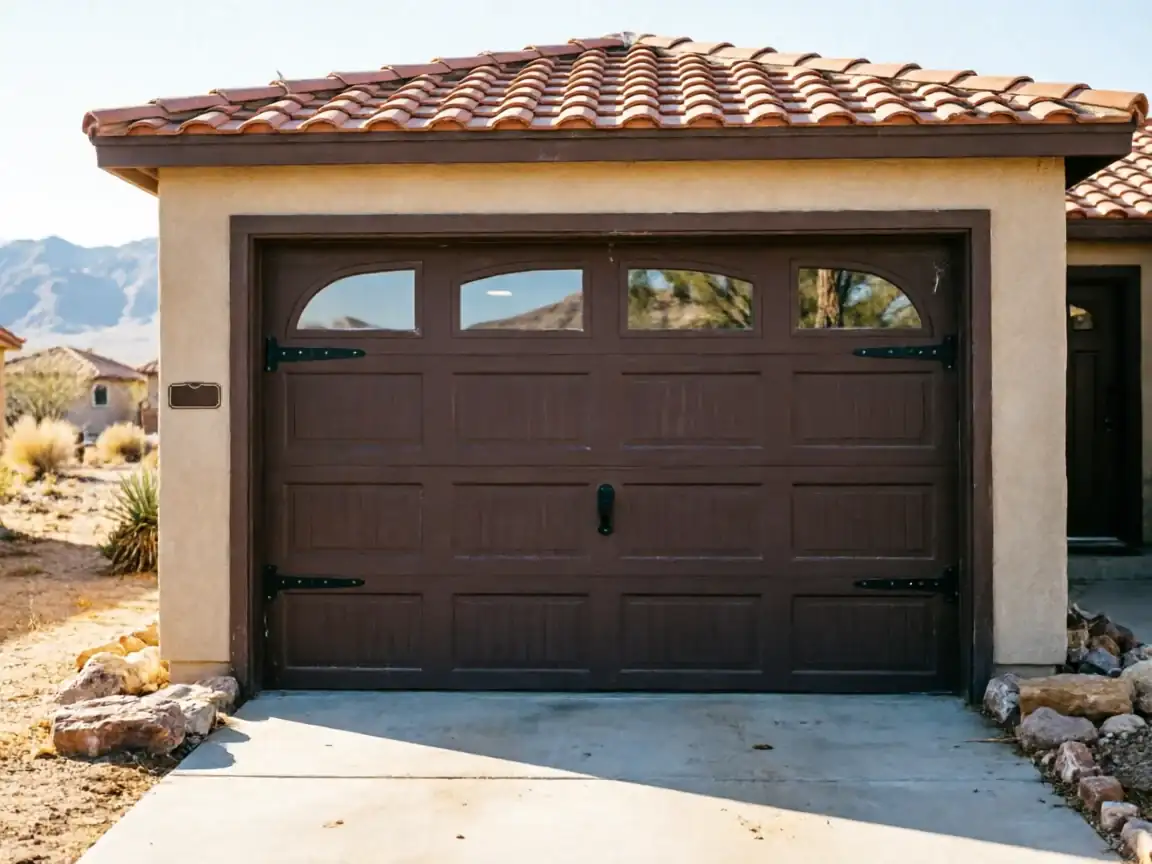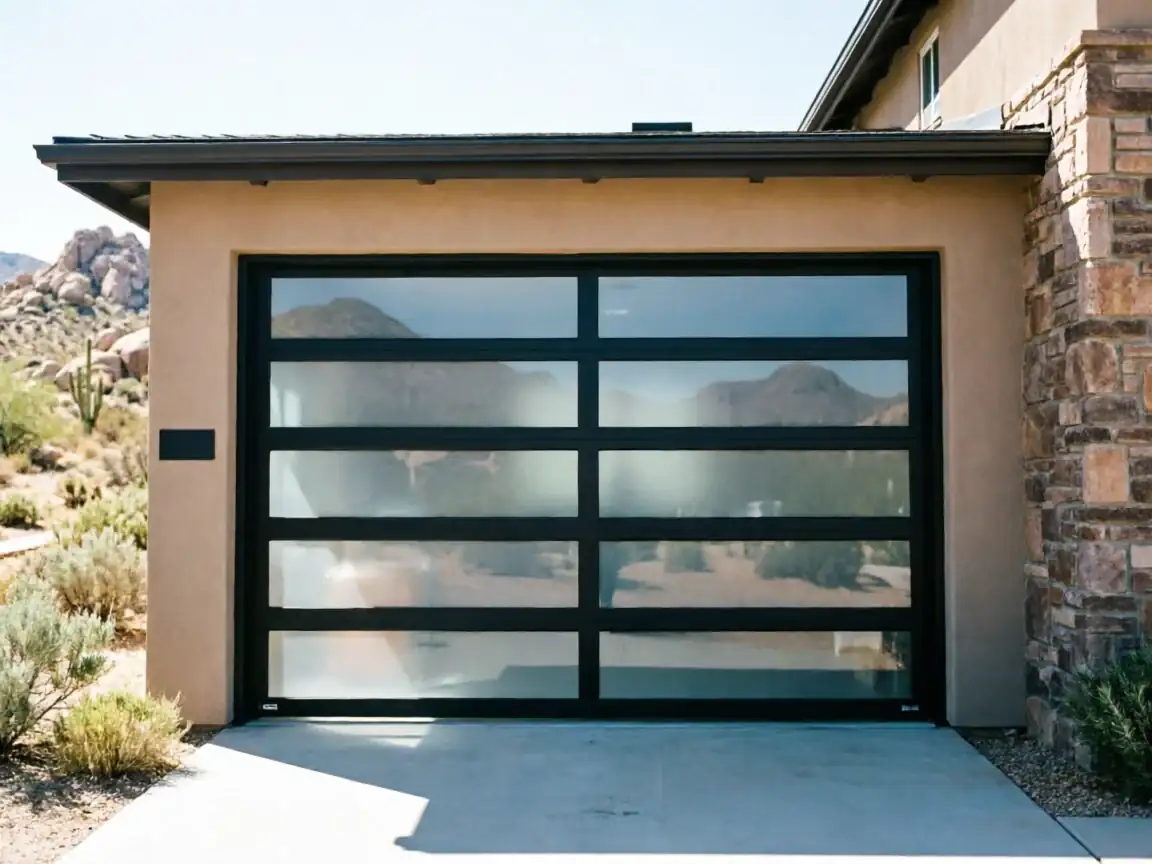
What You Are Seeing
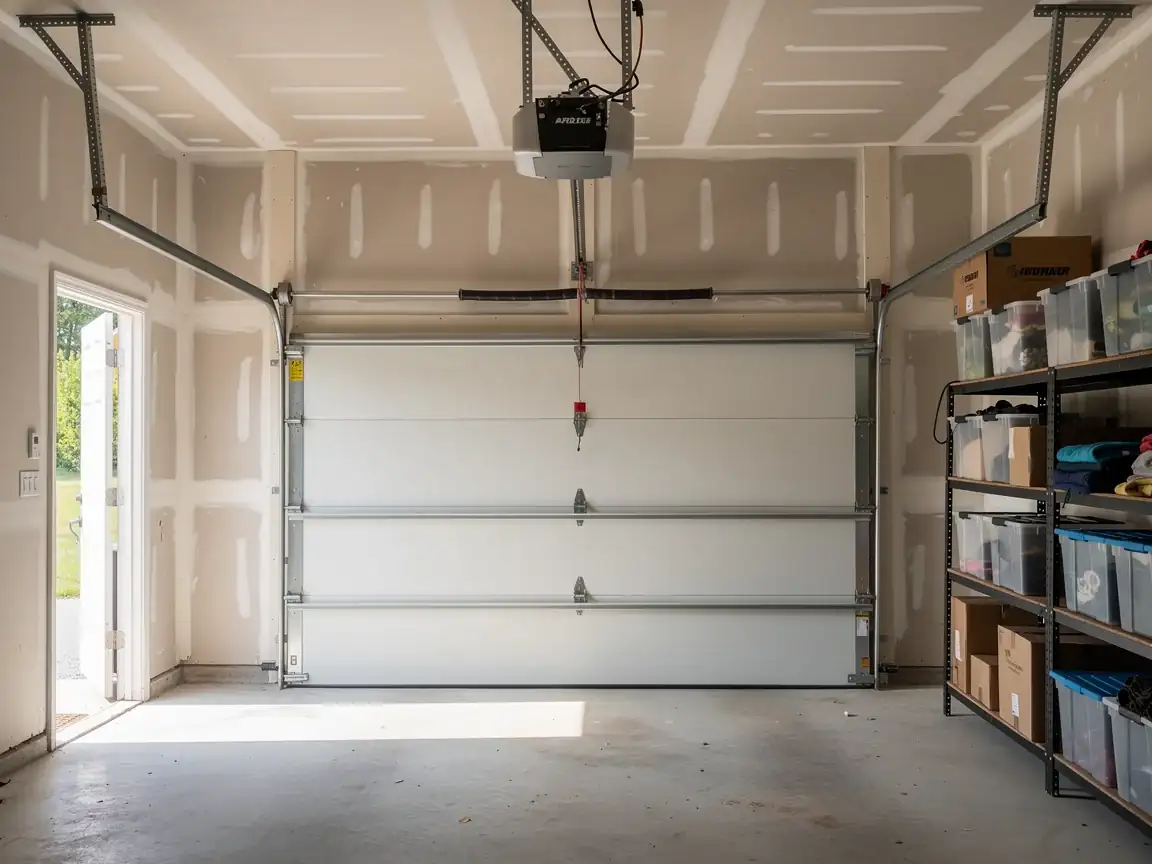
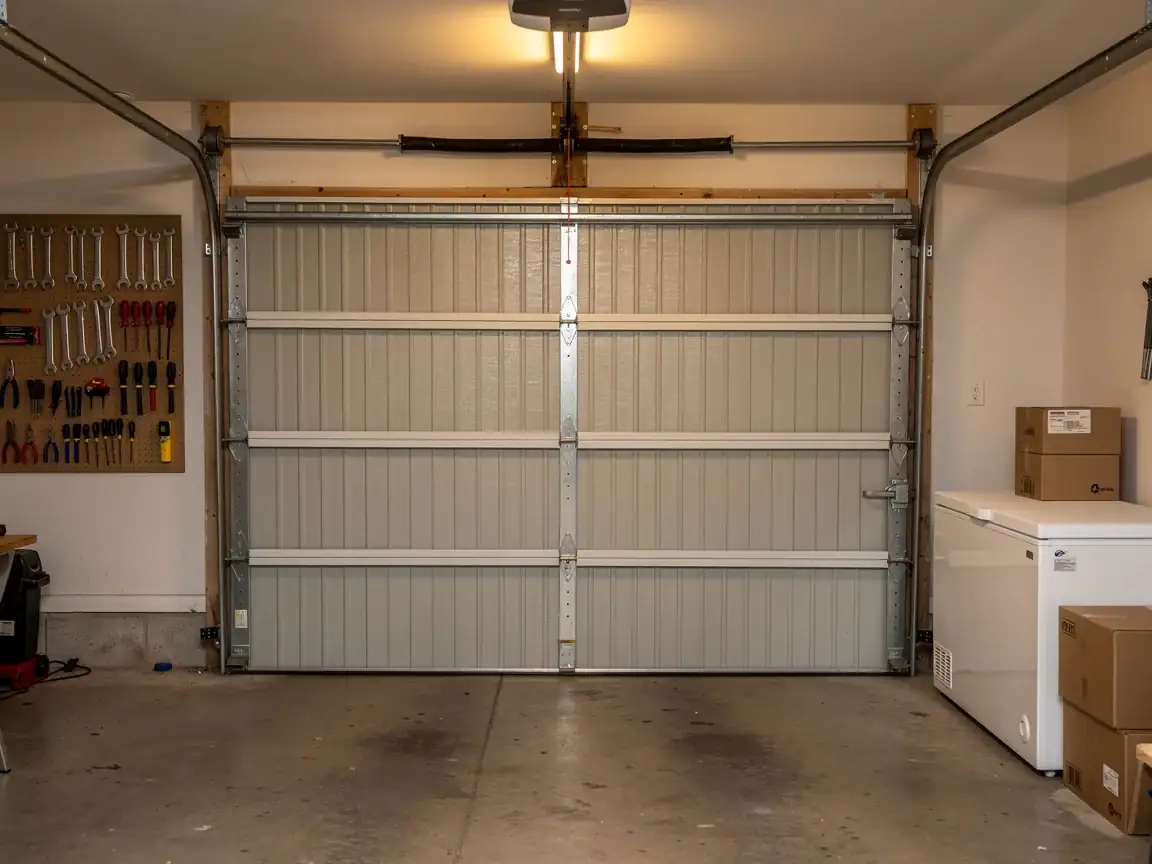
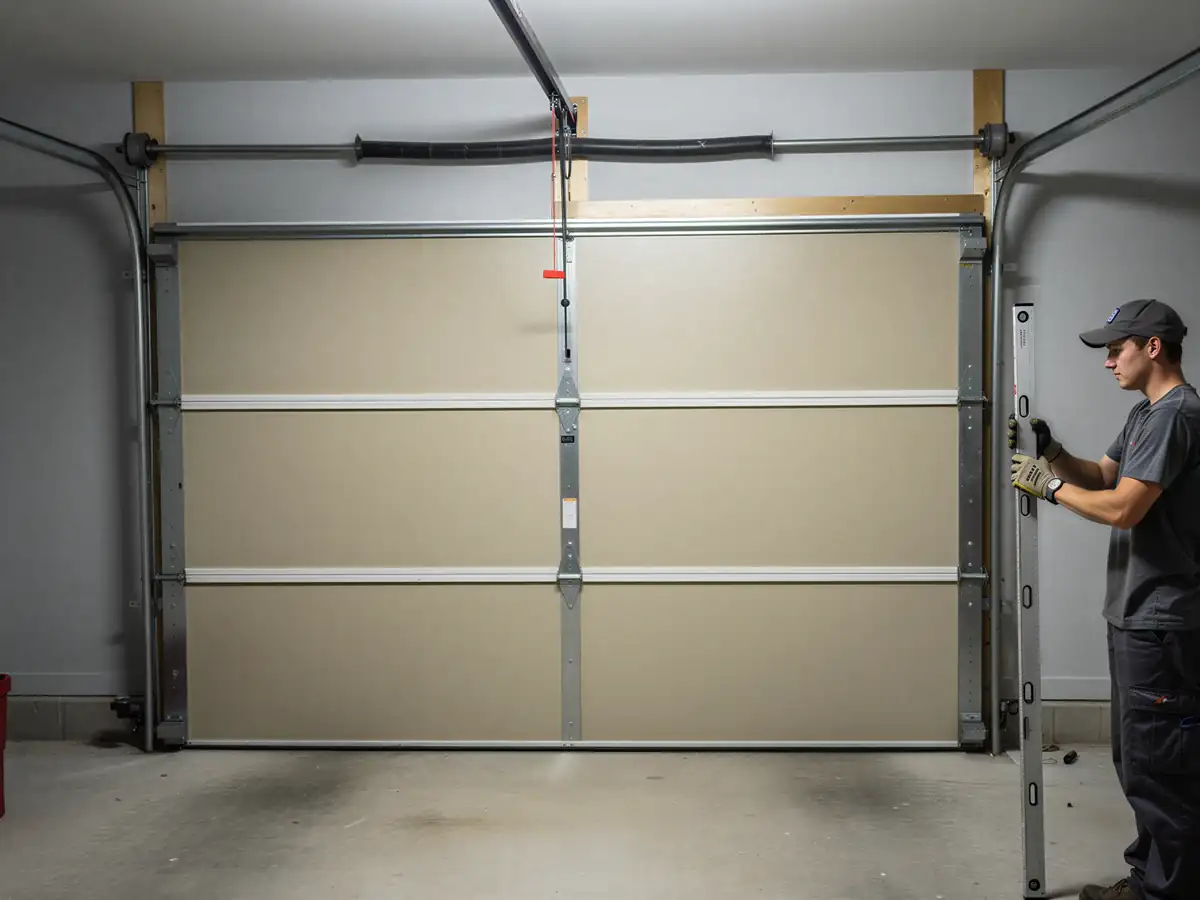
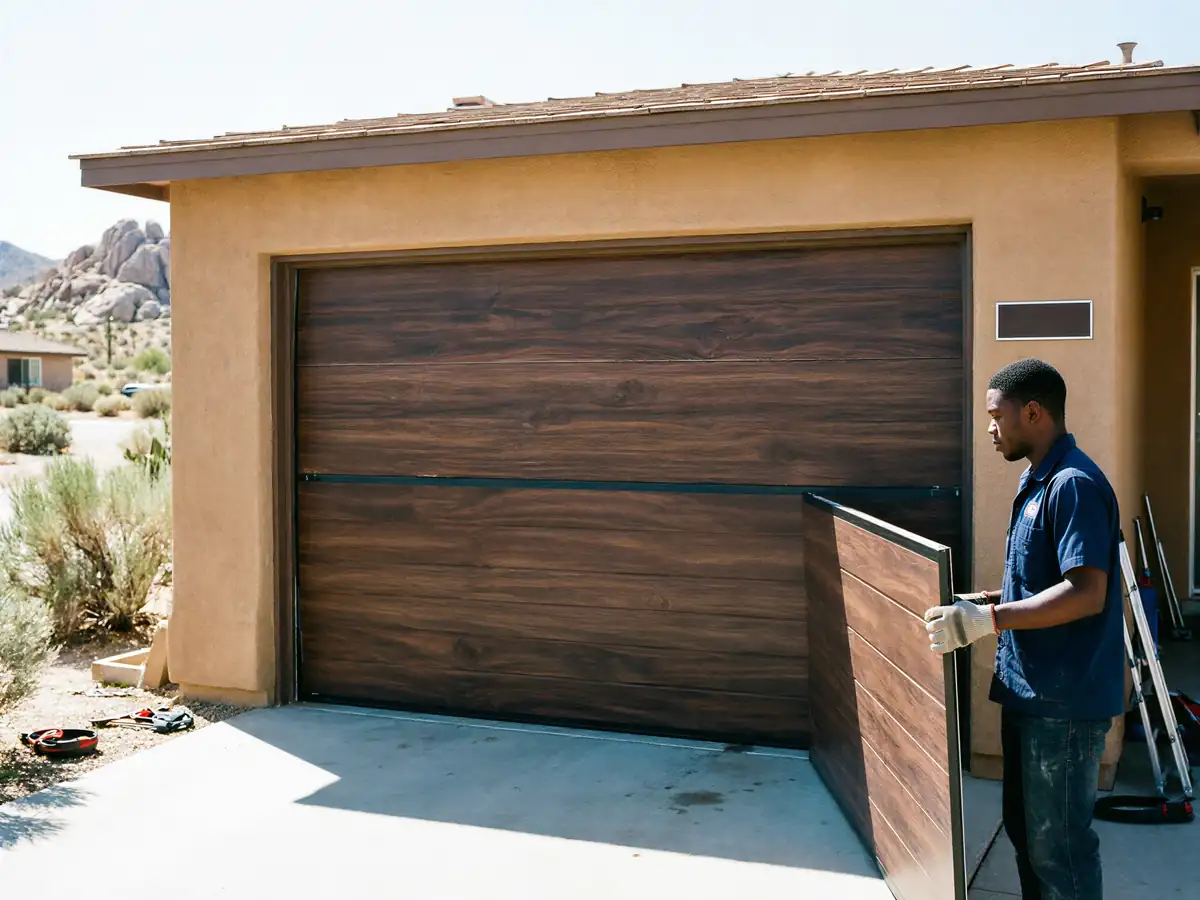
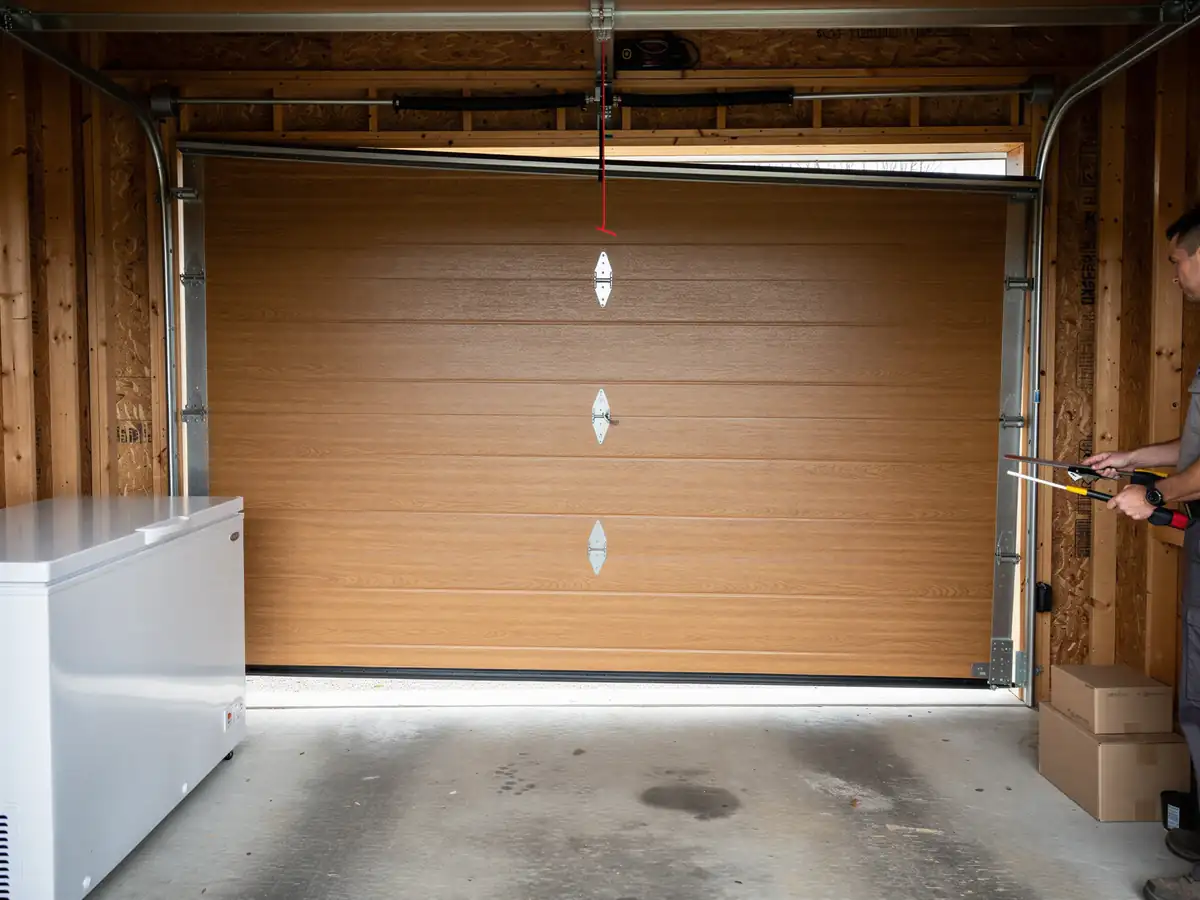
Garnet sits nine miles out from our Palm Springs base, which is a straight run and not one that eats into how fast a truck gets to you once a call is booked. What's waiting when we get there is different from the older part of the valley, though. Garnet's housing stock centers on 1994, a good decade-plus newer than the 1968-1999 spread you'll find across the wider service area. That matters for doors: you're less likely to be dealing with a worn-out one-piece door on side hardware and more likely looking at a sectional steel door with an extension or torsion setup that was standard mid-90s build, now pushing close to thirty years of desert sun on the same springs, cables, and rollers.
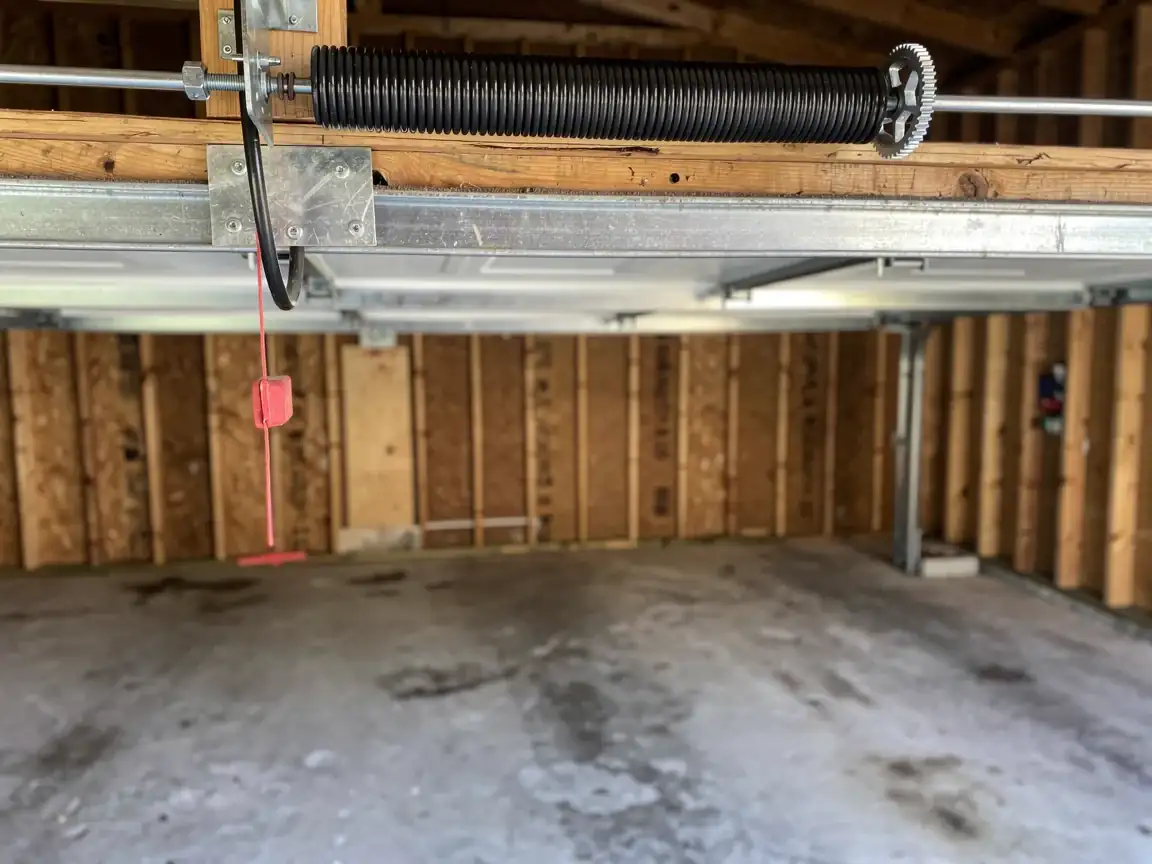
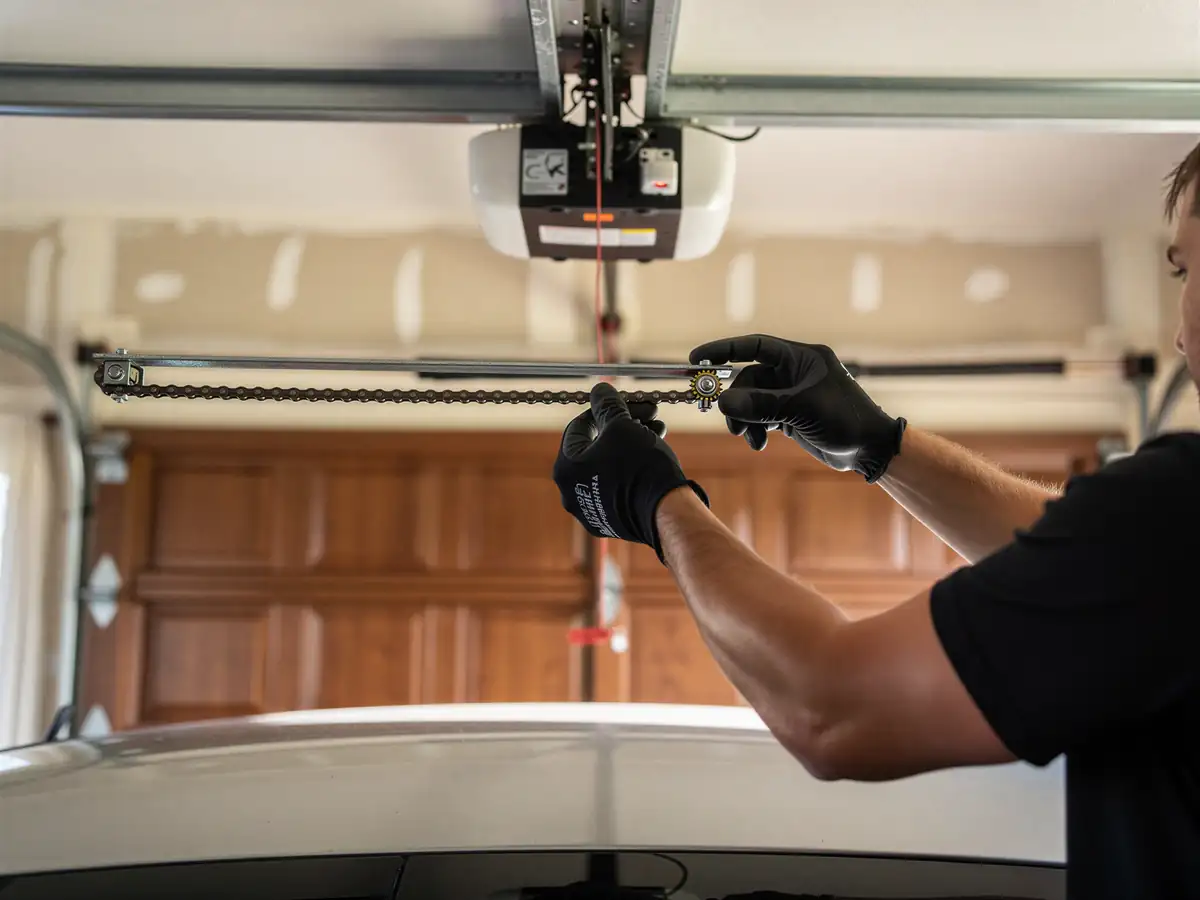
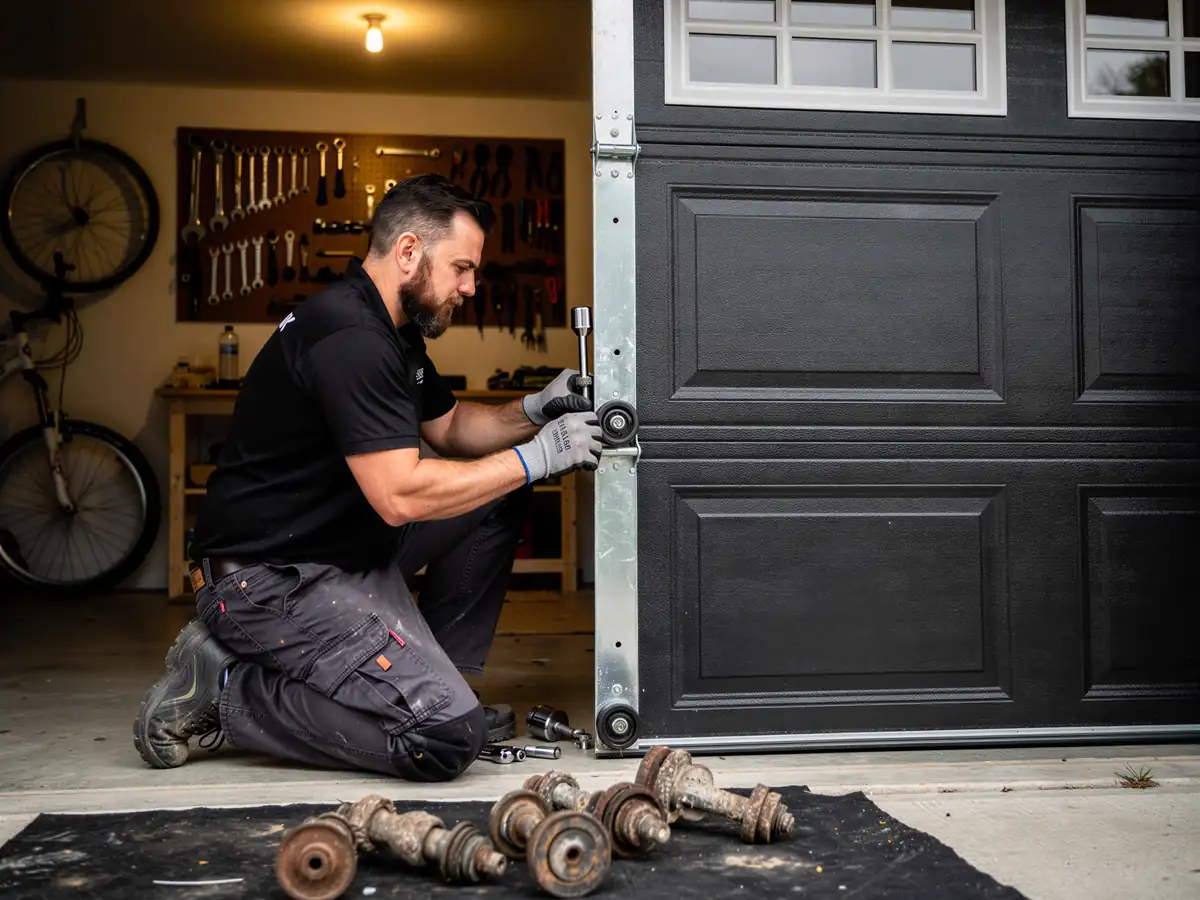
The common failure here is a torsion spring that's simply reached the end of its cycle count, or a nylon roller that's gone brittle and started chewing up the track. Openers from that build era are also aging out - chain-drive units with circuit boards that don't like the heat soak this area gets, year after year. If your opener has started reversing on its own or your door shudders partway up, that's the age of the stock talking, not a fluke.
Can You Do This Yourself
Some of it, yes. Lubricating hinges and rollers, tightening the bracket bolts that shake loose from years of thermal expansion and contraction, swapping weatherstripping along the bottom - all reasonable weekend work if you're comfortable on a ladder. Checking balance is easy too: disconnect the opener, lift the door halfway by hand, and see if it holds. If it drops or shoots up, the springs are off and that's not a tuning job.
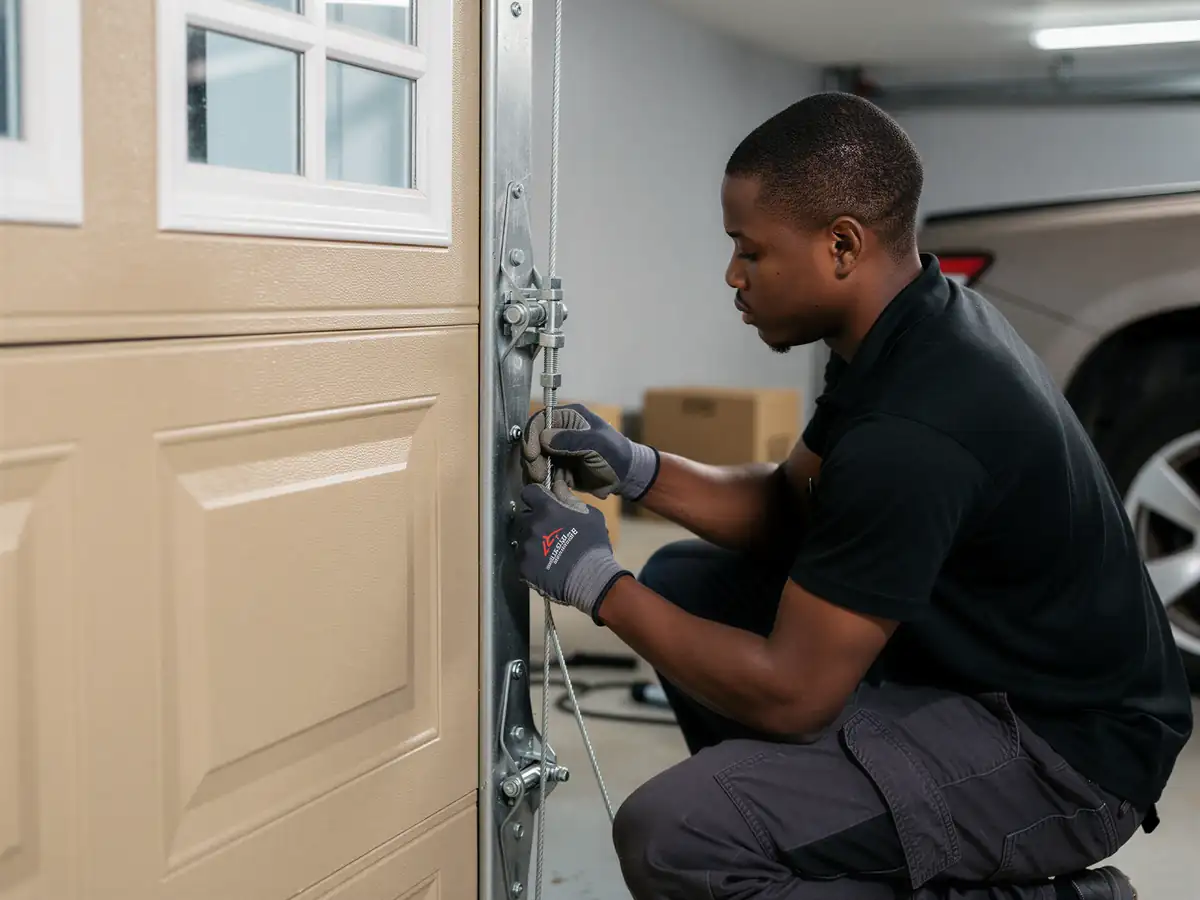
What we don't recommend doing yourself is anything involving the torsion spring itself. A door built in the mid-90s on a two-car garage carries enough stored energy in that spring to break bones or worse if it lets go while you're working on it. We also wouldn't touch opener circuit board swaps unless you know what you're diagnosing - heat-related board failures can look like a dozen other problems, and guessing wrong means buying a part you didn't need. If you're not sure which category your repair falls into, that's a reasonable thing to ask us on the call before we come out.
The Cost of This Job
We don't post flat prices here because what a Garnet door needs depends on what's actually failed
A roller swap and a full torsion spring replacement on a double door are not the same invoice. What we can tell you is what shapes the number: the age of your opener (original 90s units often need full replacement rather than a board swap, since parts for that generation aren't being made anymore), whether it's a single or double door, and whether the track has been knocked out of alignment, which adds labor beyond the part itself.
Garnet's median household income sits at $63,082
Noticeably below the $69,704 median across the broader service area we cover from Palm Springs. We mention that because it's part of how we scope a job with you - we'll tell you plainly when a repair makes more sense than a replacement, and when it doesn't. A door that's structurally fine but has one dead spring is a repair. A door with a cracked panel, a dying opener, and worn-out hardware all at once is usually cheaper to replace outright than to patch three times over the next two years.
The Complications
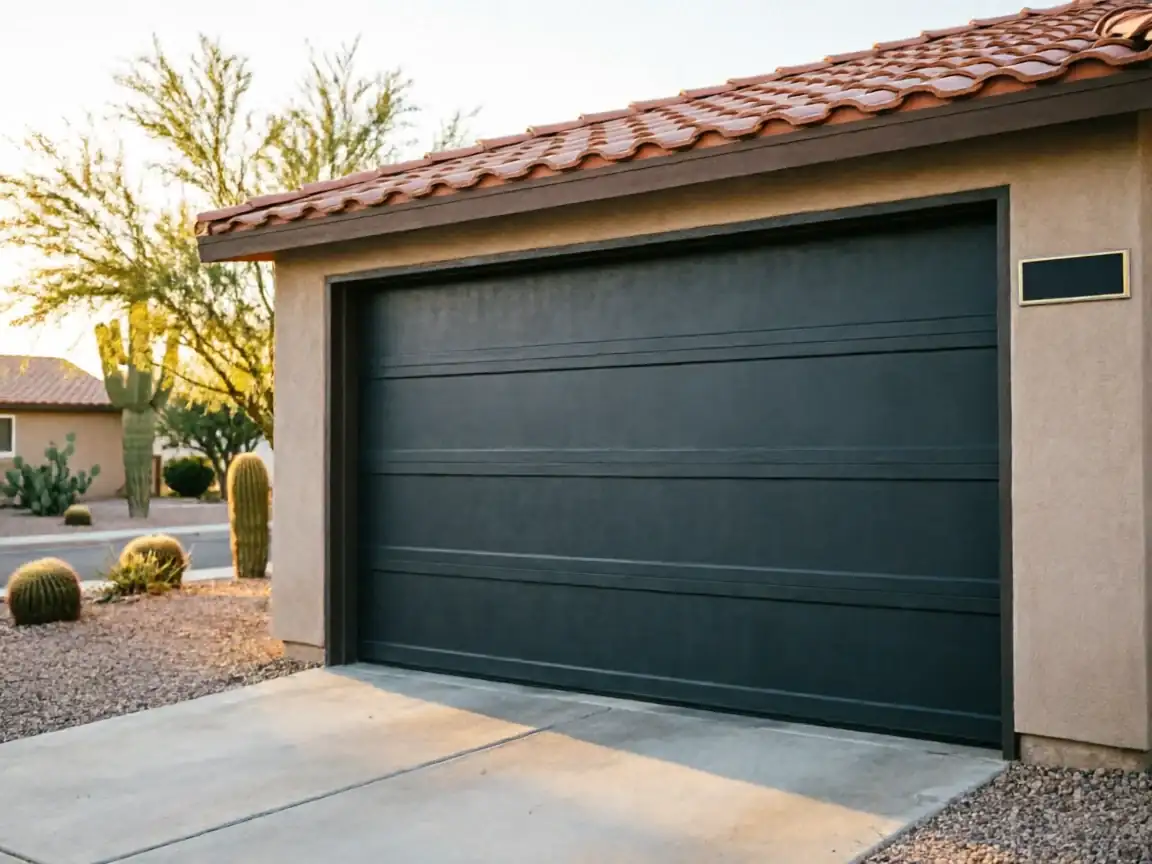
Heat is the recurring issue for doors built in Garnet's era. This is a severe-heat climate band, and a steel door panel baking in a west-facing driveway all afternoon expands and contracts every single day. Over thirty years that cycle works lubricant out of hinges, dries out seals, and fatigues springs faster than the rated cycle count would suggest in a milder climate. We see 1990s-built doors here failing springs a bit earlier than you'd expect from the manufacturer's numbers, precisely because of that daily heat load.
The other complication is parts availability for openers from that build year. A lot of mid-90s chain-drive units used motors and logic boards that have been discontinued, so a board failure sometimes means replacing the whole opener rather than one part - not because we're upselling, but because the part genuinely isn't made anymore. We'll always check what's actually available before we tell you that, but it's worth knowing going in so the estimate doesn't come as a surprise.
How Long You Are Without the Door
Because the call comes from Palm Springs, nine miles out, the travel itself isn't the long part of the day - it's whether the part needed is something carried on the truck or something that has to be ordered. A standard torsion spring, a roller set, or weatherstripping are the kind of fixes that get your door closing again the same visit. A full opener replacement for a discontinued 90s unit, or a non-standard panel size, can mean a return trip once the part's in hand.
We won't quote a response time here because it depends on the day's schedule and what's already on the truck, not on the distance - nine miles doesn't change much either way. What we will do on the call is tell you honestly whether your issue looks like a same-visit fix or a two-trip job, based on what you describe and, where useful, a photo. A door stuck open or shut is a security and heat problem both, so we treat those calls as the priority regardless of what neighborhood they're coming from.